
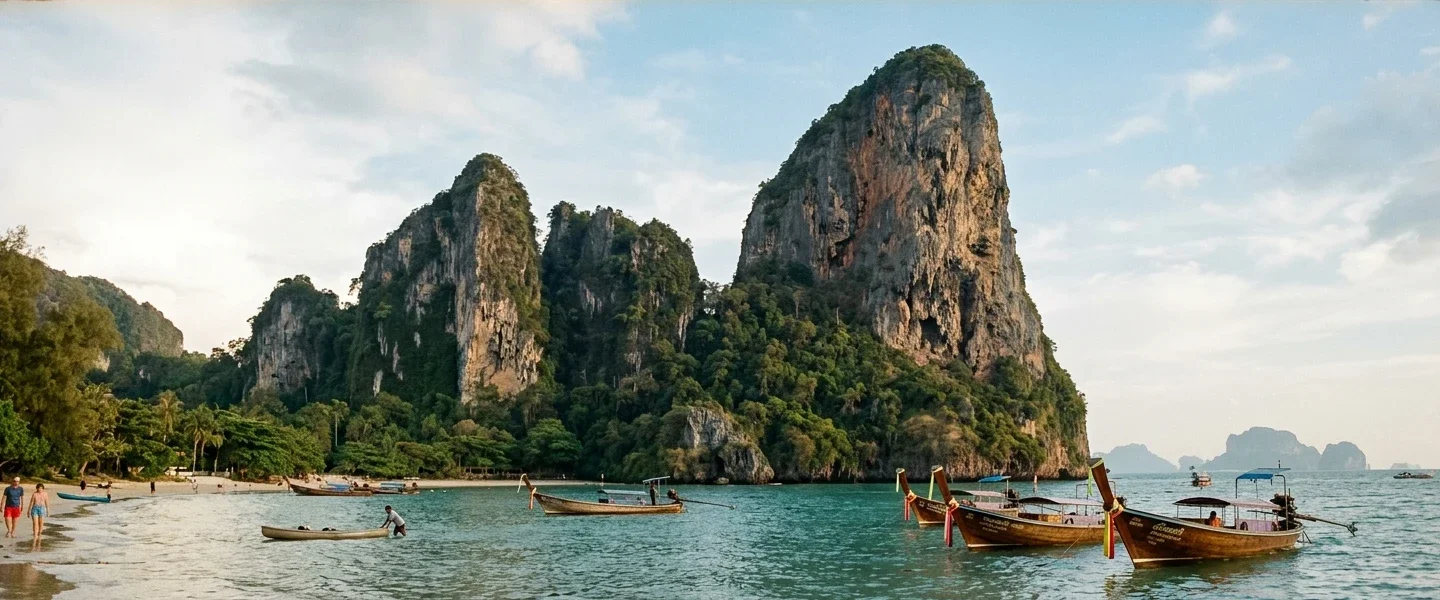
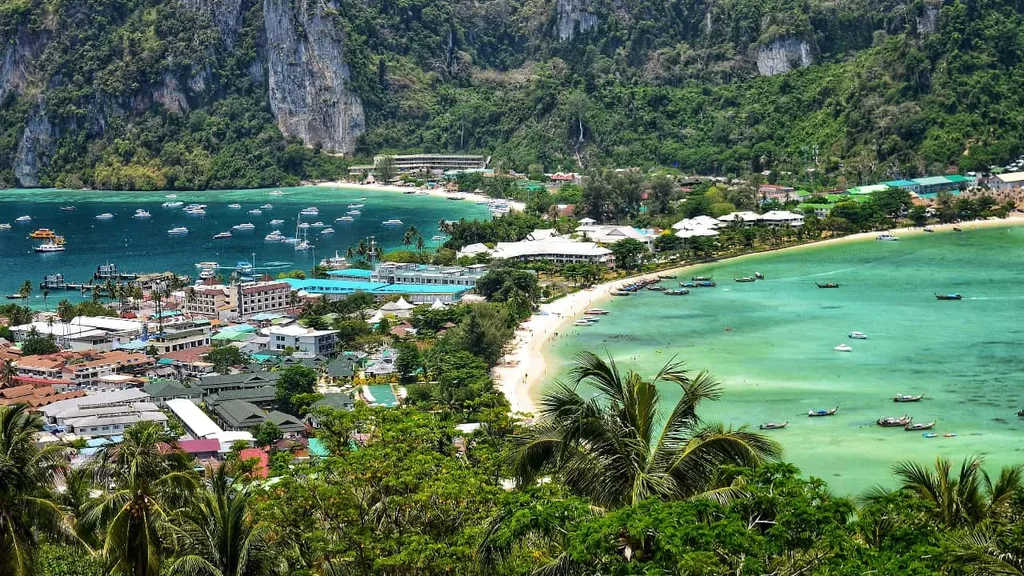
Krabi Right Now
Heavy rain and rough seas are forecast for the Andaman Sea region, including Krabi, with potential for flash floods and high waves.
European Conference on Leadership and Management (ECLM) · Krabi
Asahna Bucha Day
Khao Phansa (Buddhist Lent Day)
ISER International Conference 2026 - Krabi (August) · Krabi, Krabi
Interest in travel to Krabi remained about the same as a year ago, suggesting demand is holding steady.
Best time to visit
Off-season🌧️Monsoon season
Expect frequent rain showers and warm temperatures around 31°C (88°F) as July is part of the monsoon season. Pack waterproofs and be aware of potential sea conditions.
SCORE BY MONTH
Visit Krabi between December and March for the driest weather and pleasant temperatures around 31-33°C (88-91°F). Avoid September and October when monsoon season brings heavy rain and rough seas. While the peak season months are drier, they also see more visitors.
Visitor data: Estimated Krabi Visitor Index 2023
Day-to-day in Krabi
Walkability
42/100
Krabi is walkable in short pockets, not across the destination. Ao Nang and Krabi Town work for food and errands, but broken pavements, scooter traffic, and awkward crossings limit longer walks.
Ao Nang has usable stretches, but pavements break, narrow, or vanish off the main strip.
Restaurants and shops cluster in Ao Nang, but beaches, piers, and services still spread out.
Scooters, songthaews, and vans make crossings stressful, especially near beach roads and junctions.
Climate works against walking for much of the year. Plan around weather windows.
-
LIMESTONE CLIMBING
Railay and Tonsai define Krabi's daily scene for climbers, with bolted limestone routes, guide shops, and half-day courses. Beginners can start on Railay, while stronger climbers usually drift toward Tonsai.
-
Coworking
Ao Nang is mostly hotel desks and cafes, fine for email but weak for serious workdays. Dedicated coworking is much stronger on Ko Lanta, where KoHub and Fika give you A/C, desks, and a clearer remote-work crowd.
-
Gym
$29 / month
VERY AFFORDABLEAo Nang has usable training rather than polished city gyms: Yaksha Fitness works for basic strength, while Khunsuek and Bull Muay Thai pull longer-stay fighters. Expect open-air sessions, drop-ins, and scooter rides between gyms.
Need to Know
- Population
- 484,000 DOPA · 2024 (registered)
- Currency
- Thai baht (THB)
- Language
- Thai; English common in Ao Nang, Railay, and tour offices
- Tap water
- Not safe
- Time zone
- ICT (UTC+7)
- Power plug
- Type A / B / C / O, 230V
- Dialling code
- +66
- Driving side
- Left
- Tipping
- Not expected; round up for drivers, massage, and casual restaurants if service is good.
- Internet
- Strong 4G and 5G in Ao Nang and Krabi Town; weaker on boats, beaches, and mangrove edges.
- Emergency
- 191 emergency and police; 1669 ambulance; 199 fire; 1155 Tourist Police.
When not to go
-
Skip peak Andaman monsoon
Sep, Oct · peaks OctDo not plan a Krabi trip around island-hopping in the wettest part of the Andaman monsoon. October averages about 21 wet days, and the bigger problem is rough sea: longtail trips get uncomfortable, beach landings get messy, and ferry plans can be cut short. Go to Koh Samui for a Thailand beach trip in September, or look to Indonesia if you mainly want dry sand and boat days.
Krabi itineraries
Upcoming Events & Holidays
Upcoming events — next 30 days
On the horizon
Public holidays & observances — next 12 months
Dates are researched and checked, but events move. Always confirm with the official source before you book anything around them.
Getting To Krabi
-
From Krabi Airport (KBV)
15 km to Krabi Town, 28 km to Ao Nang
This is the cleanest way in for most travellers. Use the airport transport counters for fixed-fare taxis and shared vans, or check Grab if you are not arriving very early or very late. Shared vans are cheap but make hotel-drop loops, so families and late arrivals should take a car.
Direct flights to Krabi
Serves 8 direct destinations, 5 international and 3 domestic, about 20 flights a day.
International 5- Kuala Lumpur KUL Malaysia
 AirAsia F Firefly 3/day
 - Singapore SIN Singapore
 Scoot 1-2/day
 - Abu Dhabi AUH United Arab Emirates
 Etihad Airways ~1/day
 - New Delhi DEL India
 IndiGo 3/week
- Dubai DXB United Arab EmiratesF flydubai2/week
Within Thailand 3
- Bangkok DMK
 Nok Air Thai AirAsia
  Thai Lion Air 7/day
 - Bangkok BKK
 Bangkok Airways
  Thai Airways International
  Thai Vietjet Air 6/day
 - Chiangmai CNX Thai AirAsia 1-2/day
Nonstop routes only. Flights per day are an average, each way. Data: AeroDataBox, updated July 2026.
Visa rules apply at the country level. See visa advice for Thailand. -
-
From Phuket Airport (HKT)
About 150 km west of Krabi Town
Use Phuket only when flights are much better or you are pairing both coasts. A private car is the least annoying with luggage, while shared vans are cheaper but slower and can involve confusing pickup points. Do not land late and assume a cheap onward bus will be waiting.
-
From Rassada Pier Phuket
About 2 hr by ferry to Ao Nang
This is the better Phuket to Krabi move if you are already near Phuket Town or the east-coast piers. Ferries and speedboats usually land around Ao Nang, Railay, or nearby transfer points, but luggage handling is rougher than a car. In rough seas, take the road instead.
-
Bus from Bangkok
Overnight buses run to Krabi Bus Terminal
This is the main overland route if you are skipping a domestic flight. Departures usually leave from Bangkok's Southern Terminal and arrive at Krabi Bus Terminal, not the beach. Book VIP or express seats on 12Go or at the terminal, then budget a final taxi or songthaew to Ao Nang.
Safety Advice
Krabi is generally a safe destination with low rates of violent crime against tourists. However, petty theft, road accidents, and scams can occur, so exercising common sense and awareness is advised. There is an ongoing threat of terrorism in Thailand, and authorities have defused devices in Krabi in the past.
Common Scams
-
ATM skimming
HIGH RISKTrigger:The card slot feels loose or has an odd attachment
Skimming and card fraud are known Thailand problems, and Krabi's tourist zones have enough cash-heavy traffic to make outdoor ATMs a weak point. The loss is not the machine fee, it is your card being copied.
How to avoid: Use ATMs inside banks, malls, or bright convenience stores. Cover the keypad and lock the card in your banking app after withdrawals.
-
Rental damage claims
HIGH RISKTrigger:The operator asks for your passport before handing over keys
Some scooter and jet ski operators later point to old scratches, weak parts, or salt damage and demand inflated repair money. If they hold your passport, a small dispute becomes a flight-risk problem.
How to avoid: Photograph every panel, tyre, mirror, and fuel gauge before leaving. Leave a cash deposit or passport copy, not your original passport.
-
Taxi driver theft
HIGH RISKTrigger:The driver says your bags are safe while you sightsee
Leaving cash, cards, or passports in a waiting taxi turns a sightseeing stop into an easy theft. This pattern is worse on informal day tours where the driver controls the timing.
How to avoid: Take valuables with you every time, even for a five-minute stop. Use hotel-booked cars or Grab when possible.
-
Airport taxi overcharging
MEDIUM RISKTrigger:A driver quotes a fixed fare before you reach the counter
Some drivers at Krabi Airport quote inflated fares to Ao Nang or Krabi Town and exaggerate travel time to make the number sound normal. The damage is usually cash, not safety.
How to avoid: Use the official airport counter, Grab, or a hotel transfer. Confirm the total fare before bags go in the boot.
-
Longtail boat surcharges
MEDIUM RISKTrigger:A boatman adds luggage, night, or private boat fees
Railay and nearby beaches depend on longtails, so the boatman has leverage once you are on the sand. Extra charges appear as return fees, luggage fees, or a sudden private-boat claim.
How to avoid: Agree the total price, passenger count, and return terms before boarding. Pay at the pier where possible and photograph the ticket board.
Mistakes to Avoid
-
Not wearing a helmet
SERIOUS CONSEQUENCEHelmet checks happen in tourist areas, and a fine is the small consequence. The real consequence is a head injury on roads where scooters, vans, sand, rain, and bad helmets all stack risk.
Fix: Wear a proper helmet every ride, including short Ao Nang runs. Do not treat the rental shop's plastic bowl as real protection.
-
Drinking tap water
SERIOUS CONSEQUENCETap water in Krabi is not drinking water for travellers, and stomach trouble can wreck a short beach trip. Ice and washed raw garnish are the quieter risks.
Fix: Use sealed bottled or filtered water for drinking and brushing teeth. Eat hot cooked food when your stomach is already shaky.
-
Over-tipping local eateries
Tipping hard in small local restaurants is not expected and can make a simple meal weird. Tourist restaurants are used to it, noodle shops are not.
Fix: Round up or leave THB 20-50 [USD 1-2] when service is good. Check for a service charge before adding more.
Money & Payments
Carry cash for small vendors, use cards in hotels, and always pay in Thai baht.
-
Cash Runs Krabi
Cash still handles street food, markets, longtails, songthaews, small massage shops, and many Ao Nang side-street restaurants. Carry THB 20, THB 50, and THB 100 notes because THB 1,000 [USD 31] can be annoying to break.
-
Cards Work Selectively
Cards work best at resorts, tour offices, larger restaurants, and bigger shops in Ao Nang and Krabi Town. Smaller businesses may add a card surcharge, often around 3%, so ask before tapping.
-
ATMs Cost Per Withdrawal
Bangkok Bank, Kasikorn, SCB, Krungthai, and Krungsri ATMs are easy to find around Ao Nang, Krabi Town, the airport, and convenience stores. Foreign-card fees are commonly around THB 220-350 [USD 7-11] per withdrawal, depending on bank and card network.
-
Withdraw Larger Amounts
The fee is charged per withdrawal, so small cash pulls are a bad deal. Many Thai ATMs cap withdrawals around THB 20,000 [USD 615], while Krungsri ATMs often allow THB 30,000 [USD 923] per transaction.
-
Reject DCC
ATMs and card terminals may offer to charge you in your home currency. Decline that conversion and choose Thai baht, because dynamic currency conversion is built to give you a worse rate.
-
Exchange Before Beach Hops
Money changers are easiest in Ao Nang, Krabi Town, and at the airport, not once you are bouncing between Railay, boats, and small beach businesses. Airport exchange is convenient, but compare rates before changing a large stack.
-
PromptPay Has Limits
Thailand's PromptPay QR system is everywhere for locals, but most foreign travellers cannot use it without a Thai bank app or supported cross-border wallet. Apple Pay and Google Pay are useful at bigger card terminals, not market stalls or longtail counters.
-
International Transfers
To send money to a bank account in Thailand, for things like rent or day-to-day expenses, services like Wise or Remitly usually offer better rates than traditional banks and faster delivery.
You'll typically need the recipient's full name, account number, and SWIFT/BIC code. Some banks may also require a local address.
Costs in Krabi
Krabi offers a fantastic balance of natural beauty and affordability, especially when compared to more tourist-heavy Thai destinations. While street food is incredibly cheap, expect prices for accommodation and dining to be higher in popular beach areas like Ao Nang than in Krabi Town itself.
Save money?
Sign up for our guide on how to save money on your next trip.
SIM Cards & Data
Best option for most travellers: an eSIM you set up before you arrive. You'll be online the moment you land, with no airport queue and no tourist pricing.
Travel eSIMs Connect the second you land. Zero hassle. Skip the airport queue and paperwork. Activate before you fly and land connected. Find the best eSIM →Prefer a local SIM?
Krabi is easy for local SIMs if you buy at the airport, a carrier shop, or a staffed mobile counter in Ao Nang or Krabi Town. Bring your passport for registration, expect solid 4G and 5G in populated areas, and do not count on steady signal on boats, limestone beaches, or remote coves.
What Krabi is Like
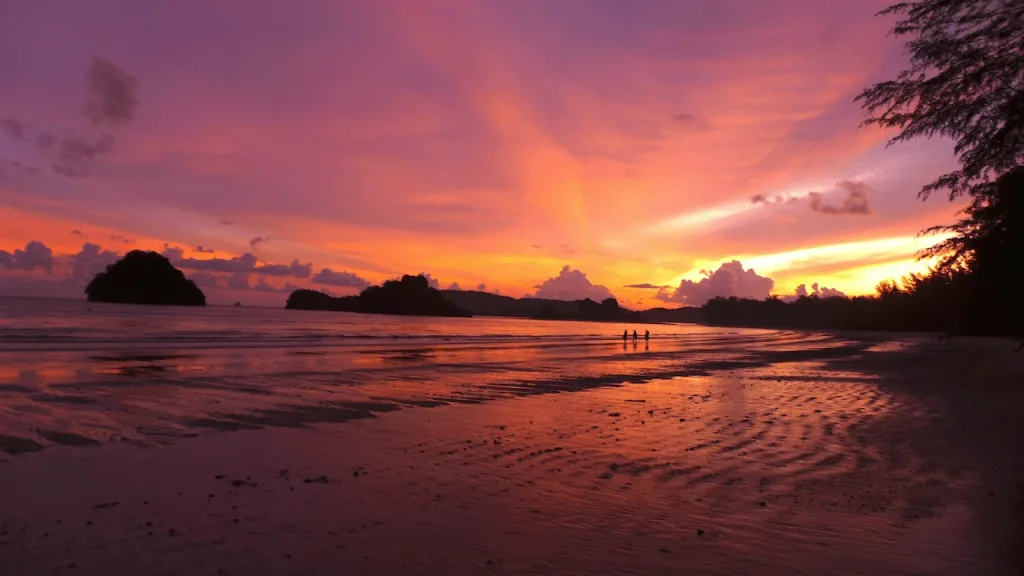
Step off the longtail onto Railay West and the first thing that hits is not solitude, but the number of people trying to photograph the same limestone wall. The cliffs still do their job, rising straight out of the sand with climbers clipped in above the palms, but the social feeds have done their job too. In the busier pockets, resort upkeep, construction noise, boat exhaust, and drainage smells break the fantasy before lunch. Railay is still worth seeing. It is not untouched.
Ao Nang, the main tourist base, feels like a beach town that learned its lines from Phuket, for better and worse. The main road is a practical strip of tour desks, massage signs, souvenir shops, pharmacies, scooter rentals, and restaurants selling the same safe dishes to sunburned people in flip-flops. That sounds grim, but it works when you need boats, laundry, dinner, cash, and a driver without turning the day into admin. Proper Southern Thai food exists here, just not always on the first menu facing the sea.
Krabi Town runs on a different rhythm. It has government offices, school traffic, riverfront evenings, market smoke, and everyday meals that have not been sanded down for beach tourists. The weekend walking street is the easiest way in, with grilled seafood, curry pastes, fruit shakes, plastic stools, and enough families eating dinner to remind you this is still a working provincial town. It will not give you a swim-before-breakfast fantasy. It gives you a better meal and a clearer look at the place behind the tour counters.
The islands are the headline reason many people come, and they are also where Krabi gets most compromised. Hong Island and the Four Islands route can turn into a boat pile-up in the dry season, with longtails arriving in bunches and everyone spilling onto the same sand at once. The roar and petrol smell are part of the soundtrack, especially around busy landings. Pay for an earlier private boat if silence matters, or accept the public version for what it is: beautiful limestone, shared with everyone.
Phi Phi sits slightly outside the mainland conversation because many travellers never actually stay there, they visit on a whistle-driven day tour and leave convinced they have seen it. Staying overnight changes the picture. The crowds thin after the last boats depart, the cliffs feel larger, and the place starts to make more sense. The trade-off is that Phi Phi has become its own tourist machine, packed with dive shops, bars, tour sellers and accommodation squeezed into a small strip of land. It is spectacular. It is rarely peaceful.
Krabi is not the best choice if you want polished resort isolation, empty beaches, or a town you can wander for hours without thinking about traffic. Klong Muang and Tubkaek are calmer bases with more space and softer evenings, but they trade that calm for fewer food choices and more dependence on taxis. Railay feels dramatic but boxed in once the day boats arrive. Ao Nang is useful, not lovely. Choose the friction you can live with.
Pi Leh Lagoon

Pi Leh Lagoon is the Phi Phi fantasy sold from every second tour desk in Ao Nang: green water, sheer limestone, boats floating inside a narrow bay like someone staged the Andaman for drone footage. The catch is that everyone else bought the same fantasy. From Krabi, you are not popping around the corner, you are committing to a full Phi Phi day with speedboat transfers, set stops, and a schedule built around moving bodies through famous places. The lagoon can still hit hard when the light drops onto the cliffs. It is just rarely yours.
The worst version is the midday group-boat squeeze, when engines idle, guides shout over each other, and the water fills with people trying to take the same photo from the same bow. Swimming rules and access can shift with park management, conservation limits, and sea conditions, so treat the lagoon as a timed stop rather than a beach day. If Pi Leh is the reason you are booking Phi Phi, pay for a smaller boat with an early start and fewer filler stops. Otherwise the closer Krabi islands give you better value for the day.
Pi Leh makes most sense in calm-sea months, when the crossing from Krabi is less punishing and tour boats run heavily. In rougher Andaman weather, the whole equation gets worse: more chop, less comfort, and a higher chance that the schedule turns into damage control. Families, weak swimmers, and anyone who hates being managed by a whistle should think hard before spending a Krabi day this way. The lagoon is beautiful, but the trip around it is the product.
Areas of Krabi
- Resorts, seclusion, sea views
Tubkaek Beach
Tubkaek Beach is the most secluded mainstream base in the Krabi area, facing the limestone islands of Phang Nga Bay. Most visitors spend their days between the beach, the pool and the restaurant rather than exploring nearby towns. Dining options outside resorts are limited and evenings become very quiet once the sun sets. That isolation is the point.
Good for: Quiet resort stays, couples, uninterrupted sea views.
Skip if: You want local nightlife, cheap eating, or lots of choice.
- Beach stays, resorts, families
Klong Muang Beach
Klong Muang Beach attracts travellers who want sand and sea without Ao Nang's constant churn of tour groups. The beach is wider, quieter and better suited to long afternoons than ticking off activities. Restaurants and resorts are spread out, which means most days involve scooters, taxis or pre-arranged transfers. It rewards travellers who are happy slowing down.
Good for: Beach time, family trips, quieter resort stays.
Skip if: You want nightlife, dense restaurant choices, or walkability.
- Island life, nightlife, diving
Phi Phi Islands
Phi Phi Islands are a completely different proposition from mainland Krabi, with no roads, constant boat traffic and a dense concentration of hotels, bars and dive shops. Days revolve around beaches, diving trips and boat excursions, while nights can be surprisingly loud around Tonsai Village. The scenery earns the reputation. The crowds do too.
Good for: Diving, island scenery, staying in the middle of the action.
Skip if: You want peace, easy logistics, or room to yourself.
- Island tours, nightlife, transport
Ao Nang
Ao Nang is Krabi's default base, chosen more for convenience than beauty. Longtail boats, tour desks, pharmacies, restaurants and transport connections sit along the same strip, making it easy to organise island days without much planning. The trade-off is constant tourist traffic, aggressive sales pitches and a beach that works better as a departure point than a destination. Most first-time visitors end up here.
Good for: Island hopping, first Krabi visits, easy transport connections.
Skip if: You want quiet beaches, local character, or a slower pace.
- Climbing, beaches, scenery
Railay Beach
Railay Beach sits behind limestone cliffs that cut it off from the road network, so every arrival comes by boat. West Railay and Phra Nang deliver some of southern Thailand's most dramatic coastal scenery, while East Railay handles most of the practical side of daily life. Rock climbers get the most value from staying here because the cliffs become part of the routine rather than a day trip. Everyone else pays for the views through crowds and resort-focused dining.
Good for: Rock climbing, beach scenery, staying beside the cliffs.
Skip if: You want road access, local restaurants, or flexibility.
- Local food, markets, riverside
Krabi Town
Krabi Town is where the province actually lives and works, with riverfront parks, local markets and restaurants aimed at residents rather than beach tourists. Evenings revolve around food stalls and waterfront walks instead of beach bars. The downside is obvious: every beach and island day starts with transport before the fun begins. Stay here for Thai food and breathing room, not sea views.
Good for: Local food, markets, a less tourist-focused stay.
Skip if: You want to walk from your room to the beach.
Frequently Asked Questions
Planning & moving around
-
How many days do I need in Krabi?
Three full days is the practical minimum: one Railay or beach day, one island day, and one inland or town day. Four or five days feels better because weather, boat timing, and heat can ruin a packed plan. Longer than a week starts repeating unless you climb, dive, work remotely, or use Krabi as a base for nearby islands.
-
What are the best day trips from Krabi?
Hong Island is the cleanest all-round boat day if you want cliffs, water, and less time in transit than Phi Phi. The Four Islands tour is closer and easy to arrange, but it can feel like everyone is being moved between the same beaches. Phi Phi and Pi Leh Lagoon are worth it only if you accept a longer, more managed day.
-
Which Krabi markets are worth visiting?
Krabi Walking Street in Krabi Town is the best first pick, running on Friday, Saturday, and Sunday evenings with food stalls, snacks, crafts, and a local stage scene. Maharat Market is better for a daytime look at produce and daily life, not souvenir browsing. Ao Nang's market scene is easier from the beach strip but more tourist-facing.
-
Which ride-hailing app works in Krabi?
Grab is the main app to have in Krabi for cars, some motorbike taxis, and food delivery. It works best around Ao Nang, Krabi Town, and the airport, but early morning airport runs are less reliable. For flights, late arrivals, and families with bags, a hotel car or prebooked taxi is still safer.
-
Where can I store luggage in Krabi?
Most hotels in Ao Nang and Krabi Town will hold bags after checkout for a few hours. Some tour agencies and travel desks also store luggage if you are taking a late ferry or bus, but do not leave passports, cards, or laptops in a back room. Airport storage can help, but check hours before building a plan around it.
-
Is Krabi good for digital nomads?
Krabi works for a slow stay if you are happy working from your room or cafes, not if you need a serious coworking scene. Ao Nang has the easiest daily setup, while Ko Lanta is stronger for dedicated coworking nearby. The trade-off is clear: better limestone and sea access, weaker work infrastructure than Chiang Mai.
-
Do I need a VPN in Krabi?
You do not need a VPN to access most normal websites in Krabi. It is still useful for banking, streaming accounts, and public Wi-Fi in hotels or cafes. Treat it as a privacy tool, not a way around a local internet problem.
-
What mistake do first-time visitors make in Krabi?
They book Ao Nang thinking it is the dream beach, then spend the trip disappointed that it feels like a tour base. Use Ao Nang for logistics, or choose Railay, Klong Muang, or Tubkaek if the room setting matters more than easy transport. The right base fixes half the trip.
-
What do tourists get wrong about Krabi?
They treat Krabi as one beach destination, when it is really a set of bases with very different compromises. Ao Nang is practical, Railay is dramatic but boxed in, Krabi Town has the better food, and Tubkaek is quiet because it is isolated. Pick the base before picking the boat tour.
-
When should I avoid island-hopping from Krabi?
Avoid building the trip around island-hopping in the roughest part of the Andaman monsoon, especially September and October. Boats still run on some days, but rough seas, messy landings, and cancellations change the whole value of the trip. If boat days are the point, choose the calmer dry season.
-
Is Krabi better with a car or scooter?
A scooter is useful only if you are licensed, confident, and staying somewhere with awkward short hops. Most visitors are better with Grab, hotel cars, songthaews, boats, and the occasional taxi. Families, nervous riders, and anyone drinking at dinner should skip scooters entirely.
-
Is Phi Phi worth a day trip from Krabi?
It is worth it only if Phi Phi, Maya Bay, or Pi Leh Lagoon is a priority and you accept a long, managed boat day. The scenery is real, but so are the crowds, fixed stops, engine noise, and limited freedom. If you just want a good Krabi boat day, Hong Island is usually the cleaner choice.
-
How do you get from Krabi Airport to Ao Nang?
The easiest options are a pre-booked hotel transfer, airport taxi, shared minivan, or Grab if cars are available. Shared vans are cheaper but slow because they loop through hotels, while a private car is better if you land late or carry dive bags. Do not plan a tight ferry or tour connection straight after landing.
-
Can you visit Railay without staying overnight?
Yes, Railay is easy as a day trip from Ao Nang by longtail boat. The catch is timing: late afternoon return boats can bunch up, and rough weather makes the ride wetter and less pleasant than people expect. Staying overnight only makes sense if you want climbing, quieter mornings, or a break from Ao Nang's road traffic.
-
Is Krabi better before or after visiting Koh Lanta?
Krabi works well before Koh Lanta if you want to get the big boat tours and Railay scenery done first, then slow down. Do it the other way if you want Krabi's airport and easier transport at the end of the trip. In rough-weather months, build slack into the ferry day instead of treating it like a city train.
Safety & medical
-
Is it safe to walk around Krabi at night?
Ao Nang and Krabi Town are usually fine after dark on lit main streets with other people around. The weak points are side lanes, beach edges, and quiet roads where scooters and poor lighting make walking feel worse than the crime risk. Use Grab or a hotel taxi after drinking or when your room is set back from the main strip.
-
Are there areas in Krabi I should avoid?
There is no single no-go zone that most visitors need to plan around. The places to treat carefully are dim side streets behind Ao Nang's main road, isolated beach paths after dark, and any road where scooters are moving fast without pavements. Railay also feels different late at night because it is boat-access only.
-
Is Krabi LGBTQ+ friendly?
Krabi's tourist areas are usually low-friction for LGBTQ+ travellers, especially in Ao Nang, Railay, and resort settings. It is not a queer nightlife destination, and public affection can draw looks in more local areas. Book rooms normally and use the same judgement you would in any smaller Thai beach province.
-
What happens if I get sick in Krabi?
For routine problems, pharmacies in Ao Nang and Krabi Town can handle basics such as stomach medicine, painkillers, rehydration salts, and minor skin issues. For more serious care, Krabi Nakharin International Hospital is the main private option used by travellers, while Krabi Hospital is the public option. Call 1669 for medical emergencies.
-
Do I need travel insurance for Krabi?
Yes, especially if you plan to ride scooters, climb, snorkel, dive, or take boats in rougher weather. Standard health coverage from home may not cover evacuation, private hospitals, or activity accidents. Check the scooter and adventure-sport exclusions before you buy, not after the crash.
-
Can you drink the tap water in Krabi?
No. Use bottled or filtered water for drinking, and use the same for brushing teeth if your stomach is sensitive. Ice in busy restaurants and hotels is usually factory-made, but avoid suspicious ice from quiet stalls if it looks hand-chipped or dirty.
-
Are mosquitoes or dengue a problem in Krabi?
Mosquitoes are part of the deal, especially near mangroves, gardens, drains, and after rain. Dengue exists in Thailand, so bites are not just an irritation. Use repellent, cover up around dusk, and take fever after mosquito exposure seriously.
-
Are Krabi's beaches safe for swimming?
Ao Nang, Railay, Phra Nang, and Klong Muang can be fine for swimming in calm weather, but conditions change fast during the monsoon. Watch for red flags, boat lanes, jellyfish warnings, and sharp coral underfoot. The bigger mistake is assuming a pretty bay means lifeguards, clear signage, and rescue cover.
Laws & local norms
-
Do you need a licence to rent a scooter in Krabi?
Rental shops may hand over a scooter without checking much, but legality and insurance are a different story. You need a proper motorcycle licence and an international driving permit that covers motorcycles. If you crash without the right licence, fines are the small problem and medical bills can become yours.
-
What are the drug laws in Krabi?
Thailand's drug laws are strict, and Krabi's tourist setting does not make them softer. Cannabis rules have shifted, but public smoking, transport, and recreational use can still create legal trouble. Hard drugs carry severe penalties, including prison, and tourists do get caught in beach towns.
-
Can I vape in Krabi?
No. Thailand bans possession and use of vapes, e-cigarettes, pods, e-liquids, and heat-not-burn devices, with confiscation, fines, detention, and court proceedings possible. Do not bring one for personal use and assume it will be ignored.
-
What is the dress code in Krabi?
Beachwear is normal on Ao Nang, Railay, and resort beaches, but it looks sloppy once you leave the sand. Cover shoulders and knees at temples such as Tiger Cave Temple, and put on a shirt before entering shops, restaurants, or local markets. Krabi is relaxed, not indifferent.
Culture & etiquette
-
How much English is spoken in Krabi?
English is common in Ao Nang, Railay, hotels, tour offices, dive shops, and airport transport counters. It gets thinner in Krabi Town markets, local clinics, villages, and cheaper eateries. Learn a few Thai basics and use translation apps for menus, pharmacy questions, and taxi details.
Food & drink
-
Where do locals eat in Krabi?
Krabi Town gives you better odds than the Ao Nang beach strip, especially around markets, shophouse restaurants, and places away from souvenir traffic. Look for curry rice, kanom jeen, grilled seafood, and tables full of Thai families rather than laminated menus in five languages. Ao Nang has good food too, but you have to work harder for it.
-
What local foods should I try in Krabi?
Start with Southern Thai curries such as gaeng som and khua kling if you can handle chilli. Kanom jeen with curry and fresh herbs is a good market breakfast or lunch, and seafood is strongest when grilled or fried simply. Tourist-strip pad Thai is not the thing to chase here.
-
Is Krabi vegan-friendly?
Krabi is workable for vegans in Ao Nang, Railay, and Krabi Town, but you need to ask clearly about fish sauce, oyster sauce, shrimp paste, and egg. Jay food stalls and vegetarian restaurants help, especially around town and markets. Thai food can adapt well, but not every vegetable dish is actually vegan.
-
Is Krabi halal-friendly?
Yes, Krabi is one of Thailand's easier beach destinations for Muslim travellers. Halal restaurants, mosques, and Muslim-owned food stalls are common around Krabi Town, Ao Nang, and nearby villages. Alcohol-heavy beach bars still exist, but halal meals are not hard to find.
-
Is seafood in Krabi worth it near the beach?
Beachfront seafood in Ao Nang can be fine, but the setting often carries more of the bill than the cooking. You will usually eat better by going slightly back from the sand or into Krabi Town, where turnover is high and the menu has not been flattened for tourists. If every table is ordering pizza and cocktails, that is your answer.
Families & kids
-
Is Krabi good for travel with kids?
Krabi can work well with kids if you base in Ao Nang, Klong Muang, or a resort with a pool and keep boat days short. The hard parts are heat, longtail boarding, fumes, crowds, and island tours that run too long for small children. Build in beach and pool downtime instead of trying to prove the itinerary.
-
Is Krabi manageable with a stroller or buggy?
A stroller works for short stretches in Ao Nang and Krabi Town, but pavements break up fast and road crossings are awkward. Railay sand, longtail boats, piers, and beach paths make wheels a nuisance. Bring a baby carrier for islands, temples, and any day involving boats.
-
What happens if a child gets sick in Krabi?
Use a pharmacy first for minor fever, bites, dehydration, or stomach trouble, since staff are used to traveller basics. For anything that feels serious, go to Krabi Nakharin International Hospital or ask your hotel to call ahead. Carry familiar children's medicine because Thai brands and dosing labels may not match what you use at home.
-
Where should families stay in Krabi?
Ao Nang is easiest for food, taxis, shops, and short boat access, especially with older kids. Klong Muang is calmer and better for pool-heavy days, but you need taxis for most plans. Railay is more awkward with small children because every transfer involves sand, luggage, and a boat.
-
What works for a half-day with young kids?
Keep it simple: Ao Nang or Klong Muang beach in the morning, lunch close to the room, and pool time after heat builds. Railay can work as a half-day if you leave the stroller behind and return before everyone is tired. Avoid full-day island tours with young kids unless they already handle boats well.
Staying longer
-
Which area of Krabi should I stay in?
Stay in Ao Nang if you want the simplest base for boats, food, taxis, and tour counters. Railay suits climbers and people who want cliffs outside the room, but every arrival and departure involves a boat. Krabi Town is better for food and breathing room, while Klong Muang and Tubkaek are calmer beach bases with fewer walk-out options.
After dark
-
What changes after dark in Krabi?
Ao Nang gets louder after dark, with restaurants, bars, live music, street food, and tour sellers still working the main strip. Railay turns into a beach-bar scene once the day boats leave, while Krabi Town is quieter except around market nights. It is social, but not on the scale of Phuket.
-
Where do Krabi nights go wrong?
Most bad nights involve alcohol, scooters, dark roads, or leaving valuables in the wrong place. Ao Nang's main strip is manageable, but side roads and beach edges get less forgiving late. Take a car after drinking and do not ride back to a set-back hotel on a rented scooter.
-
Where is the best nightlife in Krabi?
Ao Nang is the main nightlife base, with live music bars, sports bars, and late drinks along and behind the beach road. Railay has a looser backpacker beach-bar mood, especially after the last day-trippers leave. Krabi Town is better for markets and a quiet drink than a proper night out.
Adventure
-
Can beginners try rock climbing in Railay?
Yes, Railay is one of the easier places in Southeast Asia to book a beginner climbing session. Go with a proper climbing school, not a random beach offer, and check that helmets, harnesses, and belaying look professional before you commit. The heat is the real grind, so morning sessions are less punishing.
-
Are bioluminescent plankton tours in Krabi worth it?
They can be worth it on a dark, calm night, but they are easy to oversell. Moonlight, rain, boat traffic, and water clarity all affect what you see, so do not expect the glowing blue scenes from edited videos. Treat it as a bonus on an evening boat trip, not the whole reason to book one.
Accessibility
-
Is Krabi suitable for travellers with limited mobility?
Krabi is workable in parts, but not easy. Ao Nang has the most practical base setup, while Railay requires boat transfers, sand, steps, and uneven paths that can turn a simple outing into a full operation. Island tours are the hardest piece because boarding longtails often means wading through water or climbing over the bow.