
Phuket Right Now
Ongoing waste management issues mean the island's landfill is at capacity, leading to foul odors and environmental concerns for residents.
Cincity at Café del Mar Phuket · Café del Mar Phuket, Kamala
Hardt Antoine at Café del Mar Phuket · Café del Mar Phuket, Kamala
Asalha Bucha Day
Buddhist Lent Day (Khao Phansa)
Interest in travel to Phuket remained about the same as a year ago, suggesting demand is holding steady.
Best time to visit
Off-season🌧️Monsoon season
July brings frequent rain showers and high humidity, with average highs around 31°C (88°F). Be aware of the monsoon season, which poses a medium risk of disruption. Pack accordingly and be prepared for potential delays due to weather.
SCORE BY MONTH
Visit Phuket between November and February for the driest weather and pleasant temperatures around 31-33°C (88-91°F). Avoid May through October due to the monsoon season, which brings heavy rain and rougher seas.
Visitor data: Tourism Authority of Thailand (TAT) Phuket Visitor Statistics 2024
Day-to-day in Phuket
Walkability
8/100
Phuket is walkable only in short beach-town pockets; crossing between areas usually means a car, scooter, or app ride.
Tourist strips have usable pavements; side roads quickly turn broken, narrow, or parked over.
Kata, Karon, Patong, and Old Town work locally, but the island does not stitch together on foot.
Fast scooters, blind curves, and weak crossings make walking beside roads feel exposed.
Heat and humidity make twenty-minute walks uncomfortable for most of the year, and wet months pile on top.
-
Monthly cost
$1,379 / month
AFFORDABLESolo mid-range stay including rent, daily eating out, groceries, and routine costs.
-
MUAY THAI
Muay Thai shapes daily life for a lot of longer-stay travellers in Phuket, especially around Soi Ta Iad. Train in the morning, eat nearby, recover in the afternoon, then repeat until the novelty wears off or your shins do.
-
Coworking
$136 / month
AFFORDABLECoworking is useful but uneven, with the strongest setup around Rawai and Chalong rather than the beach resort strips. Grind Time is the safest bet for proper desks, calls, air-conditioning, and nomad traffic; cafes fill the gaps, but they are not reliable for full workdays.
-
Gym
$48 / month
AFFORDABLEChalong's Soi Ta Iad is Phuket's serious training strip, with Tiger Muay Thai, Unit 27, Titan Fitness, and smaller fight gyms packed along one road. Elsewhere you get normal commercial gyms, but the island's fitness scene is built around drop-in Muay Thai, strength work, and short training camps.
Need to Know
- Population
- 430,000 DOPA · 2024 (registered)
- Currency
- Thai baht (THB)
- Language
- Thai; English common in tourist areas
- Tap water
- Not safe to drink
- Time zone
- ICT (UTC+7)
- Power plug
- Type A / B / C / F / O, 220V
- Dialling code
- +66
- Driving side
- Left
- Tipping
- Not mandatory; round up or leave 10% at restaurants if service is not included.
- Internet
- Fast mobile data in main beach towns and Phuket Town; hotel Wi-Fi can be throttled.
- Emergency
- 191 police, 199 fire, 1669 ambulance, 1155 tourist police.
When not to go
-
Avoid the rough Andaman monsoon
May – Oct · peaks SepThis is the wrong window if your Phuket trip depends on clear west-coast swimming, snorkelling, or easy boat days. Red flags go up, sea visibility drops, and Phang Nga or island tours lose their point when rain and swell take over the schedule. Pick a Gulf island or a drier regional beach trip instead.
Phuket itineraries
Upcoming Events & Holidays
Upcoming events — next 30 days
On the horizon
Public holidays & observances — next 12 months
Dates are researched and checked, but events move. Always confirm with the official source before you book anything around them.
Getting To Phuket
-
From Phuket International (HKT)
35 km north of Patong Beach
HKT is Phuket's main gateway and the only card most fly-in travellers need. Grab is the easiest app option from the airport, Bolt and inDrive can be cheaper but less clean at pickup, and the Smart Bus is slow but useful if your hotel sits near the west-coast route. Avoid fixing a street-taxi price before checking the official airport counters or apps.
Direct flights to Phuket
Serves 45 direct destinations, 37 international and 8 domestic, about 129 flights a day.
International 37- Bangkok BKK Thailand
 Bangkok Airways
  Thai Airways International
  Thai Vietjet Air 24/day
 - Bangkok DMK Thailand
 Nok Air
  Thai AirAsia
  Thai Lion Air 20/day
 - Singapore SIN Singapore
 Scoot
Scoot  Singapore Airlines 9/day
 - Ko Samui USM Thailand Bangkok Airways 9/day
- Kuala Lumpur KUL Malaysia AirAsia
 Malaysia Airlines
  Malindo Air 8/day
 - Shanghai PVG ChinaS Shanghai Airlines
 Spring Airlines 6/day
 - Abu Dhabi AUH United Arab Emirates
 Etihad Airways 5/day
 - Chiangmai CNX Thailand Thai AirAsia Thai Vietjet Air 4/day
- New Delhi DEL India
 Air India
  IndiGo 4/day
 - Hong Kong HKG Hong Kong
 Cathay Pacific
  Hong Kong Express 3/day
 - Dubai DXB United Arab Emirates
 Emirates 3/day
 - Bangalore BLR India Air India Express IndiGo S Starlight Airline 3/day
- Mumbai BOM India IndiGo S Starlight Airline 3/day
- Chengdu TFU China
 Air China S Sichuan Airlines Spring Airlines 1-2/day
 - Doha DOH Qatar
 Qatar Airways 1-2/day
 - Seoul ICN South Korea
 Asiana Airlines
  Korean Air 1-2/day
 - Sharjah SHJ United Arab EmiratesA Air Arabia1-2/day
- Muscat MCT OmanO Oman Air1-2/day
- Ho Chi Minh City SGN Vietnam VietJetAir
 Vietnam Airlines 1-2/day
 - Almaty ALA KazakhstanA Air Astana~1/day
- Beijing PEK China Air China ~1/day
- Bali DPS Indonesia Indonesia AirAsia ~1/day
- Hat Yai HDY Thailand Bangkok Airways ~1/day
- Penang PEN Malaysia AirAsia F Firefly ~1/day
- Perth PER Australia
 Jetstar ~1/day
 - Rayong UTP Thailand Bangkok Airways ~1/day
- Guangzhou CAN China
 China Southern Airlines ~1/day
 - Kolkata CCU India IndiGo 5/week
- Melbourne MEL Australia Jetstar 5/week
- Kunming KMG China
 China Eastern Airlines 4/week
 - Istanbul IST Türkiye
 Turkish Airlines 3/week
 - Shenzhen SZX China Spring Airlines 3/week
- Sydney SYD Australia Jetstar 3/week
- Tel Aviv Yafo TLV IsraelE El Al3/week
- Taipei TPE Taiwan
 Tigerair Taiwan 2/week
 - Tashkent TAS UzbekistanU Uzbekistan Airways2/week
- Ahmedabad AMD IndiaR Redstar Aviation1/week
Within Russia 8
- Moscow SVO
 Aeroflot P Pegas Fly ~1/day
 - Irkutsk IKT Aeroflot 3/week
- Khabarovsk KHV Aeroflot 3/week
- Krasnoyarsk KJA Aeroflot P Pegas Fly 3/week
- Novosibirsk OVB Aeroflot P Pegas Fly 3/week
- Ekaterinburg SVX Aeroflot 2/week
- Saint LED Aeroflot 2/week
- Vladivostok VVO Aeroflot 2/week
Nonstop routes only. Flights per day are an average, each way. Data: AeroDataBox, updated July 2026.
Visa rules apply at the country level. See visa advice for Thailand. -
-
Ferry from Krabi
Klong Jilad Pier to Rassada Pier
This route makes sense if you are already in Krabi, Ao Nang, Railay, or Phi Phi and want to avoid backtracking by road. Rassada Pier lands on Phuket's east side, so budget another car ride to Patong, Kata, Karon, Rawai, or the airport. In rough wet-season seas, take the road route instead of pretending the boat is the easy option.
-
Bus from Bangkok
Southern Bus Terminal to Phuket Bus Terminal 2
This is the real overland budget route from Bangkok, not the train. Lignite, Sombat Tour, and Transport Co run long direct services to Phuket Bus Terminal 2, where you still need a taxi, songthaew, or app ride to the beaches. Pick VIP if you care about sleep, and do not schedule a boat trip straight after arrival.
-
Road transfer from Krabi
Krabi Town or Ao Nang to Phuket
This is the better Krabi option when seas are rough, luggage is heavy, or your Phuket hotel is far from Rassada Pier. Private cars and shared vans cross by road over Sarasin Bridge, then continue to Phuket Town, Patong, Kata, or the airport. It is less romantic than the ferry and often more useful.
Safety Advice
Phuket is generally safe for tourists, with violent crime being rare. Petty theft like pickpocketing can occur in crowded areas, and beach safety is important due to strong currents, especially during monsoon season. Be aware of your surroundings and use common sense to ensure a safe visit.
Common Scams
-
Jet ski damage claims
HIGH RISKTrigger:A beach vendor offers a quick jet ski ride
After the ride, the operator points to old scratches or dents and demands repair money. Patong, Kata, and Karon are the usual beach zones for this trap.
How to avoid: Do not rent jet skis from beach vendors. If you ignore that, film the whole craft with the operator visible before you ride.
-
Police bribe demands
HIGH RISKTrigger:A roadside stop turns into a cash demand
Tourists on scooters get stopped around Patong, Chalong, and Phuket Town for helmets, licences, or minor road issues. Some officers push for on-the-spot cash instead of an official fine.
How to avoid: Carry a motorcycle-valid international driving permit and wear a helmet. Ask to pay the official fine at the police station and get a receipt.
-
Airport taxi overcharging
MEDIUM RISKTrigger:A driver quotes a fixed fare outside arrivals
Drivers and minivans at HKT can quote inflated fares, then some minivans detour to a travel desk selling tours or hotel changes. The first ride is where tired arrivals overpay fastest.
How to avoid: Compare Grab, Bolt, inDrive, official airport counters, and your hotel transfer before accepting. Do not discuss tours or bookings at a roadside travel desk.
-
Timeshare or tour touts
MEDIUM RISKTrigger:A scratch card or survey promises a prize
The prize turns into a long holiday club or timeshare pitch, often around Patong, Kata, and Karon. The pressure comes after you have already lost an hour.
How to avoid: Decline scratch cards, surveys, free gifts, and prize invitations. Real discounts do not require sitting through a sales pitch.
-
Bar girl inflated bills
MEDIUM RISKTrigger:A friendly stranger invites you into a bar
Someone orders drinks on your tab, disappears, and leaves you with an inflated bill. Refusing to pay in Patong nightlife venues can bring aggressive staff or bouncers into it.
How to avoid: Do not follow strangers into bars. Check prices first, pay each round as it arrives, and leave before the bill turns into a negotiation.
Mistakes to Avoid
-
Riding without a helmet
SERIOUS CONSEQUENCEA short scooter hop can still end in a police fine, road injury, and an insurance dispute. Phuket's hills, blind bends, and fast local traffic punish casual riders.
Fix: Wear a properly fastened helmet and carry a motorcycle-valid international driving permit. Do not ride if your travel insurance excludes scooters.
-
Ignoring beach red flags
SERIOUS CONSEQUENCEWest coast beaches get strong rip currents during the southwest monsoon, especially at Patong, Karon, Kata, and Surin. Ignoring red flags leads to drownings.
Fix: Do not enter the water when red flags are up. Swim between lifeguard flags or use the hotel pool instead.
-
Not bargaining at markets
MINOR CONSEQUENCETourist markets and beach stalls often open with padded prices. Paying the first number is a small but avoidable overpay.
Fix: Negotiate politely at markets and street stalls. Treat malls, convenience stores, and restaurants as fixed price.
-
Drinking tap water
MINOR CONSEQUENCEPhuket tap water is not a safe drinking default because pipes, tanks, and local storage are the weak points. Stomach trouble can wreck a beach week fast.
Fix: Drink bottled, filtered, or boiled water. Use the same for brushing teeth if your stomach is sensitive.
-
Over-tipping or under-tipping
MINOR CONSEQUENCETipping is not mandatory, and many tourist restaurants already add service charge. Double-tipping is common because visitors do not read the bill.
Fix: Check for service charge first. If none is added and service was good, round up or leave a modest tip.
-
Inappropriate temple attire
Bare shoulders and knees are disrespectful at Buddhist temples and can get you refused entry. This applies to men and women.
Fix: Carry a sarong or wear clothing that covers shoulders and knees. Remove hats and shoes where signs tell you to.
Money & Payments
Carry cash for markets, use cards in bigger venues, and always pay in Thai baht.
-
Carry beach-town cash
Cash still matters at night markets, street food stalls, beach vendors, longtail counters, and smaller shops in Rawai, Kata, and Karon. Keep small Thai baht notes for taxis, tips, and day-trip extras.
-
Cards work in big places
Visa and Mastercard work in hotels, malls, beach clubs, and larger restaurants around Patong, Kata, Phuket Town, and Central Phuket. Amex and JCB are patchier, and some small hotels or tour desks add a card surcharge.
-
ATMs are everywhere
Bangkok Bank, Kasikorn, SCB, Krungthai, and Krungsri ATMs are easy to find at 7-Eleven stores, bank branches, Jungceylon, Central Phuket, and main beach roads. Use bank-attached machines when possible, not lonely roadside ATMs near bars.
-
ATM fees sting
Foreign-card withdrawals usually trigger a Thai ATM fee around THB 220-250 (USD 6-7) per transaction. Most machines cap withdrawals around THB 20000-30000 (USD 560-840), so take fewer larger withdrawals if your bank limits allow it.
-
Reject DCC
ATMs and card terminals often ask whether to charge you in your home currency instead of Thai baht. Choose Thai baht every time, because dynamic currency conversion is a ripoff exchange rate dressed up as convenience.
-
Exchange away from HKT
Phuket airport exchange counters are convenient and usually worse value. Compare booths in Patong, Kata, Karon, and Phuket Town, and bring clean notes because damaged bills get rejected or discounted.
-
PromptPay blocks tourists
PromptPay QR is everywhere for locals, but most foreign visitors cannot use it without a Thai bank account. Some merchants accept card-linked or cross-border QR apps, but small vendors often show personal PromptPay codes that tourists cannot pay.
-
International Transfers
To send money to a bank account in Thailand, for things like rent or day-to-day expenses, services like Wise or Remitly usually offer better rates than traditional banks and faster delivery.
You'll typically need the recipient's full name, account number, and SWIFT/BIC code. Some banks may also require a local address.
Costs in Phuket
Phuket can be surprisingly affordable for visitors, especially outside the peak tourist season, though the cost of living for locals is higher due to the influx of tourism. You'll find budget-friendly street food and guesthouses, but imported goods and upscale dining will add up quickly.
Save money?
Sign up for our guide on how to save money on your next trip.
SIM Cards & Data
Best option for most travellers: an eSIM you set up before you arrive. You'll be online the moment you land, with no airport queue and no tourist pricing.
Travel eSIMs Connect the second you land. Zero hassle. Skip the airport queue and paperwork. Activate before you fly and land connected. Find the best eSIM →Prefer a local SIM?
Phuket boasts widespread 4G coverage, with 5G readily available in major tourist hubs like Patong, Phuket Town, and around Central Festival. Network speeds are generally reliable for essential travel needs such as navigation, ride-hailing, messaging, and streaming video.
What Phuket is Like
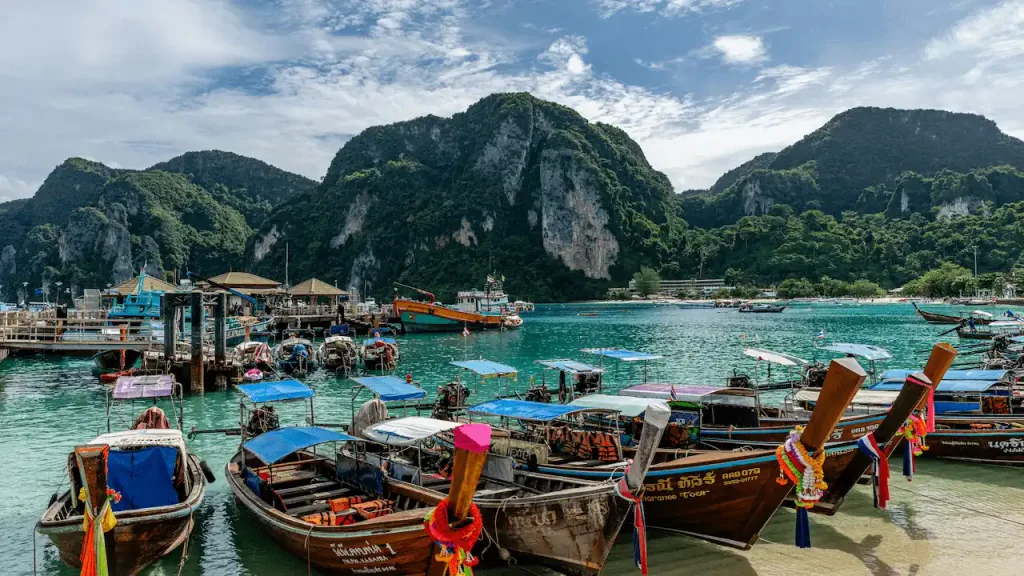
The first Phuket lesson usually arrives between the airport and the beach, somewhere in the slow grind past minivans, scooter swarms, concrete shopfronts, and billboards selling villas to people who are not going to live in them. The island is better organised than most Thai islands, which is exactly why so many people come, but that ease has a cost: traffic thickens fast, water and road systems strain under peak-season demand, and the west coast can feel built for arrivals rather than residents. Phuket is good-looking, useful, and overloaded. All three are true.
The beaches are still the headline reason people book Phuket, and pretending otherwise is just travel-writer vanity. Kata works for families who want sand, restaurants, and a hotel pool within easy reach; Karon gives you a longer sweep of beach with less immediate nightlife pressure; Nai Harn feels softer and more local at the edges; Mai Khao has space but little walkable life. Patong is the loudest version of the island, with jet skis, beach chairs, touts, music, and the sense that every minute has already been priced. Choose the beach, not just Phuket.
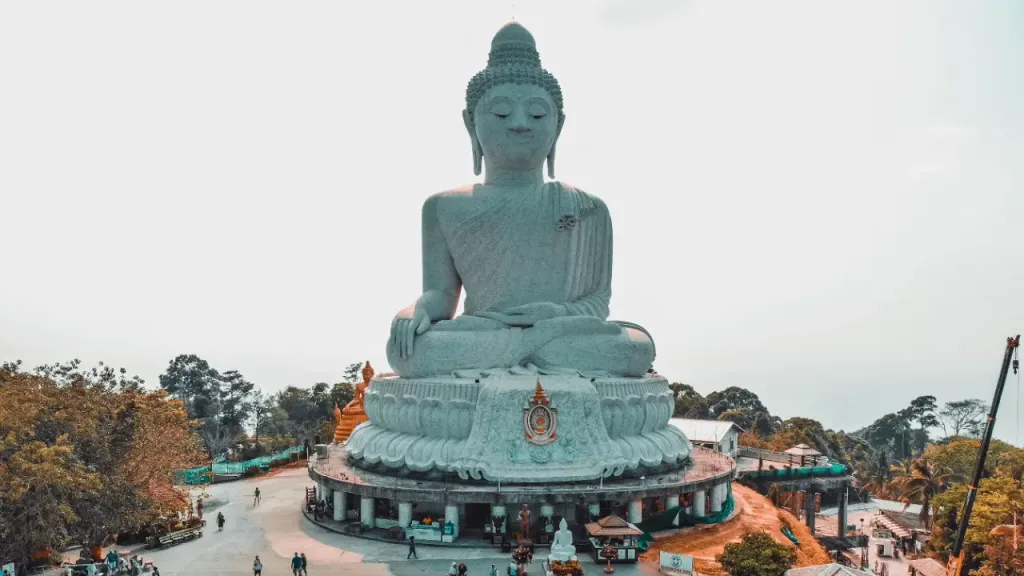
Old Phuket Town is where the island proves it has more going on than resort sprawl. Thalang Road, Dibuk Road, and Soi Rommanee still have the Sino-Portuguese bones, shrine smoke, Hokkien noodle shops, and shophouse cafes that make a few hours inland worth the taxi argument. The Sunday walking street is fun if you arrive hungry and patient, but it is not some secret local ritual; it is a crowd with better snacks than most crowds. Look for mee Hokkien, moo hong, o-aew, and old family-run counters before you waste appetite on beach pasta.
Getting around is the part that ages a Phuket trip fastest. The map makes Patong, Kata, Rawai, Phuket Town, and Bang Tao look close enough to stitch together casually, then the hills, one-way roads, rain, and evening traffic remind you that islands can still behave like suburbs. Scooters solve distance and create other problems, especially for people who learned to ride five minutes after landing. Ride-hailing apps help, but not every pickup is smooth and not every driver wants the short fare. Base choice is the real transport decision.
Nightlife is not only Bangla Road, but Bangla Road still sets the island's volume knob. Patong is built for late bars, bottle menus, neon, and bad decisions made in flip-flops; Bang Tao and Boat Avenue chase a cleaner beach-club crowd; Rawai and Nai Harn are better for smaller bars, sunset beers, and leaving before the night turns stupid. Phuket is not for travellers who need untouched quiet or local prices at every turn. It is for people who want comfort, beaches, choice, and enough friction to keep the place honest.
Patong Machine
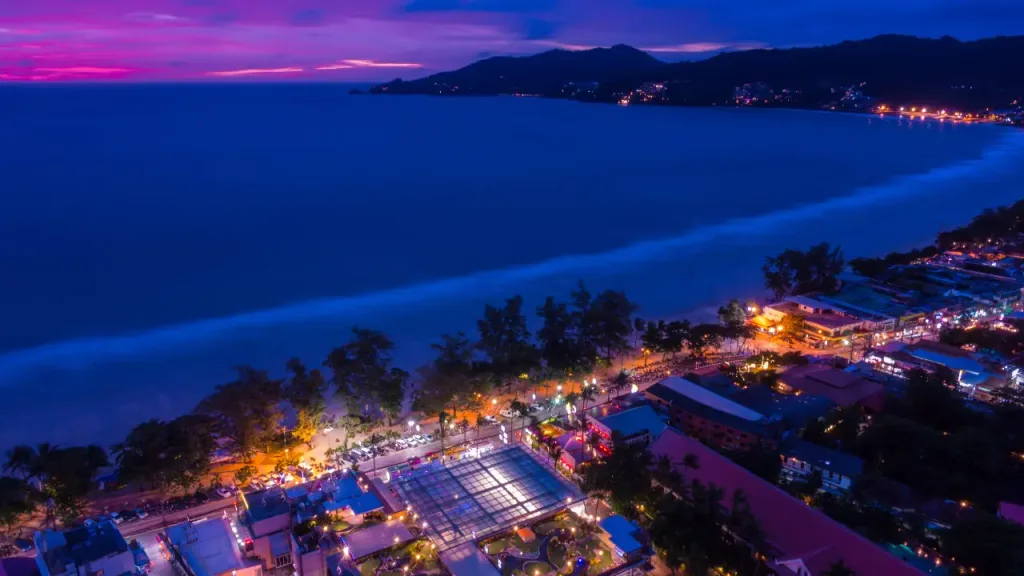
Bangla Road does not ease you into the night; it hits like a generator starting behind your chair. The strip runs on LED glare, beer towers, tout cards, wristbands, bass leaking from every doorway, and men walking too slowly because someone has promised them a better version of the same bar. It is not subtle, and it is not trying to be. If you came for noise, flirting, cheap theatre, and the feeling that the beach day has been fed into a blender, Patong delivers exactly that.
The mistake is booking beside it because the map showed a beach and a short walk to restaurants. Patong after dark is a machine designed to keep you moving, buying, drinking, arguing over bills, and saying yes to things that looked sillier in daylight. That does not make it worthless; one lap of Bangla Road is useful if you want to understand why Phuket has the reputation it does. Stay alert, pay as you go, and leave before the night starts making decisions for you.
Patong works best as a controlled visit, not a default base. Eat elsewhere, arrive late enough that the show has started, walk the strip with your wallet buried, then get out before the taxi stand becomes part of the entertainment. Couples chasing quiet, families with early mornings, and anyone who thinks beach towns should smell mostly of salt will be happier sleeping in Kata, Karon, Nai Harn, or Rawai. Patong is not the whole island. It is the volume knob.
Areas of Phuket
- Families, surf, beach
Kata
Kata is the easiest west-coast base for travellers who want beach time without Patong's volume. The sand, restaurants, surf schools, family hotels, and tour desks are close enough to keep days simple. It is still a tourist strip, with traffic on the main road and crowded beach patches when the weather is good. Choose it for ease, not discovery.
Good for: Beach days, families, beginner surf, simple dining.
Skip if: You want a quiet local neighbourhood or empty sand.
- Resorts, beach clubs, dining
Bang Tao
Bang Tao is Phuket's polished long-stay and resort belt, built around a wide beach, Laguna hotels, Boat Avenue, and beach clubs that look cleaner than they feel cheap. It works well if you want restaurants, gyms, villas, and a less chaotic version of the west coast. The area spreads out quickly, so walking only works within small pockets. Expect taxis, scooters, or hotel shuttles to become part of the routine.
Good for: Resort stays, beach clubs, villas, longer stays.
Skip if: You want cheap stays, local streets, or easy walking everywhere.
- Long beach, resorts, space
Karon
Karon gives you one of Phuket's broadest west-coast beaches and more breathing room than Kata or Patong. The catch is the road: many hotels sit behind traffic rather than directly on the sand, so check the exact block before booking. It has restaurants, massage shops, and resort comforts, but little reason to stay out late. This is beach holiday territory, not a scene.
Good for: Long beach walks, resort stays, calmer west-coast holidays.
Skip if: You want doorstep nightlife or guaranteed beachfront access.
- Quiet beach, swimming, sunsets
Nai Harn
Nai Harn is the softest main beach base in south Phuket, with a sheltered feel, a lake behind the sand, and hills closing in around the bay. It stays calmer than Patong, Kata, or Karon, though the beach still fills when the weather is good. The village has enough places to eat and drink, but not much shopping or late-night energy. Come here to slow down.
Good for: Swimming, sunsets, quieter beach days, repeat visitors.
Skip if: You want big shopping, late bars, or constant restaurant choice.
- Nightlife, shopping, first-timers
Patong
Patong is Phuket at full tourist volume, with Bangla Road, Jungceylon, beach chairs, jet skis, touts, and late bars packed into one walkable zone. It is useful if you want everything close and do not mind the hard sell following you from the sand to dinner. Prices feel inflated, taxi arguments are common, and quiet depends more on your exact block than the area as a whole. Stay here for the machine, not despite it.
Good for: Nightlife, shopping, tours, first-time Phuket convenience.
Skip if: You want quiet nights, soft beach towns, or local prices.
- Seafood, expats, boat trips
Rawai
Rawai is Phuket's southern workhorse, with seafood counters, longtail boats, expat rentals, gyms, and a more lived-in rhythm than the west-coast beaches. The waterfront is good for eating and departures, not for swimming. Nai Harn, Yanui, and Promthep are nearby, but you need wheels or regular app rides to make the area work. It suits repeat visitors better than first-timers chasing a classic beach hotel.
Good for: Seafood, boat trips, longer stays, south-coast exploring.
Skip if: You want a swimmable beach outside your door.
- Old Town, food, culture
Phuket Old Town
Phuket Old Town is the best inland base if beaches are not your first priority. Thalang Road, Dibuk Road, Soi Rommanee, shrines, shophouse cafes, and Hokkien noodle counters make it feel more rooted than the west-coast resort strip. The Sunday walking street is worth doing hungry, but it gets packed and loses patience fast in the heat. You trade sand for better food and easier wandering.
Good for: Food walks, shophouse architecture, short cultural stays.
Skip if: You want to walk from your room straight onto sand.
Frequently Asked Questions
Planning & moving around
-
How many days do I need in Phuket?
Three full days gives you one beach day, one Old Town or south-coast day, and one boat trip if the sea behaves. Four or five days feels better because traffic, heat, and rain all steal time. A week works if you want a slower base rather than a checklist.
-
What are the best day trips from Phuket?
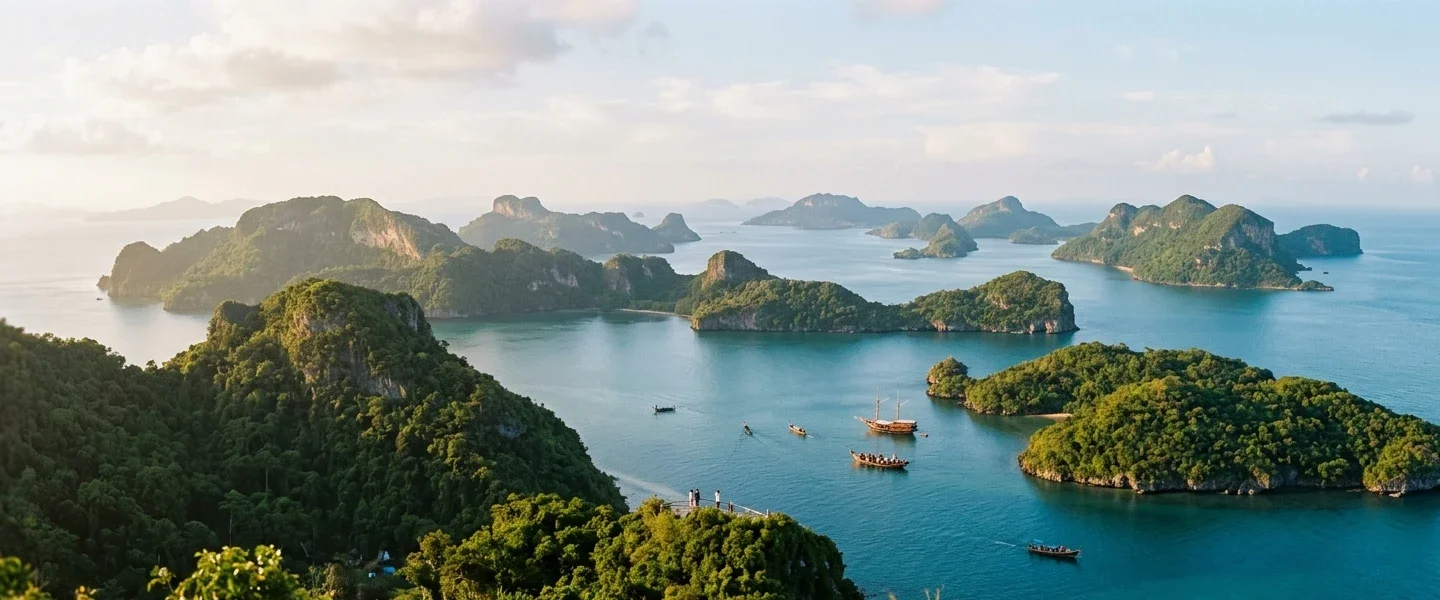
Phang Nga Bay is the smarter first pick if you want limestone scenery, sea caves, and less beach-club nonsense. Phi Phi is famous but crowded, so go only if you accept an early start and a busy boat day. Racha works for clearer water and snorkelling when conditions are calm.
-
Which ride-hailing apps work in Phuket?
Grab, Bolt, and inDrive are the main apps to install. Grab is often the cleanest option, Bolt can be cheaper, and inDrive sometimes helps when other apps quote badly. Airport, beach, and nightlife pickups still involve local friction, so compare before committing.
-
Where can I store luggage in Phuket?
Most hotels will hold bags after checkout if you are returning later. For longer gaps, use a proper luggage-storage service in Patong, Kata, or Phuket Town, or the airport left-luggage counter when flying out. Do not leave bags with tour desks unless the arrangement is clearly staffed and written down.
-
Is Phuket good for digital nomads?
Phuket works for digital nomads who want beach life, gyms, and better infrastructure than smaller islands. Rawai, Chalong, and Phuket Town are more practical than Patong for longer stays, with better routines and fewer distractions. It is more expensive and more spread out than Chiang Mai, so community takes more effort.
-
Do I need a VPN in Phuket?
You do not need a VPN for basic browsing, maps, or messaging. It is still useful for banking, streaming accounts, and using hotel or cafe Wi-Fi without trusting the network. Bring one already installed, because setting it up mid-problem is the wrong order.
-
What is the biggest first-time mistake in Phuket?
The biggest mistake is booking the wrong base and assuming you can fix it with short rides. Patong, Kata, Rawai, Bang Tao, and Old Town feel close on the map, then traffic and taxi friction start eating the trip. Choose the beach or neighbourhood that matches your actual holiday, not the hotel photo.
-
Should I use a local SIM in Phuket?
Yes, if you want reliable maps, ride-hailing, and hotel calls without hunting for Wi-Fi. AIS, True, and dtac all work well in main tourist areas, with physical SIMs sold at HKT, carrier shops, and many convenience stores. Bring your passport for registration.
Safety & medical
-
Do I need travel insurance for Phuket?
Yes, especially if you might ride a scooter, take boats, or use private hospitals. Phuket's medical care is good in private facilities, but bills rise fast and insurers look closely at licence, helmet, and alcohol details after road accidents. Buy cover before arrival, not after something goes wrong.
-
Is it safe to walk around Phuket at night?
Busy tourist streets in Patong, Kata, Karon, and Old Town are usually fine at night if you stay sober enough to read the room. The weak spots are dark beach roads, quiet shortcuts, and late-night bar areas where bills, pickpockets, and drunk scooter traffic collide. Use ride-hailing for short hops after dark.
-
Where do nights go wrong for travellers in Phuket?
Most bad nights start with too much alcohol, a scooter key, or a bill nobody checked. Bangla Road adds touts, inflated drink tabs, pickpockets, and people pushing you into bars you did not choose. Pay round by round, keep your phone buried, and do not ride after drinking.
-
Are there areas in Phuket I should avoid?
There are no real no-go zones for normal travellers, but parts of Patong get ugly late at night. Side sois off Bangla Road, unlit beach edges, and quiet roads between resort areas are where drunken arguments, petty theft, and bad transport decisions cluster. Avoid isolation more than any single district.
-
What happens if I get sick in Phuket?
For serious problems, use Bangkok Hospital Phuket, Dibuk Hospital, or Phuket International Hospital, all used to foreign patients. Private care is the easy route but not the cheap route, so have insurance details ready. For minor issues, Boots, Watsons, and local pharmacies handle basic medicine without much drama.
-
Is Phuket LGBTQ+ friendly?
Phuket is one of the easier Thai destinations for LGBTQ+ travellers, especially around Patong, resorts, and mainstream nightlife. Same-sex couples are unlikely to shock anyone in tourist areas, but public affection of any kind is more restrained outside the beach zones. Choose normal hotels and use the same social reading you would anywhere in the region.
-
What if a child gets sick in Phuket?
Use Bangkok Hospital Phuket, Dibuk Hospital, or Phuket International Hospital for anything serious, especially fever, dehydration, breathing problems, or injuries. Major pharmacies carry common children's medicine, but dosing and familiar brands are easier if you bring basics from home. Heat and stomach bugs are the usual holiday wreckers.
-
Can you drink the tap water in Phuket?
No, treat Phuket tap water as not safe to drink. Hotels and restaurants use filtered water and commercial ice, so normal drinks and salads in decent places are usually fine. Use bottled, filtered, or boiled water for drinking, and use bottled water for brushing teeth if your stomach is sensitive.
-
Are mosquitoes a problem in Phuket?
Yes, especially around rain, gardens, drains, and shaded restaurant areas. Dengue exists in southern Thailand, so mosquito bites are not just an itch problem. Use repellent at dusk, choose rooms with screens or good air-conditioning, and do not ignore fever after heavy bites.
Laws & local norms
-
Do you need a licence to rent a scooter in Phuket?
Yes, you need a motorcycle-valid international driving permit to ride legally. Rental shops often hand over scooters without checking, but that does not help you at police checkpoints or after a crash. If your licence and insurance do not cover motorcycles, use Grab, Bolt, hotel cars, or local drivers.
-
What are the drug laws in Phuket?
Cannabis shops are visible, but public smoking and nuisance use can still get you into trouble. Other recreational drugs are a different category entirely, with serious criminal penalties for possession, use, and trafficking. Do not let Patong's loose surface mood fool you.
-
Can I vape in Phuket?
No, travellers should leave vapes and e-cigarettes at home. Thailand restricts import, sale, and possession, and tourists have reported confiscation, fines, and police trouble. Patong nightlife zones are the worst place to test the rule.
-
What etiquette do tourists miss in Phuket?
Shoes come off in temples and many homes, and shoulders and knees need covering at Buddhist sites. Do not touch people's heads, point feet at Buddha images, or raise your voice over small disputes. Phuket is touristy, but basic Thai manners still count.
Money & costs
-
Is Phuket expensive compared with mainland Thailand?
Yes, Phuket is expensive for Thailand, especially for taxis, beach hotels, imported food, and anything sold directly to tourists. Local food, basic cafes, and simple guesthouses still exist, but they are not what the resort strips are built around. Expect island pricing, then spend less by choosing your base carefully.
-
Should I pay in cash or by card in Phuket?
Use cards at hotels, malls, beach clubs, and bigger restaurants, but carry cash for markets, taxis, longtail boats, massage shops, and small stalls. ATMs are easy to find, but foreign-card fees add up. Always choose Thai baht on terminals and ATMs, not your home currency.
Culture & etiquette
-
What do tourists get wrong about Phuket?
They treat Phuket as one beach town with different hotel names. It is a full island with old Chinese-Thai neighbourhoods, Muslim fishing communities, training streets, resort belts, and party zones that barely feel related. The practical consequence is simple: Phuket rewards base choice more than sightseeing ambition.
-
How much English is spoken in Phuket?
English is widely understood in hotels, tour desks, malls, hospitals, beach restaurants, and transport counters. It drops off in local markets, government offices, and small family-run places away from tourist strips. A few Thai greetings and food words still get better reactions than pointing at a phone.
Food & drink
-
Which Phuket markets are worth visiting?
Sunday Walking Street in Old Town is the easy pick for snacks, crowds, and a short evening wander. Naka Market is bigger and messier, with more general shopping and street food. Banzaan near Patong works for a quick look at produce, seafood, and cooked food without crossing the island.
-
Where do locals actually eat in Phuket?
Look around Phuket Town and away from the main beach roads. Hokkien noodle shops, moo hong counters, Muslim roti stalls, and old shophouse restaurants tell you more about Phuket than another beach pasta menu. Rawai seafood is useful, but it is not the whole local food map.
-
What local foods should I try in Phuket?
Start with mee Hokkien, moo hong, o-aew, roti, and seafood cooked simply rather than dressed up for tourists. Phuket's food sits between Thai, Chinese, Malay, and island influences, which is why Old Town matters. If a beach restaurant menu reads like twelve countries at once, lower your expectations.
-
Is Phuket vegan-friendly?
Yes, especially in Phuket Town, Rawai, and the resort strips, but local cooking still uses fish sauce, egg, and shrimp paste by default. During the Vegetarian Festival, vegan-style jey food is much easier to find. Outside that period, use clear Thai phrases and expect some confusion at casual stalls.
-
Is Phuket halal-friendly?
Yes, Phuket is one of the easier Thai islands for halal food. Muslim communities, mosques, roti stalls, seafood places, and halal-friendly Southern Thai restaurants are part of the island, especially around Phuket Town, Rawai, and local neighbourhoods. Resort strips also have options, but local areas are usually better.
Families & kids
-
Is Phuket good for families with kids?
Yes, if you choose the base carefully. Kata, Karon, Nai Harn, and family resorts work better than Patong for early nights, pools, and easier food. The hard parts are traffic, broken pavements, heat, and beach safety during rough-sea periods.
-
Is Phuket manageable with a stroller or buggy?
Only in short, controlled pockets. Resort paths, malls, and some beach promenades work, but pavements in Patong, Kata, Old Town, and Rawai are uneven, blocked, or missing. Bring a foldable stroller and expect to use taxis or ride-hailing more than you planned.
-
What accommodation works best for families in Phuket?
A resort or apartment-style stay usually beats a standard hotel room. Look for family rooms, elevators, shaded pools, breakfast on site, and a base where dinner does not require another car ride. Kata, Karon, and Nai Harn are easier family bets than central Patong.
-
What works for a half-day with young kids in Phuket?
Do one thing, then stop. A morning at Kata Noi or Nai Harn, an indoor aquarium or mall break, or a short pool-heavy water park session works better than dragging children across the island. Build the day around shade, toilets, and a fast exit.
-
Where do families struggle most in Phuket?
Families struggle with heat, traffic, rough pavements, and beaches that are not always safe for swimming. Patong adds noise, touts, and late-night spillover that wears parents down quickly. Pick a quieter base and keep daily movement short.
Staying longer
-
Which area should I stay in Phuket?
Patong is for nightlife, shopping, beach access, and first-timers who want everything close. Kata and Karon are easier beach bases for families and simple holidays, while Rawai and Nai Harn suit slower south-coast stays. Phuket Old Town works if food, shophouses, and walking matter more than sand.
After dark
-
What changes after dark in Phuket?
Patong gets louder, Old Town gets better for a short food-and-drinks wander, and the quieter beach areas settle into restaurants and small bars. The island does not become dangerous after sunset, but distances feel longer and transport gets more annoying. Plan the ride home before the second drink.
-
What are Phuket's best nightlife areas?
Patong is the main nightlife zone, especially Bangla Road and the streets around it. Bang Tao and Boat Avenue lean toward beach clubs and cleaner group nights, while Rawai and Nai Harn are better for smaller bars and a slower finish. Pick the area by noise tolerance, not by how close it looks on the map.
-
Which dating apps are used in Phuket?
Tinder and Bumble are common among tourists, expats, and longer-stay visitors. ThaiFriendly is also used, but it mixes ordinary dating, paid companionship, and sex-work-adjacent profiles more openly. In Patong, read profiles and intentions carefully before meeting.
-
Does Phuket have a red-light district?
Yes, it is concentrated around Bangla Road in Patong. Expect go-go bars, beer bars, touts, loud music, sex workers, and late-night crowds in a small pedestrian strip near the beach. Stay elsewhere if you do not want that scene outside your hotel.