
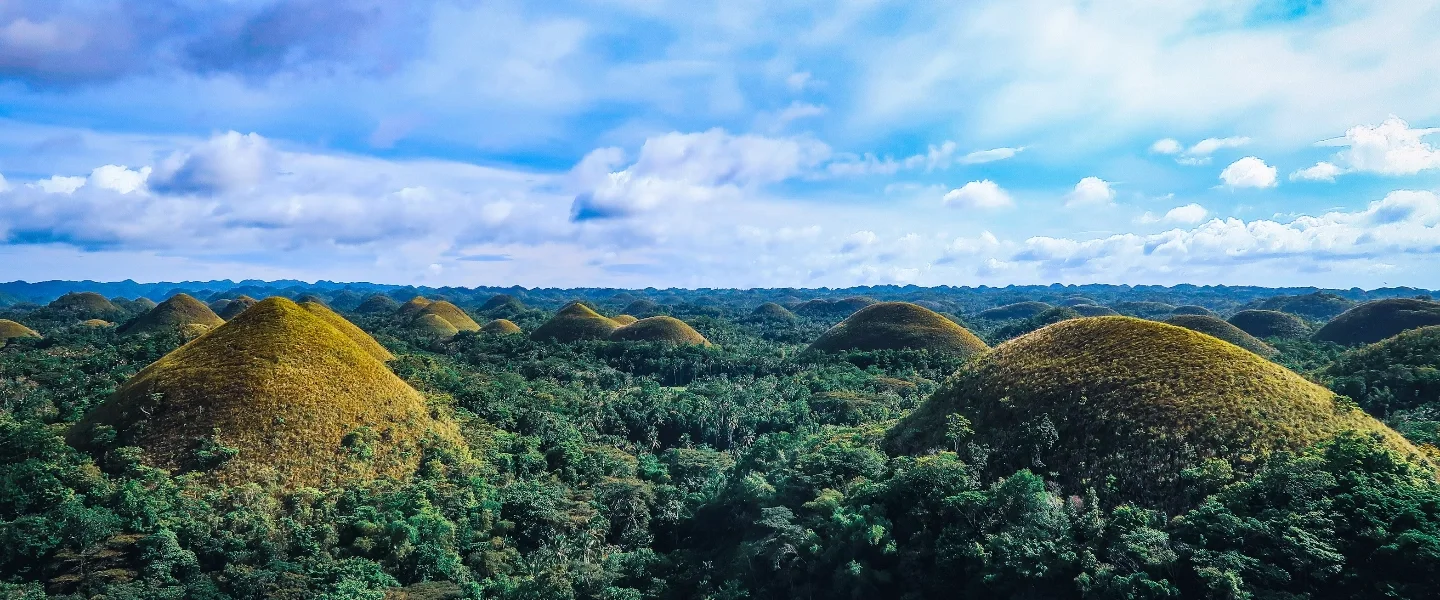

Bohol Right Now
Air quality is poor due to volcanic ash from Kanlaon Volcano, with haze observed across the region.
Sandugo Festival Street Dancing Competition · Panglao, Bohol
IRONMAN 5150 Bohol Triathlon · Panglao Island, Bohol
Interest in travel to Bohol remained about the same as a year ago, suggesting demand is holding steady.
Best time to visit
Off-season🌀Typhoon season
Frequent rain and low visitor numbers; a quiet, cheap month when island tours still run between the showers.
SCORE BY MONTH
Aim for February to May, when seas stay calm for Balicasag diving and Loboc river trips and the rain eases off. Holy Week and the Christmas-New Year stretch pack Panglao and push prices up, so sidestep those weeks. Storms and rough crossings cluster from June into December, with the quietest, wettest lull in September and October.
Visitor data: Estimated from seasonal travel patterns 2026
Day-to-day in Bohol
Walkability
32/100
Walking works around parts of Panglao and local town centres, but most visitors rely on tricycles, scooters or tours to get between sights. Distances are long, roadside infrastructure is inconsistent, and the island is built around transport rather than pedestrians.
Sidewalks exist in patches near tourist areas, then disappear into road shoulders.
Panglao's tourist strip is walkable, but most attractions require transport between bases.
Fast traffic, roadside parking and limited pedestrian space demand constant attention.
Climate works against walking for much of the year. Plan around weather windows.
-
Monthly cost
$889 / month
AFFORDABLESolo mid-range stay including rent, daily eating out, groceries, and routine costs.
-
TROPICAL WATER SPORTS
Diving shapes daily life for many longer-stay visitors. Balicasag's walls, Napaling's sardines and nearby reef sites keep dive boats busy year-round.
-
Coworking
$128 / month
VERY AFFORDABLEDedicated coworking is thin on the ground. Most remote workers base themselves in Panglao and work from cafes, resorts or a handful of work-friendly spaces with reliable internet.
-
Gym
$31 / month
VERY AFFORDABLEMost gyms are simple local setups in Tagbilaran and Panglao with basic free weights and cardio equipment. Hotel gyms fill some gaps, but serious strength training options are limited.
Need to Know
- Population
- 1,394,329 PSA · 2020 Census
- International visitors
- 498,989 (2024) +53.1% YoY DOT / PPDO Bohol · Last updated: 2025
- Annual visitors per resident
- 0.36× Annual international visitors divided by the population
Top visitor markets
- South Korea 47.0%
- China 8.9%
- Taiwan 5.4%
- United States 4.9%
- France 3.0%
- Germany 2.9%
- Japan 2.5%
- United Kingdom 2.0%
- Canada 1.7%
- Spain 1.6%
Source: PPDO Bohol · 2024
Annual visitor arrivals
- 2024 498,989 +53.1%
- 2023 325,979
- 2022 32,435 COVID
- 2021 1,127 COVID
- 2020 68,104 COVID
- 2019 727,051
International visitor arrivals. COVID years (2020-2021) are included for completeness. Source: DOT / PPDO Bohol · Last updated: 2025
- Currency
- Philippine Peso (PHP)
- Language
- Cebuano and Tagalog; English widely spoken in tourist areas
- Tap water
- Not safe to drink
- Time zone
- PST (UTC+8)
- Power plug
- Type A / B / C, 220V
- Dialling code
- +63
- Driving side
- Right
- Tipping
- Not expected, but appreciated; service charges are often included at hotels and restaurants.
- Internet
- Reliable 4G and 5G coverage in populated areas; connections can weaken in rural parts of the island.
- Emergency
- 911 (all emergency services), 143 (Philippine Red Cross)
When not to go
-
Skip Bohol for empty beaches
Don't come expecting a quiet island escape if you're staying around Panglao. Alona Beach, island-hopping routes and the main road network can feel crowded for much of the year, especially where most visitors base themselves. If your priority is space, slower days and fewer tour groups, pick a different island instead.
Go here instead:
- Sumba Far quieter beaches and fewer organised tour circuits.
- Raja Ampat Remote islands where crowds are rarely the main story.
- Koh Chang More room to spread out beyond the main beach areas.
Upcoming Events & Holidays
Upcoming events — next 30 days
On the horizon
Public holidays & observances — next 12 months
Dates are researched and checked, but events move. Always confirm with the official source before you book anything around them.
Getting To Bohol
-
From Mactan-Cebu Airport (CEB)
International gateway via Cebu ferry connection.
Many international travellers route through Cebu before continuing to Bohol. From the airport, continue to Cebu City ferry terminals and connect onward by fast ferry to Tagbilaran.
-
From Cebu City Pier 1
Fast ferries reach Tagbilaran in about two hours.
This is the main sea route into Bohol. Fast craft services run throughout the day, while slower ferry options are available on some schedules.
Safety Advice
Rented-scooter accidents on Panglao's roads are the biggest risk for visitors, followed by ordinary boat-transfer safety on island hops, so check for life vests. Petty theft is low. The typhoon window runs June to December, though Bohol sits below the worst of the track.
Common Scams
-
Fake Online Tour and Hotel Bookings
HIGH RISKTrigger:A resort deal requires payment to a personal account
Fake social media pages and cloned booking sites copy legitimate resorts and tour operators. Travellers send deposits, then arrive to find no reservation exists.
How to avoid: Book through official websites or established booking platforms. Verify contact details before sending money.
-
Counterfeit Electronics Sales
HIGH RISKTrigger:A stranger offers discounted electronics due to an emergency
The seller claims to need quick cash and offers phones or watches that appear genuine. After payment, the items turn out to be counterfeit or worthless.
How to avoid: Do not buy electronics from strangers. Purchase only from authorised retailers.
-
ATM Skimming and Card Trapping
HIGH RISKTrigger:Your card gets stuck or the ATM looks altered
Criminals fit skimmers, hidden cameras or card traps to machines. Stolen card details or a trapped card can lead to unauthorised withdrawals.
How to avoid: Use ATMs at banks or major malls, inspect the machine first, and cover the keypad when entering your PIN.
-
Overpriced Tricycle Fares
MEDIUM RISKTrigger:A driver quotes a high flat fare upfront
Some drivers around Alona Beach and transport hubs quote tourist rates far above local fares. The overcharge becomes obvious only after comparing prices later.
How to avoid: Agree on the fare before departure and ask accommodation staff for typical rates.
-
Attraction is Closed Scam
LOW RISKTrigger:A driver says your destination is closed today
The driver tries to redirect you to a different attraction, shop or tour where they receive a commission. The original attraction is often open as normal.
How to avoid: Check opening hours yourself and insist on your intended destination.
Mistakes to Avoid
-
Drinking tap water
SERIOUS CONSEQUENCETap water is not considered safe for visitors to drink. Stomach illness can derail several days of a short trip.
Fix: Use bottled or properly filtered water and refill from trusted sources.
-
Ignoring drug laws
SERIOUS CONSEQUENCEPhilippine drug laws carry severe penalties, including long prison sentences. Enforcement is strict and visitors are not treated differently.
Fix: Avoid illegal drugs entirely and do not carry items for other people.
-
Not carrying enough cash
MINOR CONSEQUENCECards work in many resorts and larger businesses, but smaller operators, tricycles and rural attractions often require cash. ATM outages do happen.
Fix: Keep a reserve of Philippine pesos for transport, entrances and small purchases.
-
Disregarding church dress codes
Historic churches such as Baclayon remain active places of worship. Revealing clothing can attract unwanted attention or result in being turned away.
Fix: Cover shoulders and knees when visiting churches and religious sites.
-
Loud noises near tarsiers
Tarsiers are highly sensitive to noise, flash photography and crowding. Disturbing them undermines conservation efforts and site rules.
Fix: Stay quiet, avoid flash photography and follow sanctuary instructions.
Money & Payments
Carry cash for daily spending, use cards at larger businesses, and always pay in PHP to avoid DCC markups.
-
Carry Small Bills
Keep PHP 20, 50 and 100 notes handy for tricycles, local eateries and small shops. Many businesses outside Panglao's main tourist areas struggle to break PHP 500 and 1,000 notes.
-
Cards Work Selectively
Visa and Mastercard are widely accepted at resorts, dive shops and larger restaurants in Panglao and Tagbilaran. Some businesses add a card surcharge, so ask before paying.
-
Use Bank ATMs
BPI, BDO and Metrobank ATMs are the most reliable options in Tagbilaran and Panglao. Machines can run low on cash during busy holiday periods, and foreign cards usually incur a PHP 250 fee.
-
Decline DCC
If an ATM or card terminal offers to charge your home currency, decline it and choose Philippine pesos. Dynamic Currency Conversion almost always gives a worse exchange rate.
-
Local Mobile Wallets
GCash and Maya are common in Bohol, especially in Tagbilaran and local businesses that use QR payments. Most short-term visitors will find them difficult to set up compared with cash or cards.
-
Travel Tax Exemption
Most foreign tourists visiting the Philippines for less than one year do not pay Philippine Travel Tax. Airport fees are usually built into airline tickets on major routes.
-
International Transfers
To send money to a bank account in The Philippines, for things like rent or day-to-day expenses, services like Wise or Remitly usually offer better rates than traditional banks and faster delivery.
You'll typically need the recipient's full name, account number, and SWIFT/BIC code. Some banks may also require a local address.
Costs in Bohol
Reckon on $55 to 90 a day for a mid-range room, meals out, and a rented scooter. Local eating is cheap, a full meal around $4 and beer under $2. The spend that adds up is on the water: private island-hopping boats, Balicasag dive trips, and the small entry fees for the tarsiers and Chocolate Hills.
Save money?
Sign up for our guide on how to save money on your next trip.
SIM Cards & Data
Best option for most travellers: an eSIM you set up before you arrive. You'll be online the moment you land, with no airport queue and no tourist pricing.
Travel eSIMs Connect the second you land. Zero hassle. Skip the airport queue and paperwork. Activate before you fly and land connected. Find the best eSIM →Prefer a local SIM?
If you prefer a physical SIM, Globe is the one to get. You can buy SIM cards at Bohol-Panglao International Airport, convenience stores, and carrier shops in Tagbilaran and Panglao. Reception is solid around the main tourist areas but can weaken in rural parts of the island. Bring your passport for SIM registration, which is required before activation.
What Bohol is Like
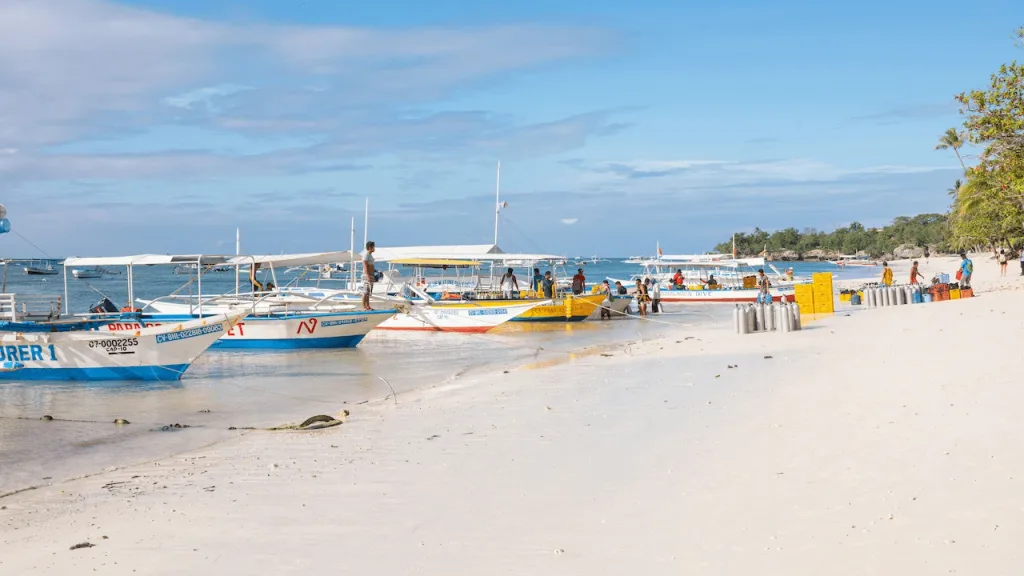
Most journeys here start with a sharp division between the coastal sand of Panglao and the limestone spine of the mainland. Down on Alona Beach, the scene is loud, compact, and unapologetically geared toward transit, with tricycles buzzing past dive shops and open-air restaurants. Cross the bridge toward Tagbilaran, however, and the landscape turns into a massive canopy of mahogany trees and quiet farming communities. Balancing these two worlds takes a lot of driving. The island forces you to pick between resort convenience and rural exploration on a daily basis.
The headline interior sights run on a well-worn circuit of tour vans, viewing decks and scheduled stops. Standing above the Chocolate Hills or watching a tarsier cling to a branch is still a strange and memorable experience, but rarely a solitary one. Most visitors spend only a few minutes at each stop before moving on to the next attraction. The interior starts to feel more interesting once you leave the standard route and follow smaller roads through villages, rice fields and roadside eateries that never make it onto the brochures.
Water takes over the itinerary the moment you look away from the hills. Around Balicasag, dive boats leave early for coral walls, sea turtles and some of the strongest underwater scenery in this part of the Philippines. By midday the channels can turn rough, and low tide exposes broad stretches of reef that make parts of the shoreline less inviting than the photos suggest. People who dive often end up structuring their entire trip around conditions offshore. The sea sets the rhythm here.
This is not a destination for the independent wanderer who hates a schedule or expects empty tropical coastlines. If you want the raw, unscripted isolation of Sumba, the crowded roads and structured day trips of Panglao will quickly irritate you. Getting between the coral reefs and the interior forests requires long hours on the asphalt, meaning you spend a significant portion of your holiday simply getting out of the way of other travellers. Solitude is a rare commodity on this circuit. Come for the sheer variety of activities, not to get away from the world.
Loboc River
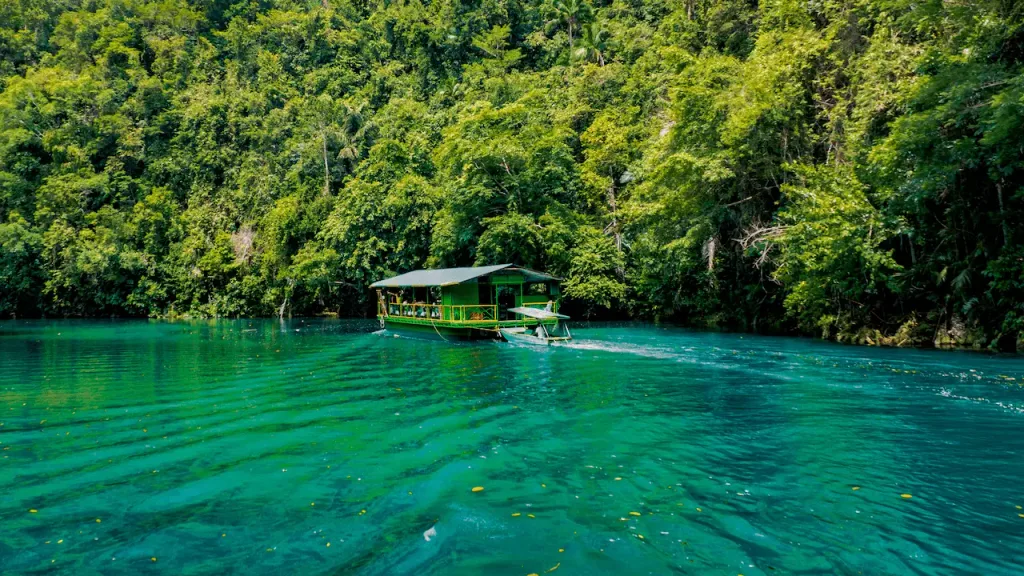
The floating buffet cruise on the Loboc River is absolutely a tourist attraction, but not necessarily a tourist trap. The trap is expecting a wilderness experience. What you actually get is a slow-moving restaurant boat gliding past coconut palms while musicians play local standards and tour groups line up at the buffet. It is organised, commercial and carefully packaged. None of that is hidden. The question is whether you enjoy that sort of thing.
Most criticism focuses on the staged cultural performances at riverside platforms, where dancers and musicians wait for the next boat to arrive. Fair enough. There is nothing spontaneous about the setup. Yet many visitors leave smiling because the river itself does a lot of the work. The water is calm, the vegetation hangs low over the banks, and for an hour or two you get a break from highways, parking lots and attraction queues. The scenery survives the packaging.
People who hate organised tours should skip it and spend their time elsewhere. Rent a scooter, drive the back roads around Loboc and watch daily life unfold without a microphone soundtrack. The river remains the same river whether you approach it from a buffet boat or a roadside bridge. The cruise works best for families, first-time visitors and anyone happy to treat it as a piece of local tourism culture rather than an authentic encounter with rural Bohol. Judge it on those terms and it becomes much easier to enjoy.
Areas of Bohol
- Beach life, diving, nightlife
Alona Beach
Alona Beach is where most visitors end up, whether they planned to or not. Dive shops, tour operators, bars and restaurants line the roads behind the beach, and almost every major activity on Bohol is easy to arrange from here. The trade-off is traffic, noise and a steady stream of tour groups. Stay a few streets back from the beachfront and it becomes far more manageable.
Good for: Diving, island hopping, first visits to Bohol.
Skip if: You want quiet beaches and long stretches without crowds.
- Local life, waterfront, quieter
Dauis
Dauis sits between Panglao's tourist zone and the mainland, with coastal roads, local neighbourhoods and far less noise than Alona Beach. Small resorts and guesthouses overlook the water rather than the party scene. You'll still need transport for restaurants, diving and most activities. That distance is exactly why many people stay here.
Good for: Quieter stays, local atmosphere, easy access to Panglao.
Skip if: You want restaurants, bars and dive shops outside your door.
- City base, transport, local life
Tagbilaran City
Tagbilaran City is the practical choice rather than the scenic one. Ferries, shopping centres, markets, banks and transport connections are concentrated here, making everyday logistics simple. It feels like a working provincial city, not a beach destination. Most visitors trade convenience for atmosphere when they stay here.
Good for: Transport connections, local food, longer practical stays.
Skip if: You came to Bohol for beaches and resort time.
- River stays, nature, countryside
Loboc
Loboc puts you in the middle of Bohol's green interior instead of along the coast. Mornings revolve around river views, forested roads and easy access to inland attractions rather than beaches. Evenings are quiet once day-trippers leave. It feels more connected to rural Bohol than anywhere on Panglao.
Good for: Countryside exploration, river scenery, slower-paced trips.
Skip if: You want beach access and nightlife every evening.
- Quiet beaches, diving, seclusion
Anda
Anda sits on the far eastern side of Bohol and feels removed from the Panglao tourism machine. White-sand beaches, reef diving and a slower pace are the main draw, while restaurant and nightlife choices stay limited. Distances to the island's headline attractions are long. People stay here because they want less activity, not more.
Good for: Beach downtime, diving, escaping the main tourist circuit.
Skip if: You plan to spend every day visiting attractions around Panglao.
Frequently Asked Questions
Planning & moving around
-
How many days do you need in Bohol?
Three to four days covers the classic first-time itinerary without rushing. That gives you time for an inland sightseeing day, a boat trip around Balicasag, and some beach or diving time. Add extra days if you plan to stay in Anda or spend several days underwater.
-
What are the best day trips from Bohol?
The two classic choices are an inland circuit covering the Chocolate Hills, tarsier sanctuaries and Loboc, or a boat trip to Balicasag for snorkelling and diving. Most visitors end up doing both. They show completely different sides of the island.
-
What are the best ways to get around Bohol?
Scooters offer the most flexibility if you are comfortable riding. Tricycles work well around Panglao and Tagbilaran, while private drivers are popular for full-day sightseeing. Public buses and jeepneys exist but are slower and less useful for most short visits.
-
Is Grab available in Bohol?
Grab operates in parts of Panglao, Dauis and Tagbilaran, but coverage is much thinner than in major cities. Availability can be inconsistent outside busy areas. You will still rely on tricycles and private transport for many journeys.
-
What's the most common mistake first-time visitors make in Bohol?
Many people underestimate travel times and try to squeeze every major attraction into a single day. The result is hours spent in vans and only a few minutes at each stop. Pick fewer sights and give yourself time to enjoy them.
-
What does almost every tourist get wrong about Bohol?
Many visitors expect a beach destination with a few inland attractions attached. In reality, Bohol is split between Panglao's resort coast and a large rural interior where many of the island's most famous sights are located. You will spend more time on the road than the beach photos suggest.
Safety & medical
-
Is Bohol safe at night?
For most visitors, yes. Alona Beach remains active after dark and walking around the main tourist areas is usually straightforward. The bigger risks are petty theft, riding scooters on poorly lit roads, and travelling through isolated areas late at night.
-
What are common illnesses for tourists in Bohol?
Stomach problems from unsafe water or poor food handling are the most common issues. Sunburn, dehydration and mosquito bites also catch people out, especially during boat trips and long days outdoors. Most problems are preventable with basic precautions.
-
Are LGBTQ+ travellers safe in Bohol?
Most LGBTQ+ travellers experience few issues in Bohol's tourist areas. Resorts, dive operators and tourism businesses are generally welcoming. The Philippines remains socially conservative in some respects, but overt hostility toward visitors is uncommon.
-
Can you drink the tap water in Bohol?
No. Most visitors stick to bottled or properly filtered water. Ice and drinks from established restaurants are usually fine, but drinking directly from the tap is one of the fastest ways to ruin a short trip.
Laws & local norms
-
Do you need a licence to rent a scooter in Bohol?
Yes. Rental shops may hand over a scooter with little scrutiny, but that does not change the legal requirements. If you crash without the correct licence and insurance coverage, you can face substantial medical and repair costs.
-
What are the drug laws in Bohol?
Philippine drug laws are extremely strict. Possession, use and trafficking can lead to lengthy prison sentences and serious legal consequences. Visitors are not treated differently from locals.
-
Are there vaping laws in Bohol?
Vaping is legal in the Philippines but regulated. Many public places apply the same restrictions used for smoking, and some establishments prohibit vaping entirely. Do not assume you can vape freely in restaurants, transport terminals or public venues.
-
What should you wear when visiting churches in Bohol?
Historic churches such as Baclayon remain active places of worship rather than tourist attractions alone. Covering shoulders and knees is the safest approach. Beachwear is fine at the coast but looks out of place inside religious sites.
-
What is proper photo etiquette in Bohol, especially with tarsiers?
Flash photography and loud behaviour around tarsiers are discouraged because the animals are highly sensitive to stress. Follow sanctuary rules and keep conversations quiet. For people, ask permission before taking close-up photographs.
Money & costs
-
Is it better to use cash or card in Bohol?
Use both, but never rely entirely on cards. Resorts, dive shops and larger restaurants often accept cards, while tricycles, small eateries and many rural businesses still operate on cash. Keeping a reserve of pesos avoids unnecessary hassles.
-
What is the tipping culture in Bohol?
Tipping is appreciated but not expected. Many restaurants already include a service charge, so check the bill first. Small tips for guides, drivers and excellent service are common but not obligatory.
Food & drink
-
Where do locals eat in Bohol?
Look beyond the beachfront strips of Panglao and toward local eateries and carinderias in Tagbilaran and smaller towns. Public markets are often a better reflection of daily food culture than tourist restaurants. The food is usually more local and less adapted for visitors.
-
What local dishes should I try in Bohol?
Lechon, kinilaw and calamay are the classics. Peanut Kisses remain the island's best-known snack, even if they lean heavily into the Chocolate Hills branding. Seafood is also a strong bet in coastal towns and around Panglao.
-
Are there vegetarian or vegan options in Bohol?
Yes, especially around Panglao where tourism has created demand for vegetarian and vegan menus. Choices become more limited once you leave the main tourist areas. If you have strict dietary requirements, Panglao is the easiest place to base yourself.
Families & kids
-
Is Bohol good for families with kids?
Yes. The mix of beaches, wildlife, boat trips and easy sightseeing makes it one of the easier family destinations in the Philippines. Travel days are relatively short compared with more remote islands, which helps with younger children.
-
Is Bohol stroller-friendly?
Only in parts. Resort areas and some promenades are manageable, but many attractions involve uneven ground, stairs or rough paths. A baby carrier is often more practical than a stroller outside major tourist zones.
Staying longer
-
Which area is best to stay in Bohol for a first-time visitor?
Panglao, particularly around Alona Beach, is the easiest base for a first trip. Most tours, dive operators, restaurants and airport transfers revolve around this area. It is busier and more crowded than other parts of Bohol, but the logistics are much simpler.
After dark
-
What changes after dark in Bohol?
Outside Panglao, much of the island quiets down quickly after sunset. Restaurants close earlier, roads become darker, and transport options thin out. Nighttime activities tend to revolve around dining, drinks or river firefly tours rather than nightlife.