
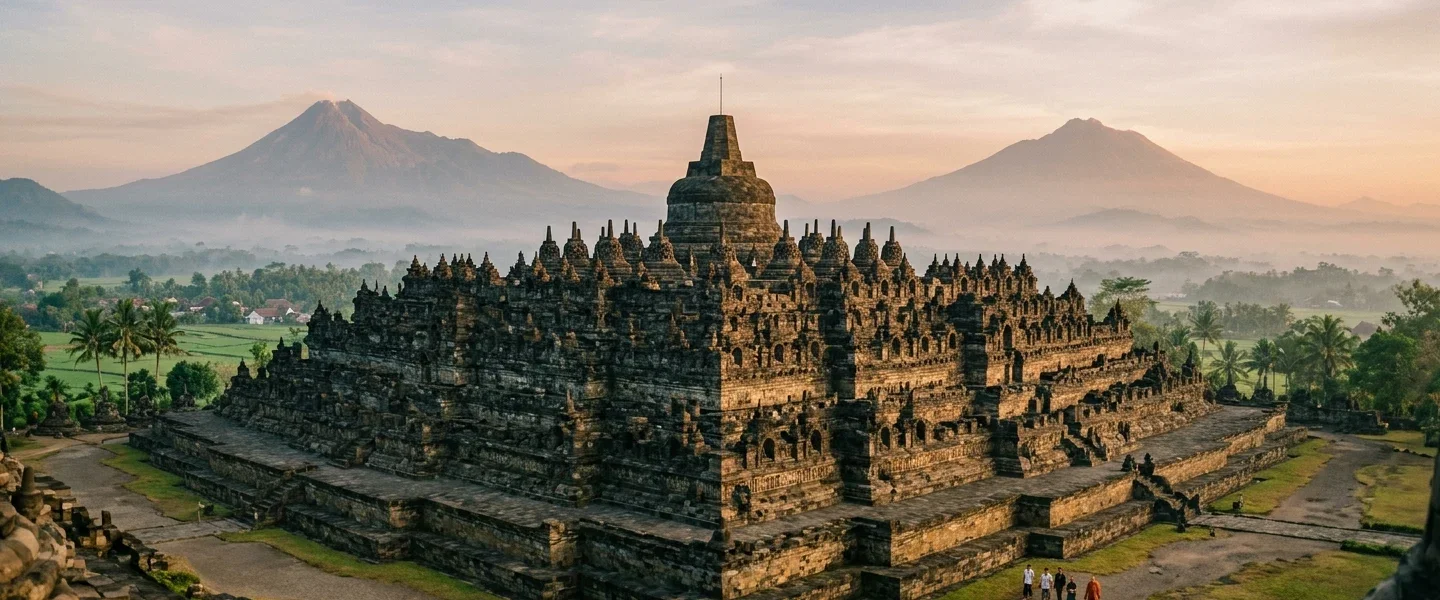
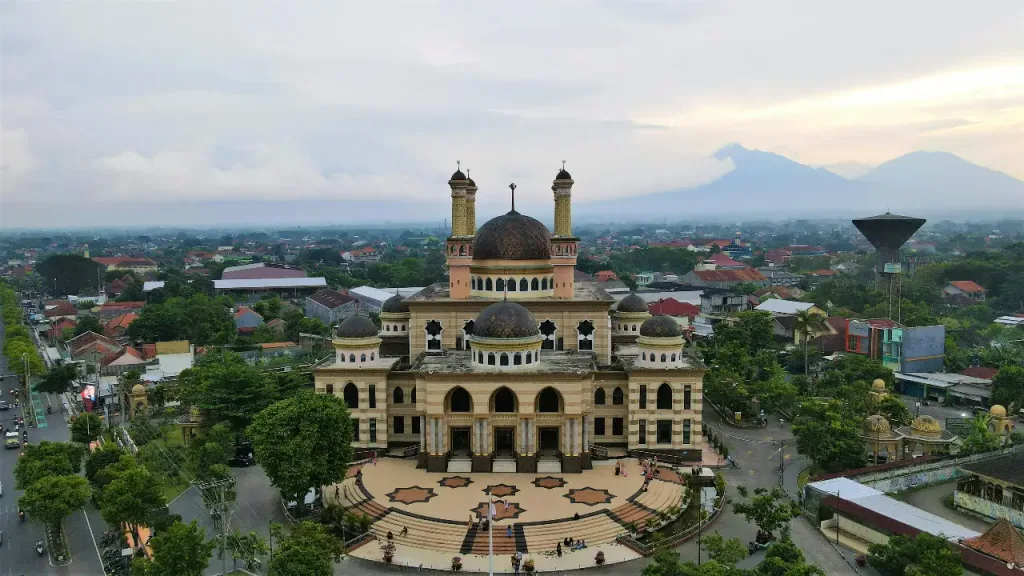
Yogyakarta Right Now
Moderate air quality is present in Yogyakarta, with PM2.5 levels at 30 µg/m³, which is 2x above the standard.
ARTJOG: Ars Longa: Generatio · Jogja National Museum, Wirobrajan
International Academic Conference on Science, Ecological Agriculture and Forestry (IACSEAF) · Yogyakarta, Indonesia
Interest in travel to Yogyakarta remained about the same as a year ago, suggesting demand is holding steady.
Best time to visit
Great time to visit
July offers pleasant weather with average highs around 30°C (86°F) and few rainy days, though popular sites will be busier. Pack light clothing and consider booking accommodation in advance due to increased visitor numbers.
SCORE BY MONTH
Visit Yogyakarta from May to September for the driest weather and fewer rainy days. Avoid December through February when the monsoon season brings heavy rain, making outdoor exploration difficult.
Visitor data: Badan Pusat Statistik (BPS) - Statistik Kunjungan Wisman 2023
Day-to-day in Yogyakarta
Walkability
43/100
Yogyakarta is walkable in short pockets, not as a city-wide walking destination. Pick your base carefully, use cars or rideshare for temple days, and treat crossings as active negotiation.
Main strips have broken pavements; side streets lose kerbs to motorbikes, vendors, and drains.
Prawirotaman, Malioboro, and Kraton work on foot, but temples and malls need transport.
Scooters crowd crossings, drivers rarely yield, and pedestrians rely on timing more than signals.
Climate works against walking for much of the year. Plan around weather windows.
-
FOOD AND MARKETS
Daily life is built around food runs more than nightlife: gudeg in Wijilan, market snacks around Beringharjo, and lesehan stalls near Malioboro after dark. It is cheap enough to graze, but the sweet Javanese flavour profile is not for everyone.
-
Coworking
$51 / month
VERY AFFORDABLECoworking exists, but Yogyakarta is not Bali with laptops. Genius Idea near Jetis is the clearest dedicated option, while student-area spaces are cheaper and quieter but less useful for networking.
-
Gym
$17 / month
VERY AFFORDABLEGyms are serviceable rather than polished, with Celebrity Fitness at Lippo Plaza the easiest mall option and smaller weight rooms around Seturan, Gejayan, and the university belt. Check day-pass rules first because many local gyms are built around monthly memberships.
Need to Know
- Population
- 3,668,719 BPS · 2020 Census
- Currency
- Indonesian rupiah (IDR)
- Language
- Indonesian and Javanese; English workable in tourist areas
- Tap water
- Not safe to drink
- Time zone
- WIB (UTC+7)
- Power plug
- Type C / F, 230V
- Dialling code
- +62
- Driving side
- Left
- Tipping
- Not expected; round up for taxis or casual restaurants if service was good.
- Internet
- Good 4G and cafe Wi-Fi in the city; weaker on rural temple and beach routes.
- Emergency
- 112 general emergency; 110 police, 118 or 119 ambulance.
When not to go
-
Skip wet temple days
Nov – MarWet season is the wrong time for a temple-heavy Yogyakarta trip. Heavy afternoon rain turns Borobudur, Prambanan, and Kraton walks into slick stone, puddled paths, and long waits under shelter. Go in the drier months if the trip is built around ruins, viewpoints, and scooters.
Go here instead:
- Bangkok Better dry-season city break with temples and easier taxis.
- Chiang Mai Dryer cool-season mornings before smoke becomes the problem.
-
Avoid Lebaran road crush
Shifts yearly · lunar calendarLebaran turns Yogyakarta into a domestic holiday pressure cooker. Malioboro, station roads, mall areas, and the routes to Borobudur and Prambanan clog with family traffic, while hotels and drivers tighten up fast. Come outside the holiday window if you want temple days without losing half the trip in traffic.
Yogyakarta itineraries
Upcoming Events & Holidays
Upcoming events — next 30 days
On the horizon
Public holidays & observances — next 12 months
Dates are researched and checked, but events move. Always confirm with the official source before you book anything around them.
Getting To Yogyakarta
-
Yogyakarta International Airport (YIA)
45 km southwest of city centre
The airport train is the fastest and cheapest option, with frequent departures directly from the terminal. Grab and Gojek are readily available via their apps, but airport taxis have fixed fares from counters inside arrivals.
Direct flights to Yogyakarta
Serves 18 direct destinations, 2 international and 16 domestic, about 46 flights a day.
International 2- Kuala Lumpur KUL Malaysia
 AirAsia
  Malaysia Airlines 1-2/day
 - Singapore SIN Singapore
 Scoot 1-2/day
Within Indonesia 16
- Jakarta CGK
 Batik Air
  Citilink
  Garuda Indonesia
  Sriwijaya Air
  TransNusa Nam Air
  Pelita Air 15/day
 - Balikpapan BPN Citilink
 Lion Air Pelita Air
  Super Air Jet 5/day
 - Makassar UPG Citilink Lion Air Sriwijaya Air 5/day
- Bali DPS Garuda Indonesia Super Air Jet 4/day
- Banjarmasin BDJ Lion Air Super Air Jet 1-2/day
- Batam BTH Citilink Super Air Jet 1-2/day
- Lombok LOP Super Air Jet ~1/day
- Palembang PLM Super Air Jet ~1/day
- Pekanbaru PKU Lion Air ~1/day
- Pontianak PNK Super Air Jet ~1/day
- Palangkaraya PKY Super Air Jet 5/week
- Samarinda AAP Super Air Jet 5/week
- Jambi DJB Super Air Jet 3/week
- Padang PDG Super Air Jet 3/week
- Pangkal Pinang PGK Super Air Jet 3/week
- Bandar Lampung TKG Batik Air 1/week
Nonstop routes only. Flights per day are an average, each way. Data: AeroDataBox, updated July 2026.
Visa rules apply at the country level. See visa advice for Indonesia. -
-
Adisutjipto International Airport (JOG)
6 km east of city centre
JOG primarily handles turboprop and non-commercial flights now, with most international and domestic jet flights redirected to YIA. If you do arrive here, Grab is usually the cheapest and most convenient option, but official airport taxis are also available with fixed rates.
-
Train from Jakarta
Direct high-speed services arrive at Yogyakarta Tugu or Lempuyangan stations
Trains are a popular and comfortable way to travel from Jakarta, offering scenic views of Java. Book in advance, especially for Executive Class or during holidays, as tickets can sell out. There are no sleeper trains, so overnight journeys are in regular seats.
-
Train from Surabaya
Direct services arrive at Yogyakarta Tugu station
Train travel from Surabaya is efficient and offers good value. The journey is scenic, passing through rice fields and villages. Book tickets online or at the station; aim for earlier departures for the fastest travel times.
Safety Advice
Yogyakarta is generally considered a safe city for tourists, with locals being friendly and helpful. However, petty crime like pickpocketing can occur, so it's wise to be aware of your surroundings and secure your belongings.
Common Scams
-
Batik gallery pressure sales
MEDIUM RISKTrigger:A friendly stranger says a batik show ends today
You get walked from Malioboro or the Kraton area to an unmarked gallery, then pushed toward overpriced batik paintings after a short demonstration. The pressure is the point, not the art.
How to avoid: Ignore gallery invitations from strangers, especially ones framed as one-day events. Buy batik from fixed shops or markets you chose yourself.
-
Becak commission detours
MEDIUM RISKTrigger:A becak driver offers a fare that sounds too cheap
The ride turns into a shopping detour to a batik, silver, or souvenir place where the driver earns commission. Around Malioboro and Titik Nol Kilometer, the script often includes claims that your chosen area is closed or moved.
How to avoid: Agree on the destination and total fare before boarding. Refuse every shopping stop, and get out if the route changes.
-
Street donation pressure
LOW RISKTrigger:Someone shows a QR code and asks for a fixed donation
Collectors near stations or tourist streets push a specific amount, sometimes with a disability or charity story. You lose small cash or a QR payment, then get guilted into more.
How to avoid: Donate through known organisations, not street approaches. Walk on without scanning QR codes or explaining yourself.
Mistakes to Avoid
-
Drinking tap water
SERIOUS CONSEQUENCETap water in Yogyakarta is not safe for travellers to drink and stomach illness can wipe out temple days fast. Ice in normal restaurants is less of a worry than untreated tap water in rooms or guesthouses.
Fix: Use bottled, boiled, or filtered water for drinking and brushing teeth. Refill only from filters that staff actually use.
-
Wrong temple clothing
Bare shoulders, short shorts, and careless clothing at Borobudur or Prambanan read as disrespectful, even when entry staff hand you a sarong. The bigger mistake is treating active religious spaces as a photo set.
Fix: Cover shoulders and knees before you arrive. Keep voices down and skip climbing, posing, or touching areas that are roped off.
-
Using your left hand
Using the left hand for greetings, food, money, or passing items lands badly in Javanese and wider Indonesian etiquette. It is a small action, but people notice it.
Fix: Use your right hand for eating, handshakes, payments, and giving objects. Use both hands when passing something to older people.
Money & Payments
Carry cash for markets, use cards in malls, and always pay in IDR.
-
Cash for small vendors
Carry IDR cash for Pasar Beringharjo, gudeg stalls, becak rides, parking attendants, and small warungs around Kraton and Prawirotaman. QRIS signs are common, but foreign visitors cannot always use local wallet rails cleanly.
-
Cards in malls
Visa and Mastercard work at hotels, Plaza Ambarrukmo, Malioboro Mall, chain cafes, and better restaurants. Small shops may refuse cards or add a 2 to 3 percent surcharge, and Amex is mostly useless outside larger hotels.
-
Use major bank ATMs
BCA, Mandiri, BNI, and BRI ATMs are easy to find around Malioboro, Ambarrukmo, Seturan, and the station area. Machines usually dispense IDR 50,000 or IDR 100,000 notes, so break big notes before using markets or becaks.
-
Limits and fees
Per-transaction limits commonly sit around IDR 1,250,000 to IDR 3,000,000 (USD 75 to USD 180), depending on bank and note size. Local ATM fees vary, and your home bank can still charge even when the Indonesian machine does not.
-
QRIS is local-first
GoPay, OVO, DANA, ShopeePay, and bank QR apps run through QRIS, which locals use everywhere from cafes to parking booths. Tourists without an Indonesian wallet or compatible regional banking app should treat QRIS as a bonus, not a plan.
-
Use known changers
Use authorised money changers such as Mulia Money Changer or Barumun Abadi around Malioboro, Ambarrukmo, and central shopping areas. Airport counters and hotels usually give weaker rates, so change only survival cash there.
-
Always pay in IDR
At ATMs and card terminals, choose Indonesian rupiah instead of your home currency. Dynamic Currency Conversion is designed to skim you with a poor exchange rate, and Yogyakarta's cheap meals will not save that mistake.
-
International Transfers
To send money to a bank account in Indonesia, for things like rent or day-to-day expenses, services like Wise or Remitly usually offer better rates than traditional banks and faster delivery.
You'll typically need the recipient's full name, account number, and SWIFT/BIC code. Some banks may also require a local address.
Costs in Yogyakarta
Yogyakarta is remarkably affordable for visitors, with daily expenses for food and transport being very low. However, locals face a significant cost of living that outpaces the minimum wage, making it challenging for them to maintain a comfortable lifestyle.
Save money?
Sign up for our guide on how to save money on your next trip.
SIM Cards & Data
Best option for most travellers: an eSIM you set up before you arrive. You'll be online the moment you land, with no airport queue and no tourist pricing.
Travel eSIMs Connect the second you land. Zero hassle. Skip the airport queue and paperwork. Activate before you fly and land connected. Find the best eSIM →Prefer a local SIM?
Yogyakarta is easy on a local SIM: 4G is solid around Malioboro, Prawirotaman, Seturan, and the temple corridors, while 5G is patchy and not worth planning around. Buy from an official carrier outlet or airport kiosk with your passport, and expect the staff to register the SIM and your phone for short-stay use.
What Yogyakarta is Like
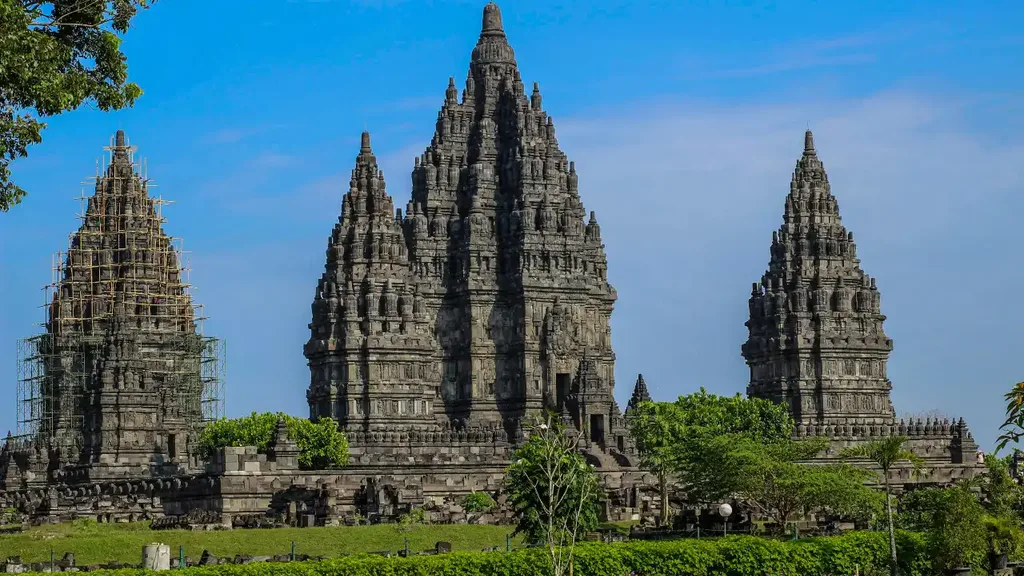
Malioboro is the version of Yogyakarta most travellers meet first: becaks edging through traffic, souvenir sellers watching the footfall, buskers and gamelan notes leaking into the evening air. The pedestrian strip has been tidied up, but it has not become sterile, and that is the useful thing about it. You still need to watch your bag, ignore the gallery pitch, and step around people who treat the pavement as a waiting room. It is cleaner than it used to be. It is not calm.
The better read on Jogja starts away from the main strip, in the spaces where the city is not performing for arrivals. Around the Kraton, palace walls sit beside school runs, food carts, birdcage shops, and families moving through the heat with no interest in your travel plan. Kotagede feels different again, with silver workshops, old houses, and narrow lanes where the craft is real but not laid out for easy consumption. The city rewards slow looking, not box-ticking.
Food here leans sweet, patient, and deeply Javanese, which either wins you over or tests you by the second plate of gudeg. Wijilan is the obvious starting point, with Gudeg Yu Djum still carrying the weight of expectation, but the better rhythm is grazing: nasi kucing at an angkringan, sate smoke by the roadside, market snacks that leave palm sugar on your fingers. Kopi joss at Angkringan Lik Man is more theatre than great coffee, with charcoal dropped into the glass like a party trick. Try it once.
Evenings do not swing the way Bali or Bangkok evenings swing, and that is not a defect. Prambanan's Ramayana Ballet is tourist-facing but still worth doing when the weather and schedule line up, because the setting does some of the work before the dancers even start. Alun-alun Kidul is stranger and more local: pedal cars lit like toy spaceships, families looping the square, and blindfolded walkers trying the banyan-tree ritual while everyone else quietly judges their aim. Prawirotaman is the traveller compromise, with bars and cafes but no real bite.
Yogyakarta is wrong for travellers who want clean pavements, empty monuments, late breakfasts, and transport that behaves on command. Temple days mean early starts, hired cars, heat management, and accepting that Borobudur and Prambanan are not casual strolls from your guesthouse. It is also not the whole of Java in miniature: the student districts, palace quarter, south coast, and Merapi slopes pull in different directions. Come for culture with friction still attached. Skip it if you only want comfort.
Borobudur Beyond Sunrise
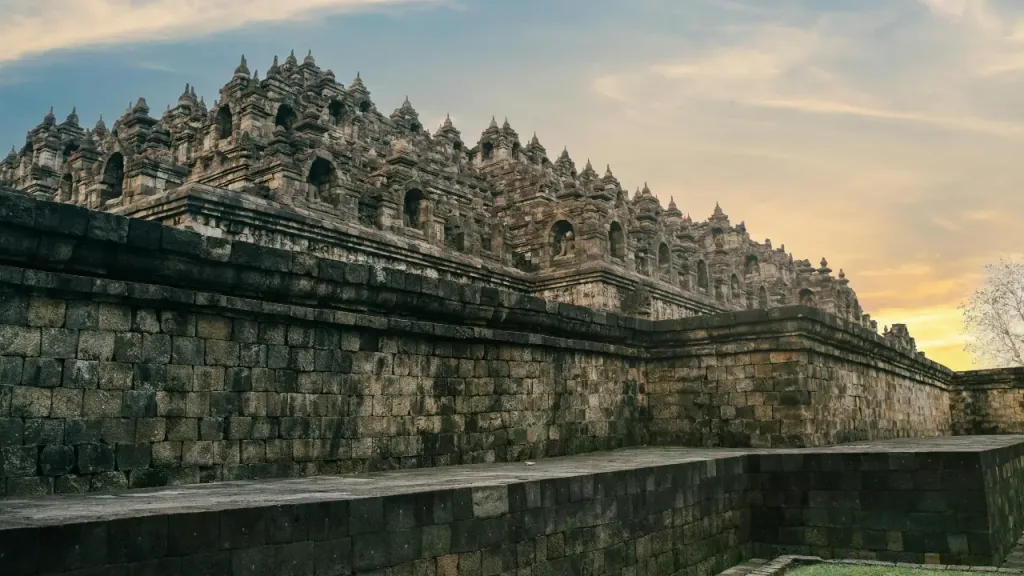
Borobudur is worth the drive, but the sunrise obsession has done strange things to people. It turns a layered, heavy, carved monument into a bleary transport operation: alarms in the dark, hotel breakfast in a box, drivers waiting with headlights on, everyone chasing the same pale band of sky. The quieter truth is that the temple does not need dawn to work. It needs enough time, a proper ticket for the structure if access is available, and a brain that is awake enough to notice the relief panels instead of just photographing mist.
The ticket matters more than the bragging rights. A ground-only visit can feel thin after the long ride from Yogyakarta, because the scale is impressive but the story sits in the climb, the terraces, and the slow reveal of stupas and carved scenes. When structure access is limited or sold in timed slots, do not gamble on turning up and arguing at the gate. Book the ticket that lets you do the thing you came for, or accept that this is a different visit. Half-measures are where Borobudur starts to feel overpriced.
Crowd flow is the other trap. Tour groups move like weather systems, and once the loudest ones arrive, the stone loses its quiet fast. The better visit is not always the earliest one; it is the one that avoids the worst pile-up and gives you room to look sideways, down at the carvings, and out across the Kedu Plain without someone stepping into your elbow. Wear shoes that handle hot stone, bring patience, and do not attach the whole day to one photograph. Borobudur rewards attention, not panic.
The drive back is where the decision gets honest. If you stack Borobudur, Prambanan, and a city evening into one heroic day, you will mostly remember traffic, heat, and your own poor judgment. Borobudur deserves its own slow half-day, with lunch nearby or a clean return to Yogyakarta before everyone gets sour. Pairing it with every other headline sight is the classic first-timer mistake. The temple is not the problem. The itinerary is.
Areas of Yogyakarta
- Palace quarter, history, quiet nights
Kraton / Alun-Alun
Kraton / Alun-Alun places you beside the palace quarter, Taman Sari, and the southern squares, with more local rhythm than hotel-strip polish. Days work well here if you like walking between court sites, food carts, and low-key residential streets. Evenings are quieter than Prawirotaman, and the restaurant range narrows fast once you move off the main lanes. It is central, but not effortless.
Good for: Palace sights, Taman Sari, local streets, quieter nights.
Skip if: You want bars, cafe choice, and easy late-night food.
- Central base, shopping, street food
Malioboro
Malioboro puts you close to Tugu station, Pasar Beringharjo, and the old first-timer circuit, which is useful if you are in town for a short stay. The trade-off is noise, hawkers, becak pitches, and the feeling that every errand happens in public. Hotels range from cheap backpacker rooms to larger city properties, but the street itself is rarely restful. Stay here for access, not atmosphere.
Good for: First visits, train arrivals, markets, short stays.
Skip if: You want quiet sleep, calm pavements, or a softer first impression.
- Cafes, small hotels, traveller scene
Prawirotaman
Prawirotaman is the easiest area for travellers who want restaurants, cafes, small hotels, and evening options without sleeping on Malioboro. The streets feel more international than local at times, with gelato shops, bars, guesthouses, and tour desks packed into a tight strip. It is calmer than the main tourist drag, but not especially close to the palace sights on foot. Pick a side street if sleep matters.
Good for: Cafes, social evenings, small hotels, first-time travellers.
Skip if: You want the cheapest local food or direct walking access to Kraton sights.
- Silver craft, heritage lanes, quiet
Kotagede
Kotagede is the wrong base for most first-timers, but the right one if you want old lanes, silver workshops, and less tourist staging. The neighbourhood has traditional houses, mosque and cemetery corners, and craft shops that reward slow wandering rather than quick shopping. Food and hotel choice are thinner than in Prawirotaman, and rideshare becomes part of every day. Stay here only if quiet is the point.
Good for: Silver workshops, old lanes, slower stays, return visitors.
Skip if: You want nightlife, easy restaurant choice, or quick access to Malioboro.
- Student life, malls, north access
Depok
Depok is the student and residential side of Yogyakarta, with universities, malls, coffee shops, and cheaper long-stay rooms spread across busy roads. It works better for nomads and repeat visitors than for temple-first travellers who want everything near the old centre. The area is practical rather than pretty, and walking between pockets is less pleasant than the map suggests. Use it if daily routine matters more than postcard access.
Good for: Longer stays, student food, malls, northern day trips.
Skip if: You want old-city character or easy walking to the main sights.
- Merapi access, nature, cool air
Kaliurang
Kaliurang is a hill base for Merapi trips, pine air, viewpoints, and family-style weekend resorts rather than a normal Yogyakarta city stay. It gives you relief from the city heat, but it also cuts you off from Malioboro, Prawirotaman, and the palace area. Restaurants and transport are thinner, so evenings can feel very quiet outside local holiday periods. Book it for Merapi, not for Jogja.
Good for: Merapi trips, cooler air, family resorts, nature breaks.
Skip if: You want city restaurants, easy rideshare, or quick temple logistics.
Frequently Asked Questions
Planning & moving around
-
How many days do I need in Yogyakarta?
Three days is the useful minimum for most visitors: one city day, one Borobudur day, and one Prambanan or Merapi day. Two days works only if you hire drivers and accept a rushed trip. Stay longer if you want Kotagede, the south coast, caves, or slower food and market time.
-
What are the best day trips from Yogyakarta?
Borobudur and Prambanan are the two big temple trips, but do not treat them like casual city stops. Merapi works if you want a volcano landscape and do not mind a jeep-tour format. Jomblang Cave is a long, muddy, early-start day, so skip it if you are already tired or travelling with young kids.
-
What should I do with one day in Yogyakarta?
Do not try to cram every headline into one day. Pick Borobudur or Prambanan, then spend the remaining time around the Kraton, Taman Sari, or Malioboro. If you insist on both temples, hire a car and accept that the city itself becomes background noise.
-
Do I need a licence to rent a scooter in Yogyakarta?
Yes, you need a valid motorcycle licence and an international driving permit with motorcycle cover. Many rental shops care more about payment than paperwork, but insurance can fail after a crash if you are not properly licensed. Use Grab, Gojek, Bluebird, or a hired car if you are not already comfortable in scooter traffic.
-
Which ride-hailing apps work best in Yogyakarta?
Grab and Gojek are the two apps to install before arrival. Cars are easier for luggage, families, rain, and late nights, while motorbike taxis cut through traffic if you travel light. Around the south coast, Merapi, and some outer villages, signal and driver supply can thin out fast.
-
Where can I store luggage in Yogyakarta?
Most decent hotels will hold bags after checkout if you stayed there. Around Tugu Station, ask directly at the station or use a nearby hotel if you have a confirmed room later that day. Do not build a tight temple day around luggage storage unless you have confirmed it first.
-
Is Yogyakarta good for digital nomads?
Yogyakarta is better for slow stays than classic laptop-colony nomad life. Internet is good enough in many cafes and guesthouses, rents can be cheap enough, and the student districts keep daily life practical. Coworking exists, but the scene is thinner and quieter than Bali.
-
Which famous spots are overrated in Yogyakarta?
Malioboro is worth one walk, not three evenings. Some batik gallery visits are really commission sales rooms, and some south-coast beach detours are too much driving for water you should not swim in. The temples are still the real heavyweights if you plan them properly.
-
Should I use a local SIM in Yogyakarta?
A local SIM is useful if you rely on Grab, Gojek, maps, and WhatsApp during temple days. Telkomsel is the safest coverage pick for city and outer trips, while cheaper carriers are fine if you stay mostly central. Buy from an official kiosk or carrier shop so registration is handled properly.
-
Should I visit Borobudur and Prambanan on the same day?
You can do both in one day with a private car, but it becomes a long temple marathon. Borobudur works best early, while Prambanan is better later when the light softens and the stone is less punishing. Split them across two days if you have the time.
Safety & medical
-
Is it safe to walk around Yogyakarta at night?
Main areas such as Malioboro, Alun-Alun Kidul, and Prawirotaman are usually fine when they are busy and lit. The bigger issue is broken pavement, scooter traffic, bag snatching risk, and awkward walks down quiet side lanes. Use a ride-hailing car when the route looks empty or you are carrying a camera, phone, or daypack.
-
Is Yogyakarta safe for solo female travellers?
Yogyakarta is manageable for solo women, especially in Prawirotaman, Malioboro, and hotel-heavy central areas. The usual problems are late-night transport, quiet lanes, budget accommodation with weak security, and unwanted attention rather than constant street harassment. Book a well-reviewed stay, use app rides after dark, and avoid isolated walks back from bars or station areas.
-
Are there areas in Yogyakarta I should avoid?
There is no main tourist district that is simply off-limits. The problem areas are situational: dark lanes after midnight, station exits with pushy drivers, and quiet roads where scooter traffic replaces sidewalks. Stay alert around Malioboro when crowded, and use rideshare instead of wandering into empty side streets.
-
What happens if I get sick in Yogyakarta?
For serious issues, use larger private hospitals such as Bethesda Hospital or JIH rather than a small clinic chosen at random. Kimia Farma and other pharmacies handle basic medicine, but do not treat bad stomach illness or fever casually. Use a ride-hailing car to reach care quickly if you are too sick to negotiate transport.
-
Do I need travel insurance for Yogyakarta?
Yes, especially if you plan to ride scooters, visit caves, take Merapi tours, or rely on private hospitals. A minor clinic visit is not the problem; crashes, evacuation, lost luggage, and serious illness are. Check that motorcycle cover is valid before you rent anything with two wheels.
-
How LGBTQ+ friendly is Yogyakarta?
Yogyakarta is socially conservative, even though it can feel softer than some larger cities. Same-sex couples should keep public affection discreet, and visibly queer travellers should choose accommodation and nightlife carefully. The risk is less about tourist gawking and more about social discomfort, police attention around events, or private situations that become unsafe.
-
Can you drink the tap water in Yogyakarta?
No, drink bottled, boiled, or filtered water. Most locals do not drink untreated tap water either, and travellers should brush teeth with safe water if they have a sensitive stomach. Ice in busy restaurants is usually factory-made, but skip it at rough-looking stalls if you are already feeling off.
-
Are mosquitoes a problem in Yogyakarta?
Mosquitoes are present, especially after rain and around gardens, drains, and lower-lying neighbourhoods. Dengue exists in Indonesia, so treat bites as more than a mild annoyance. Use repellent in the evening, choose rooms with screens or strong air-conditioning, and avoid letting water sit around balconies.
Laws & local norms
-
What are the drug laws in Yogyakarta?
Indonesia has extremely strict drug laws, and Yogyakarta is no exception. Cannabis, CBD products, recreational pills, and small amounts carried for personal use can still lead to serious legal consequences. Do not bring anything through airports, bus stations, or hotel rooms because it was legal at home.
-
Can I vape in Yogyakarta?
Vaping is visible in Yogyakarta, and vape shops exist around student and mall districts. The practical rule is simple: do not vape inside religious sites, small restaurants, enclosed public spaces, or anywhere people are eating beside you. If nobody else is vaping, put it away.
-
What is the dress code for temples in Yogyakarta?
Cover shoulders and knees at Borobudur, Prambanan, and active religious sites. Sarongs are sometimes available, but arriving dressed properly avoids the awkward tourist costume routine at the gate. Outside temples, light modest clothing works better than beachwear because Yogyakarta is still a conservative Javanese city.
-
What etiquette should tourists know in Yogyakarta?
Use your right hand for giving money, shaking hands, eating, and passing objects. Take off shoes before entering homes and some prayer spaces, and avoid pointing at people with your index finger. Politeness matters here more than loud confidence.
Money & costs
-
Is Yogyakarta expensive for travellers?
Yogyakarta is cheap enough compared with Bali, Jakarta, and many regional city breaks. Food, ride-hailing, laundry, and simple rooms stay fairly priced, but temple tickets, private cars, and nicer hotels can lift the total fast. The city rewards travellers who spend on drivers and timing, not fancy meals.
-
Can tourists use QRIS in Yogyakarta?
QRIS is everywhere, but it is built mainly for Indonesian bank apps and local wallets. Some foreign visitors can use linked regional payment apps, but many cannot. Carry cash for markets, becaks, small food stalls, and anything outside malls.
Culture & etiquette
-
Which markets in Yogyakarta are worth visiting?
Beringharjo is the obvious first market for batik, snacks, spices, and souvenirs near Malioboro. Kotagede is better if you want silver and older neighbourhood texture, while Klithikan Pakuncen is more of a thrift and oddities hunt. Go early for Beringharjo unless you enjoy slow shuffling through crowds.
-
How much English is spoken in Yogyakarta?
English is workable in hotels, tour offices, airports, larger restaurants, and many student-area cafes. It drops quickly in markets, local warungs, clinics, and small transport interactions. Learn a few Indonesian basics and keep addresses written clearly for drivers.
Food & drink
-
Where do locals eat in Yogyakarta?
Locals eat at angkringan stalls, gudeg shops, roadside sate places, and simple warungs that do not look designed for visitors. Angkringan Lik Man is famous for kopi joss, while Wijilan is the easy gudeg starting point. The best local meal is often the place with smoke, plastic stools, and no English menu.
-
Where can I eat late at night in Yogyakarta?
Late eating means angkringan stalls, Malioboro food carts, Alun-Alun Kidul snacks, and a handful of established late-night places. Kopi joss around the station is more ritual than great coffee, but it is part of the night. Use rideshare back after eating if your hotel is not close.
-
What local foods should I try in Yogyakarta?
Start with gudeg, the sweet jackfruit dish that defines the city and divides visitors fast. Add sate klathak from the Bantul side if you want smoke and goat rather than sweetness. Bakpia from the Pathok area is the classic edible souvenir, though plenty of versions are more filling than thrilling.
-
Is Yogyakarta vegan-friendly?
Yogyakarta is workable for vegans, but not effortless. Traditional cooking often uses egg, shrimp paste, chicken stock, or hidden animal ingredients even when the dish looks plant-based. Use clearly marked restaurants such as ViaVia or modern cafe menus when you need certainty.
-
Is Yogyakarta good for halal travel?
Yes, halal food is easy in Yogyakarta because most local eating is already built around Muslim diners. Alcohol exists in traveller areas, but it is not central to daily dining. The main work is checking hotel bars or Western restaurants if strict separation matters to you.
Families & kids
-
Is Yogyakarta a good place to travel with kids?
Yogyakarta can work well with kids, but it is not an easy stroller city. The best family days are short: Taman Pintar, Gembira Loka Zoo, mall downtime, and one well-planned temple trip. Heat, traffic, broken pavements, and long drives can turn a good plan sour.
-
Is Yogyakarta manageable with a stroller?
A stroller is useful inside malls and some larger hotels, but frustrating on many streets. Pavements break, kerbs vanish, and motorbikes take over the edge of the road. Bring a carrier for markets, temples, and older neighbourhoods.
-
What if a child gets sick in Yogyakarta?
Use JIH or Bethesda for anything more serious than a mild cold or stomach upset. Pharmacies such as Kimia Farma are useful for basic medicine, but staff may not always speak strong English. Keep travel insurance details handy and use a car ride, not a motorbike taxi, if the child is feverish or vomiting.
-
What accommodation works best for families in Yogyakarta?
Families usually do better in larger hotels or serviced stays with elevators, family rooms, breakfast, and easy car pickup. Prawirotaman guesthouses can work for older kids, but narrow stairs and small rooms get old fast. Near Ambarrukmo or other mall districts, food and nursing-room logistics are easier.
-
What half-day works with young kids in Yogyakarta?
Taman Pintar is the easiest half-day because it is central, hands-on, and does not require a long transfer. Gembira Loka Zoo works if you start early and leave before the heat wins. Alun-Alun Kidul is better as a short evening outing than a full family plan.
Staying longer
-
Which neighbourhood should I stay in Yogyakarta?
Prawirotaman is the easiest base for most travellers because food, guesthouses, cafes, and evening options sit close together. Malioboro is better for train arrivals and short stays, but it is noisier and more tourist-facing. Kotagede is quieter and more local, but you trade away easy restaurant choice and quick access to the main strip.
After dark
-
What changes after dark in Yogyakarta?
Yogyakarta after dark is more food, squares, and low-key socialising than clubbing. Malioboro gets crowded, Alun-Alun Kidul fills with lit pedal cars, and Prawirotaman handles the traveller bar scene. It is active, but not wild.
-
Where do nights go wrong in Yogyakarta?
Nights go wrong when travellers drink too much, accept vague becak prices, or follow friendly strangers toward batik galleries and side-street pitches. Crowded areas also make phone and bag handling sloppy. Use app rides, agree prices first, and leave the late-night wandering for streets that still have people and light.
-
What are the best nightlife areas in Yogyakarta?
Prawirotaman is the easiest traveller area for cafes, bars, and relaxed evenings. Malioboro is better for street food and people-watching than drinking, while Alun-Alun Kidul is family-chaotic rather than nightlife in the usual sense. If you want heavy clubbing, Yogyakarta is the wrong city.
-
Are there red light districts in Yogyakarta?
Yogyakarta does not have a recognised red-light district that most travellers accidentally encounter. Adult nightlife exists discreetly, but it is not concentrated like Bangkok, Pattaya, or Amsterdam. If you do not look for it, it will not shape your trip.