
Koh Samui Right Now
Ongoing waste issues with a significant landfill on the island emitting a putrid stench and impacting groundwater. Efforts to manage the waste are ongoing but a long-term solution is still needed.
Visakha Bucha Day
Best time to visit
Good time to visit
May brings warm temperatures around 32°C (90°F) with a moderate chance of rain, and crowds are generally lighter after the peak season. Pack light rain gear as afternoon showers are common.
SCORE BY MONTH
Visit Koh Samui between February and April for the best weather. It's drier and less humid, with highs around 30-32°C (86-90°F). Avoid October through December; this is monsoon season with frequent heavy rain and rougher seas.
Day-to-day in Koh Samui
Walkability
35/100
Walking here means sharing narrow roads with fast-moving motorbikes, often on broken or non-existent pavements. While some tourist strips offer basic walkability for essentials, venturing beyond them requires significant caution.
Sidewalks are often narrow, discontinuous, and frequently obstructed by parked motorbikes and vendors.
Basic amenities like shops and restaurants are accessible within a 15-minute walk in concentrated tourist hubs.
Motorbike traffic is dense and fast, with drivers showing little regard for pedestrians attempting to cross roads.
Climate works against walking for much of the year. Plan around weather windows.
-
Monthly cost
$1,579 / month
MID-RANGESolo mid-range stay including rent, daily eating out, groceries, and routine costs.
-
MUAY THAI
Koh Samui has a strong Muay Thai scene with serious training camps. Lamai Muay Thai Camp and Lionheart Muay Thai are well-regarded spots.
-
Coworking
Coworking
The coworking scene is growing, with several good options. Chaweng and Lamai have the densest clusters of spaces. Expect to pay around $134 per month.
-
Gym
Gym
Gym memberships are fair at around $56 per month. You'll find a mix of commercial chains and hotel gyms, with good options in Chaweng and Lamai.
Need to Know
- Currency
- Thai Baht (THB)
- Language
- Thai, English common in tourist hubs
- Tap water
- Not safe to drink
- Time zone
- GMT+7 (ICT)
- Power plug
- Type A / B / C / O, 230V
- Dialling code
- +66
- Driving side
- left
- Tipping
- Tipping is not mandatory but appreciated in tourist areas like Koh Samui. Round up bills or leave 20-50 baht in casual eateries. Upscale dining may include a 10% service charge; check your bill. For spa treatments, 50-100 baht is common.
- Internet
- Koh Samui has strong 4G/LTE coverage island-wide, with 5G emerging in areas like Chaweng and Bophut. Speeds are generally good in developed areas, but can be slower or patchy in jungle interiors and remote locations.
- Emergency
- 191 (all services), 1155 (Tourist Police with English-speaking operators)
When not to go
-
Skip Samui's monsoon peak
Late Oct, mid Dec · peaks NovKoh Samui is a bad bet in its wettest window if the trip is built around beaches, boats, and scooter days. November can see around 430 mm of rain, and rough Gulf crossings can turn Koh Tao or Koh Phangan day trips into delays, cancellations, or a wet ferry ride you regret. Go from Jan to Apr for Samui, or switch coasts if the dates are fixed.
Koh Samui itineraries
Upcoming Events & Holidays
Upcoming events — next 30 days
On the horizon
Public holidays & observances — next 12 months
Dates are researched and checked, but events move. Always confirm with the official source before you book anything around them.
Getting To Koh Samui
-
Samui International Airport (USM)
Located on the northeastern side of the island, close to popular beaches.
This is the most convenient airport, with direct flights from Bangkok and other regional hubs. Shared minivans are a good budget option, but expect to wait for it to fill up. Taxis and Grab are readily available and offer fixed fares, so no need to haggle.
-
Surat Thani Airport (URT)
127 km west of Koh Samui on the mainland, requiring a bus and ferry transfer.
This is the cheaper, but longer, route to Koh Samui. Several companies offer combined bus and ferry tickets directly from the airport. Lomprayah is generally faster but more expensive, while Seatran and Raja are more budget-friendly.
-
Immigration and entry process
Online Thailand Digital Arrival Card (TDAC) required for all foreigners.
As of May 1, 2025, you must complete an online TDAC within 3 days before arrival, replacing the old paper TM6 form. If you're flying into Koh Samui via Bangkok, you'll clear immigration in Bangkok.
-
Ferry from Surat Thani (Donsak Pier)
Regular ferry services connect Donsak Pier on the mainland to various piers on Koh Samui.
If you've made your own way to Donsak Pier, you can buy ferry tickets there. Lomprayah offers high-speed catamarans, while Seatran and Raja are car ferries, often a bit slower but cheaper.
Safety Advice
Koh Samui is generally safe, though petty crime like pickpocketing is common in tourist areas. Be aware of high rates of motorbike accidents and exercise caution on the roads.
Common Scams
-
Jet ski damage claim
HIGH RISKYou rent a jet ski, enjoy your ride, and upon return, the operator claims you've damaged the vehicle. They demand an exorbitant fee for repairs, often for pre-existing damage that was hard to see or on the underside of the craft. This often happens on popular beaches like Chaweng.
How to avoid: Inspect the jet ski thoroughly before renting, taking detailed photos and videos of its condition from all angles. Never leave your original passport as a deposit; a photocopy should suffice.
-
Taxi overcharging
Taxi drivers, especially at the airport or popular tourist areas like Chaweng, often refuse to use the meter and quote inflated flat fares. They might try to charge you ฿300-400 for a short ride that should cost less.
How to avoid: Always agree on the fare before getting into the taxi. If a driver refuses to use the meter, find another taxi or use ride-hailing apps like Bolt or Grab for transparent pricing.
-
Money exchange tricks
Some money exchange booths might display misleading rates, use sleight-of-hand to shortchange you, or give you old or torn bills that are difficult to use elsewhere.
How to avoid: Use reputable exchange services like established banks or official exchange bureaus. Double-check current exchange rates and count your money carefully before leaving the counter.
Mistakes to Avoid
-
Not wearing a helmet
SERIOUS CONSEQUENCERiding a motorbike without a helmet is illegal in Koh Samui, and police frequently set up checkpoints, especially in areas like Chaweng and Lamai. The fine is ฿500-2000 per person, but the real risk is severe head injury in an accident, which travel insurance may not cover.
Fix: Always wear a properly fitted helmet, even for short distances, and ensure any passenger also wears one.
-
Underestimating ocean currents
SERIOUS CONSEQUENCEThe ocean around Koh Samui can have strong, deceptive currents, especially during the wet season (September-November). Kayaking or swimming too far from shore can quickly lead to dangerous situations.
Fix: Stay close to the beach or marked swimming areas, check with locals or resort staff about current conditions, and wear a life jacket for any water activity.
-
Inappropriate temple attire
Visiting temples like the Big Buddha or Wat Plai Laem in revealing clothing (shoulders or knees uncovered) is considered disrespectful. Monks may turn you away.
Fix: Wear clothing that covers your shoulders and knees when visiting temples. Carry a sarong or light shawl for easy coverage.
-
Drinking tap water
MINOR CONSEQUENCETap water in Koh Samui is generally not safe to drink, even after boiling, due to old piping systems and potential contaminants. Drinking it can lead to stomach issues.
Fix: Stick to bottled water for drinking and brushing your teeth.
Money & Payments
-
Cash for local spots While major hotels and stores accept cards, cash is essential for street food, local markets, taxis, and smaller shops in Koh Samui. Carry small denominations like ฿20, ฿50, and ฿100 notes for convenience. Some smaller businesses may also add a surcharge for card payments.
-
ATMs widely available, flat fee ATMs are easy to find across Koh Samui, including at bank branches and in major stores like Tesco Lotus and 7-Eleven. Thai ATMs charge a flat fee of around ฿220 (approximately $6 USD) per transaction for foreign cards, regardless of the amount.
-
Withdraw larger amounts To minimize ATM fees, withdraw larger sums less frequently. Most Thai ATMs have a maximum withdrawal limit between ฿20,000 and ฿30,000 (approximately $540 to $810 USD) per transaction, though this can vary by bank.
-
Avoid DCC at ATMs and terminals When using an ATM or paying with a card, always choose to be charged in Thai Baht (THB), not your home currency. Opting for your home currency (Dynamic Currency Conversion or DCC) will result in a less favorable exchange rate.
-
Exchange at local booths For the best exchange rates, use local currency exchange booths found in popular areas like Chaweng, Lamai, Bophut, and Maenam. These generally offer better rates than banks or airport kiosks. Remember to bring your passport for currency exchange.
-
PromptPay for residents only PromptPay, Thailand's QR code payment system, is widely used by locals with Thai bank accounts. While some international e-wallets may be compatible, direct use for tourists without a Thai bank account is generally not possible.
-
Upcoming tourist tax Thailand is planning to implement a tourist tax of ฿300 for air arrivals and ฿150 for land or sea arrivals. While the exact start date is still being finalized, it's expected to be introduced in mid-2025.
-
International Transfers To send money to a bank account in Thailand, for things like rent or day-to-day expenses, services like Wise or Remitly usually offer better rates than traditional banks and faster delivery.
You'll typically need the recipient's full name, account number, and SWIFT/BIC code. Some banks may also require a local address.
Costs in Koh Samui
While Koh Samui offers a more affordable lifestyle for expats than many Western cities, recent price increases mean that what was once a budget backpacker's paradise is becoming more expensive for locals and tourists alike. You can still find value by eating street food and staying in less touristy areas, but expect to pay more for accommodation and dining than you might have a few years ago.
SIM Cards & Data
Best option for most travellers: an eSIM you set up before you arrive. You'll be online the moment you land, with no airport queue and no tourist pricing.
Travel eSIMs Connect the second you land. Zero hassle. Skip the airport queue and paperwork. Activate before you fly and land connected. Find the best eSIM →Prefer a local SIM?
AIS offers the most reliable coverage across Koh Samui's tourist areas like Chaweng, Lamai, and Bophut, with strong 4G and often 5G speeds. This ensures consistent connectivity for navigation, ride-hailing, messaging, and video streaming. You can purchase a physical SIM at Koh Samui Airport (USM) or at major shopping centers such as Central Festival Samui in Chaweng.
What Koh Samui is Like
Koh Samui in the past year feels less like an idyllic island escape and more like a small, sun-baked city that happens to be surrounded by water. The roads, particularly around Chaweng and Lamai, are congested, a constant churn of motorbikes and songthaews, sometimes leading to accidents. You can see planes flying low over Bophut Beach and Chaweng, a cool sight, but also a reminder of how close the airport is to the main tourist hubs, and the sheer volume of arrivals. The island's infrastructure, from waste management to water supply, is visibly strained, with recent water shortages and mounting piles of rubbish being persistent issues.
Getting around is a hassle if you don't rent a scooter, which comes with its own risks given the road conditions and local driving habits. Grab exists, but it is less reliable than in Bangkok, and local taxis often refuse meters, quoting inflated flat fares, especially at night. Expect to haggle, or just accept the tourist markup; it's part of the game here. The planned 74 billion baht bridge connecting Samui to the mainland by late 2033 is a massive project that will fundamentally change the island, for better or worse, by bringing even more traffic and development.
The food scene, however, remains a highlight and is surprisingly diverse. Beyond the ubiquitous pad thai, you will find southern Thai specialties like gaeng tai pla (fermented fish intestine curry) and khao yam (rice salad with toasted coconut) that are genuinely excellent. Fisherman's Village in Bophut hosts a fantastic Friday Walking Street, where you can feast on freshly grilled seafood, kanom krok coconut pancakes, and made-to-order spring rolls in an atmospheric, lantern-lit setting. For a truly local experience, the Nathon morning market is the place to go for breakfast, with vendors selling roti canai and sticky rice with mango. Just be aware that beachfront restaurants in Chaweng and Lamai will charge significantly more for the same curry you can get for cheap at a night market.
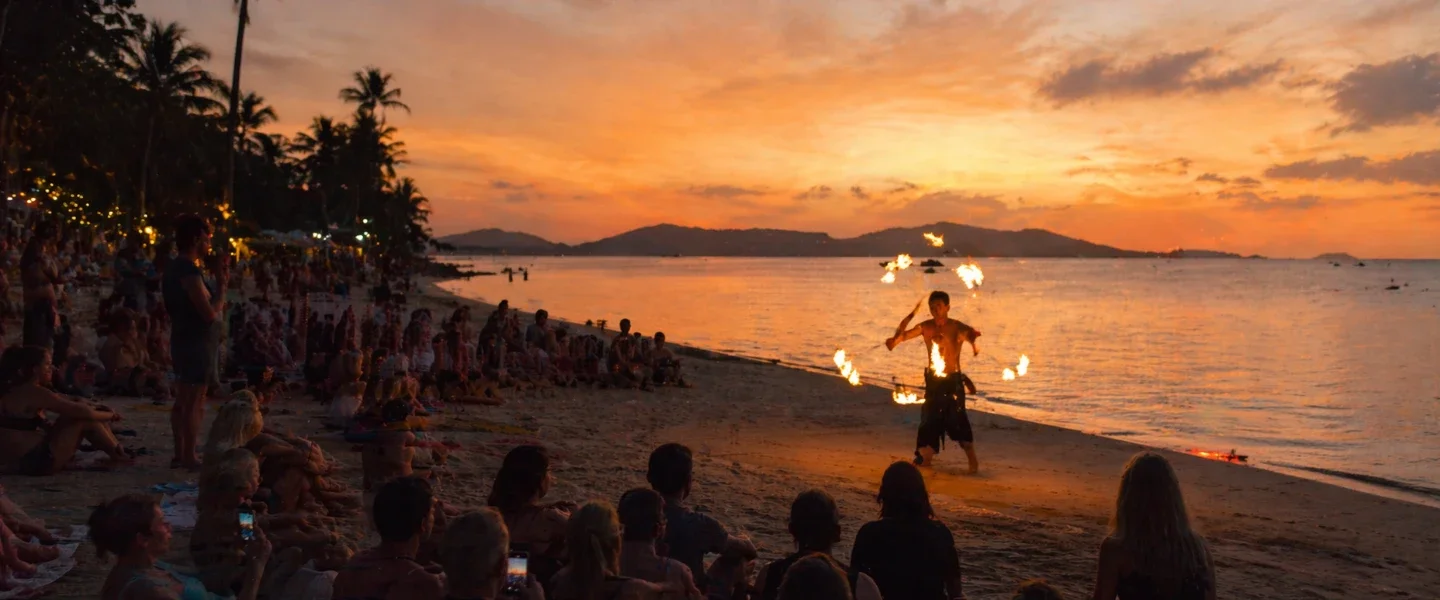
Nightlife leans heavily into the party scene in areas like Chaweng, with beach clubs and bars blasting music and hosting fire shows. If you are looking for quiet, laid-back beach bars, you will likely be disappointed; many places feel more like city bars transplanted onto sand, with a notable focus on prostitution in certain areas. For a quieter evening, some of the hidden cafes and viewpoints like Overlap Stone or the Lamai Viewpoint Cafe offer stunning panoramic views and a more relaxed atmosphere, a welcome escape from the main drags.
Samui Flight Premium
The first Samui surcharge hits before you see the beach: the airport. USM is small, open-air, and absurdly convenient, with baggage belts almost within shouting distance of the pickup lane. That convenience is the product you are paying for. Direct flights from Bangkok, Phuket, Singapore, or nearby regional gateways land you fifteen to thirty minutes from Bophut, Chaweng, or Choeng Mon, but the fares often sit in a different league from normal Thailand domestic hops. On a short trip, that premium buys back the only thing you cannot replace: usable island time.
The cheap workaround is real, but it is not painless. You fly to Surat Thani, collect bags, find the transfer desk, sit on a bus toward Don Sak, then board a ferry before dealing with the final ride across Samui. On paper it looks clever. In practice, it can turn a simple travel day into airport tiles, bus air-con, diesel fumes at the pier, and a boat crossing you stop enjoying after the first few minutes. For four days, that route is false economy unless the fare gap is brutal.
Treat Samui like an island with an entry fee, not a cheap beach add-on. Fly direct when the trip is short, when you are carrying kids or dive gear, or when your first night matters. Use Surat Thani only when you have more time than money, and book the bus-ferry combo as one chain so a late flight does not strand you between counters. The premium stings less when you build the route around Samui instead of squeezing it between Bangkok and somewhere else.
Areas of Koh Samui
- Local town, Transport hub
Nathon
Nathon is Koh Samui's capital and main port, offering a glimpse into authentic Thai island life away from the main tourist beaches. You'll find old Chinese shophouses, local markets, and affordable eateries, particularly at the Nathon Night Food Market. It's a functional town rather than a resort area, and while it's a hub for ferries to other islands, there aren't many major attractions beyond the local atmosphere.
Good for:Experiencing local Thai culture, budget-friendly food, and ferry connections.
Skip if:You're looking for a beach holiday or resort amenities.
- Secluded beach, Sunset views
Lipa Noi
Located on the west coast, Lipa Noi is prized for its wide, soft sandy beach, clear waters, and breathtaking sunset views, offering a truly secluded and tranquil experience. It's a quiet, family-friendly area with luxury villas, far removed from the crowds of the east coast. The area is less developed, meaning fewer dining and entertainment options within walking distance compared to Chaweng or Lamai.
Good for:Romantic escapes, private villa stays, and serene sunset viewing.
Skip if:You want a wide selection of restaurants, bars, or shops nearby.
- Tranquil beach, Local character
Maenam
Maenam offers a genuinely tranquil escape on the north coast, with a long stretch of golden sand and calm, shallow waters that are ideal for swimming. The village behind the beach retains a distinctly Thai character, feeling more local than touristy, with motorbike repair shops outnumbering cocktail bars. While it lacks the vibrant nightlife of Chaweng, it provides a peaceful atmosphere and good value for money, especially for longer stays.
Good for:Quiet relaxation, long beach walks, and an authentic local feel.
Skip if:You want bustling nightlife, extensive shopping, or powdery white sand.
- Relaxed nightlife, Value stays
Lamai
Lamai offers a slightly more relaxed atmosphere than Chaweng, balancing nightlife with a more laid-back beach vibe. The beach is long and less crowded, with a mix of rustic beach bars and restaurants, and the area provides good value for money on accommodation. While still tourist-focused, it retains more local charm than Chaweng, and the hills behind it are less developed with villas.
Good for:A balance of beach relaxation and evening entertainment without Chaweng's intensity.
Skip if:You want absolute seclusion or a truly local, non-touristy feel.
- Party hub, Tourist base
Chaweng
This is Koh Samui's main tourist and nightlife hub, packed with hotels, restaurants, and bars, especially along Soi Green Mango and Soi Reggae. While it offers easy access to the island's largest beach and a wide range of dining, the area can feel overwhelmingly busy and loud, with traffic congestion and persistent taxi touts. It's the most developed area, making it less authentically Thai than places like Maenam.
Good for:Nightlife, beach parties, and easy access to amenities.
Skip if:You want quiet evenings or an authentic Thai experience.
- Charming village, Family friendly
Bophut
Bophut, particularly its Fisherman's Village, offers a charming, walkable experience with a unique blend of traditional Sino-Thai architecture and modern boutiques, restaurants, and bars. It's a more sophisticated and less chaotic option than Chaweng or Lamai, with a popular night market on Fridays that now often extends to other nights. The beach here is generally calm and suitable for families, though prices for dining can be higher than in more local areas.
Good for:Romantic dinners, cultural atmosphere, and family-friendly evenings.
Skip if:You're seeking a wild party scene or the cheapest food options.
- Quiet luxury, Family beach
Choeng Mon
This secluded bay on the northeastern tip of the island is known for its calm, shallow waters and soft, white sand, making it ideal for families and couples seeking tranquility. While new high-end hotels have opened, it maintains a personal feel with beach bungalows and local businesses. It's quieter and more exclusive than Chaweng, with accommodation and dining generally pricier.
Good for:Peaceful beach days, safe swimming for children, and luxury resorts.
Skip if:You prefer a lively atmosphere or budget-friendly options.
Frequently Asked Questions
Planning & moving around
-
Which neighbourhood in Koh Samui should I stay in?
Chaweng is the spot for high-energy nightlife and a wide selection of restaurants, but it's also the busiest and most developed. For a more relaxed, family-friendly vibe with good dining, consider Choeng Mon or the quieter ends of Lamai. Bophut's Fisherman's Village offers a charming mix of boutique shops, beachfront restaurants, and a popular night market, making it good for couples or those seeking a slightly more upscale, yet still lively, atmosphere.
-
How many days do I need in Koh Samui?
You need a minimum of 2-3 nights to hit the highlights, but a week to ten days is ideal to avoid rushing and truly soak in the island's offerings. A shorter trip means focusing on one or two main beaches and a night market, while a longer stay allows for day trips to nearby islands like Koh Phangan or Koh Tao, and more time for relaxation or jungle adventures.
-
Where do locals actually eat in Koh Samui?
Locals often eat at neighborhood 'Khao Gaeng' (rice and curry) shops in areas like Mae Nam and at authentic night markets such as the Nathon night food market. You'll find excellent, affordable Thai food at family-run roadside stalls away from the main tourist beaches. Specific recommendations include Jahn Dim Sum in Lamai for morning dim sum, Krua Chao Baan in Hua Thanon for fresh seafood, and Raan Kao Hom in Chaweng for no-frills, home-style Thai food.
-
What are the best day trips from Koh Samui?
The standout day trip is to Ang Thong National Marine Park, a stunning archipelago of 42 islands perfect for kayaking and snorkeling. This is a full-day excursion that departs from Mae Nam Pier. While other islands like Koh Phangan and Koh Tao are close, they often warrant an overnight stay rather than a quick day trip to truly experience them.
-
Where can I store my luggage in Koh Samui between checkout and my flight?
Most hotels and resorts on Koh Samui will happily store your luggage at their front desk for a few hours after checkout. For longer storage, particularly if you're heading to the airport later, inquire with your accommodation about extended options or local tour operators who sometimes offer luggage services. There are no dedicated luggage storage apps widely available on the island like in larger cities.
-
Which markets in Koh Samui are worth visiting and when are they on?
The Fisherman's Village Walking Street in Bophut is a must-visit on Friday nights for its lively atmosphere, street food, and crafts. Lamai also has a daily night market, and the Nathon morning market is excellent for a truly local breakfast experience. These markets offer everything from freshly grilled seafood to traditional Thai dishes and snacks.
-
Where can I eat late at night in Koh Samui?
Late-night food in Koh Samui is primarily found in the main tourist hubs. Chaweng Beach, being the nightlife capital, has numerous street food stalls and some restaurants that stay open late to cater to the party crowd. You'll also find late-night options around Lamai, particularly near Lamai Central Plaza, which features a food court that stays open into the evening.
-
Are there any areas in Koh Samui I should avoid?
There are no genuinely dangerous areas in Koh Samui that tourists should outright avoid. However, parts of the red-light districts in Chaweng and Lamai can become quite loud and seedy late at night, which some travelers might find uncomfortable. Generally, exercise common sense in poorly lit or isolated areas after dark.
-
Do I need a licence to rent a scooter in Koh Samui?
Yes, you absolutely need a valid international driving permit (IDP) with a motorcycle endorsement to legally rent and ride a scooter in Koh Samui. Police checkpoints are common, especially in tourist areas like Chaweng and Lamai, and riding without the correct license will result in a fine, typically ฿500-2000. More importantly, your travel insurance will likely be void in case of an accident if you're not properly licensed, and road accidents are a significant risk.
-
What are the must-have ride-hailing apps in Koh Samui?
Grab is the most widely used ride-hailing app in Koh Samui, though its reliability can be hit-or-miss compared to larger Thai cities. It's still worth having on your phone for convenience, especially for getting around during the day. Local taxis are plentiful but often refuse meters, so be prepared to haggle for a fair price.
-
What are the top attractions in Koh Samui and what should I prioritise?
Prioritise the Big Buddha (Wat Phra Yai) and Wat Plai Laem for their impressive religious architecture and serene atmosphere, ideally in the late afternoon. For natural beauty, a day trip to Ang Thong National Marine Park is a must. Fisherman's Village in Bophut offers a charming evening experience, especially on Friday nights, with its walking street and beachfront dining. Skip any attraction that feels overly commercialized or promises animal interactions, as these often disappoint.
-
Which popular spots in Koh Samui are overrated or not worth the trip?
While often promoted, central Chaweng Beach can feel overcrowded and overly commercialized, lacking the tranquil island vibe many seek. The same goes for many of the more tourist-focused 'waterfall' experiences that are often underwhelming outside of the rainy season. Focus instead on quieter beaches like Choeng Mon or Silver Beach, and explore local markets for a more authentic experience.
-
What are common local etiquette mistakes tourists make in Koh Samui?
Tourists often forget to dress respectfully when visiting temples, with uncovered shoulders or knees being a common oversight. It's also considered rude to point your feet at people or religious images, as feet are considered the lowest part of the body. Public displays of affection are generally frowned upon, and always remove your shoes before entering someone's home or a temple.
-
If someone has only one day in Koh Samui, what should they do?
With only one day, start your morning at a serene beach like Choeng Mon for some relaxation. In the afternoon, visit the iconic Big Buddha and Wat Plai Laem for a dose of culture. As evening approaches, head to Fisherman's Village in Bophut for dinner and a stroll through the night market, soaking in the atmosphere.
Safety & medical
-
Do I need travel insurance for Koh Samui?
Travel insurance is non-negotiable for Koh Samui. Beyond standard medical emergencies, it's crucial for covering scooter accidents, which are a common and serious risk on the island's dangerous roads, especially if you lack the proper license. Evacuation insurance is also vital, as serious injuries or illnesses may require transfer to a larger hospital in Bangkok or even back to your home country.
-
Is Koh Samui safe for solo female travellers?
Koh Samui is generally safe for solo female travellers, with a low crime rate and friendly locals. However, standard precautions apply: avoid walking alone in poorly lit or isolated areas at night, and be aware of your surroundings in crowded tourist zones. Scams related to motorbike rentals and taxis are more prevalent than gender-based harassment.
-
What happens if I get sick in Koh Samui?
If you get seriously ill, Bangkok Hospital Samui in Bophut is the island's flagship private hospital, offering international-standard care, English-speaking doctors, and a pediatrics division. Other options include Bandon International Hospital and Samui International Hospital, also in Bophut. For less urgent needs, 24-hour pharmacies are widely available, particularly in Chaweng and Lamai. The general emergency number is 191, and for medical emergencies, dial 1669.
-
What are the realistic medical risks in Koh Samui from food, water, insects, or environmental hazards?
Food poisoning is a realistic risk, especially from street food, so choose busy stalls with high turnover. Tap water is not safe to drink, even after boiling, due to old piping systems and potential contaminants. Mosquitoes are plentiful and carry diseases like dengue, so use repellent consistently. Strong ocean currents, particularly during the wet season, can also be dangerous if you're swimming or kayaking too far from shore.
Laws & local norms
-
What are the drug laws in Koh Samui?
Thailand has a complex stance on cannabis: while it was decriminalized in 2022, allowing for personal use and cultivation, recreational smoking in public is still illegal and can result in fines. Other recreational drugs, including MDMA, cocaine, and methamphetamine, remain strictly illegal with severe penalties, including lengthy prison sentences and heavy fines. Do not assume that the relaxed attitude towards cannabis extends to other substances, or that public consumption of cannabis is fully tolerated.
-
Can I vape in Koh Samui?
Bringing e-cigarettes or vapes into Thailand, including Koh Samui, is illegal, as is their sale and use. While enforcement can be inconsistent, you risk confiscation, heavy fines, or even arrest if caught. It's best to leave your vape at home to avoid any potential legal issues.
-
What is the dress code for temples in Koh Samui?
When visiting temples like the Big Buddha or Wat Plai Laem, you must dress respectfully. This means covering your shoulders and knees; wearing shorts, tank tops, or revealing clothing is considered inappropriate and you may be denied entry. It's a good idea to carry a light sarong or shawl to cover up if you're wearing less conservative attire.
-
Is Koh Samui LGBTQ+ friendly?
Koh Samui is generally tolerant and welcoming towards LGBTQ+ travellers, particularly in tourist-heavy areas like Chaweng and Bophut. While Thailand has a reputation for being LGBTQ+ friendly, public displays of affection might still draw stares in more conservative, local areas. There isn't a documented pattern of police harassment or entrapment targeting LGBTQ+ travellers on the island.
-
What are the alcohol laws and norms in Koh Samui?
Alcohol is widely available in Koh Samui, from convenience stores to bars and restaurants. There are legal restrictions on sales during certain hours (typically 2 PM to 5 PM and after midnight), though these are not always strictly enforced in tourist areas. Public drinking is generally accepted on beaches and in designated entertainment zones, but extreme intoxication is frowned upon.
Food & drink
-
What are the best local foods a first-time visitor should actually eat in Koh Samui?
Beyond Pad Thai, a first-time visitor should seek out Southern Thai specialties like Gaeng Tai Pla (fermented fish intestine curry) and Khao Yam (rice salad with toasted coconut). For breakfast, try roti canai and sticky rice with mango from local vendors. Don't miss the fresh seafood, especially grilled skewers, available at night markets.
-
Is Koh Samui vegan-friendly?
Koh Samui is increasingly vegan-friendly, particularly in tourist areas like Chaweng, Lamai, and Bophut, where many restaurants offer dedicated vegan menus or can adapt dishes. Look for places advertising 'Jay' (Thai vegetarian/vegan) food, which is often found near temples. However, outside these hubs, options become more limited, so be prepared to explain your dietary needs clearly.
-
Is Koh Samui halal-friendly?
Koh Samui offers a decent selection of halal food, especially in popular towns like Chaweng, Lamai, and Bophut. You'll find several dedicated halal restaurants, such as Lake View Halal Food in Bophut and Kedai Halal Sedap in Maenam, serving authentic Southern Muslim Thai cuisine. Street food stalls also offer halal-friendly options like roti, satay, and fresh fruit smoothies.
Families
-
Is Koh Samui a good place to travel with kids?
Koh Samui is an easy place to travel with kids, as locals are incredibly welcoming and accommodating towards children in most restaurants and public spaces. The island offers a relaxed pace, and while traffic can be heavy in some areas, child-specific safety concerns are minimal beyond standard vigilance. The abundance of beaches and family-friendly attractions makes for a fun, rather than grinding, family holiday.
-
Is Koh Samui manageable with a stroller or buggy?
Navigating Koh Samui with a stroller can be challenging. Sidewalks are often uneven or nonexistent, especially outside of the main resort areas, and the heavy traffic makes walking along roadsides difficult. You'll find it easiest in well-developed areas like Fisherman's Village or within resorts, but outside of these, expect to carry your child or opt for a baby carrier.
-
What happens if a child gets sick in Koh Samui?
If a child gets sick in Koh Samui, the Bangkok Hospital Samui in Bophut has an excellent pediatrics division with English-speaking doctors and 24-hour emergency services. Pharmacies across the island, particularly in Chaweng and Lamai, stock a good range of children's medicines. For immediate medical emergencies, the general emergency number is 191, and for an ambulance, call 1669.
-
What type of accommodation works best for families in Koh Samui?
Villas with private pools or family-friendly resorts are generally the best options for families in Koh Samui. Many resorts offer dedicated kids' clubs, child-friendly pools, and larger rooms or interconnected options. While hotels exist, dedicated family rooms can be harder to find, and apartments or villas often provide more space and amenities for longer stays.
-
What actually works for a half-day with young kids in Koh Samui?
A half-day with young kids is best spent at a calm beach like Silver Beach or Choeng Mon, where the shallow, wave-free waters are perfect for splashing and sandcastle building. Alternatively, a cooking class, like Ying's Thai Cooking Class, can be an engaging and fun activity for older children. Many resorts also offer kid-specific activities and pools.
-
Where do families struggle most when travelling to Koh Samui?
Families often struggle with the heat and humidity, especially with younger children during nap times, making air-conditioned breaks essential. Food for fussy eaters can also be a challenge outside of international resort restaurants, though many Thai dishes can be adapted. The cost of private transport can add up quickly, as public transport with strollers or young children is not always practical.
Staying
-
Is Koh Samui a good place for digital nomads to settle?
Koh Samui works for digital nomads, especially if you prioritize a relaxed beach lifestyle with good infrastructure, but it's not as cheap or bustling as some other Thai hubs. Internet is reliable with fiber optics in most developed areas and good 4G/5G coverage. Monthly rentals for a one-bedroom can range from 10,000 to 30,000 THB (approximately 270-810 USD) depending on the area and amenities, with options from budget apartments to luxury villas. Coworking spaces like Desk+Chair Samui exist, but many nomads also work from cafes. The nomad scene is growing, offering community meetups and events.
-
Do I need a VPN in Koh Samui?
Koh Samui does not block many websites, but a VPN still earns its keep. Without one, your home Netflix and Hulu libraries collapse to the local catalogue, and most banking apps get twitchy about logins from unfamiliar IPs. Free Wi-Fi in hotel lobbies and cafes is where session tokens quietly get lifted, and a VPN takes that whole category of risk off the table.
After-dark
-
What changes after dark in Koh Samui?
After dark, Koh Samui transforms, with beach clubs and bars coming alive, particularly in Chaweng, which becomes the island's party hub. Fisherman's Village in Bophut also shifts, with restaurants turning down the lights and small bars spilling onto the walkway, offering a more romantic and relaxed ambiance. Quieter areas become very calm, with most local shops closing by late evening.
-
Is it safe to walk around Koh Samui at night?
Walking around Koh Samui at night is generally safe, especially in well-lit, tourist-heavy areas like Chaweng, Lamai, and Bophut. However, it's always wise to be cautious in poorly lit or isolated areas, and to use trusted transportation services. Petty theft can occur in crowded areas, so keep valuables secure.
-
Where do nights go wrong for travellers in Koh Samui?
Nights often go wrong for travellers in Koh Samui due to excessive alcohol consumption, leading to poor judgment and increased vulnerability to petty theft or scams. Scooter accidents are also a significant risk, especially after dark and if driving under the influence or without proper licensing. Drink spiking, though rare, can also occur, so always keep an eye on your drink.
-
What are the best areas for nightlife in Koh Samui?
Chaweng Beach is the undisputed nightlife capital of Koh Samui, with a high concentration of energetic clubs, bars, and beach parties like Ark Bar and Green Mango Club. Lamai Beach offers a more laid-back vibe with diverse options, including live music pubs. For a more romantic evening with trendy bars and dining, Fisherman's Village in Bophut is the best choice.
-
Are there red light districts in Koh Samui?
Yes, Koh Samui has visible red-light districts, primarily concentrated in parts of Chaweng and Lamai. These areas are characterized by go-go bars and beer bars, similar to those found in other Thai tourist destinations. While not inherently dangerous, these areas can be loud and have a seedy atmosphere late at night, which some travelers might prefer to avoid, particularly when choosing accommodation.