
Hiroshima Right Now
Public holiday for Marine Day on July 20th may mean some businesses are closed and domestic travel is heavy.
Marine Day
Dreams Come True: CONCERT TOUR 2026 THE BLACK ALBUM · Hiroshima Green Arena, Naka-ku
Peace Memorial Ceremony · Peace Memorial Park, Naka-ku
Interest in travel to Hiroshima rose 13% from a year ago, suggesting demand is growing.
Best time to visit
Off-season🌀Typhoon season🔥Summer heat and humidity
July brings hot, humid weather with frequent rain, and crowds are moderate. Be aware of the typhoon season and intense summer heat. Pack light clothing and stay hydrated.
SCORE BY MONTH
Visit Hiroshima in April, May, October, or November for pleasant weather with highs around 17°C to 25°C (63°F to 77°F) and fewer crowds. Avoid July and August due to intense heat, humidity, and the risk of typhoons.
Visitor data: Japan National Tourism Organization (JNTO) - 2023 data for Japan 2023
Day-to-day in Hiroshima
Walkability
84/100
Central Hiroshima is flat, orderly, and easy to cover on foot, especially between Peace Park, Hondori, the rivers, and tram stops. Longer hops to the station or port work better by streetcar.
Major avenues and tram corridors have broad pavements, with narrower paths on older side streets.
Peace Park, Hondori, restaurants, hotels, and river walks sit close enough for easy wandering.
Crossings are frequent and drivers usually yield, but tram tracks need attention at intersections.
A few months are tough on walkers, but the rest of the year is workable for daily outdoor time.
-
Monthly cost
$1,492 / month
AFFORDABLESolo mid-range stay including rent, daily eating out, groceries, and routine costs.
-
HIKING TRAILS
Hiking is the easiest reset from city life, with Mount Misen on Miyajima the obvious half-day climb. Closer in, the Futabanosato trail links hillside temples behind Hiroshima Station without needing a full escape from town.
-
Coworking
$106 / month
VERY AFFORDABLECoworking is useful rather than social, with Regus branches near Hiroshima Station and Naka-ku plus smaller spaces like Soar Business Port. Expect clean desks, air conditioning, and reliable wifi, not a big nomad scene.
-
Gym
$69 / month
EXPENSIVEHiroshima has enough proper gyms for a longer stay, but short-term access is not always smooth. Anytime Fitness has central branches, while Gold's Gym Hiroshima Pasela is the safer bet for travellers who want a serious workout without hunting around.
Need to Know
- Population
- 2,683,399 Statistics Bureau · 2025 Census
- Currency
- Japanese yen (JPY)
- Language
- Japanese; English signage is common around transport and major sights.
- Tap water
- Safe to drink
- Time zone
- JST (UTC+9)
- Power plug
- Type A / B, 100V
- Dialling code
- +81
- Driving side
- Left
- Tipping
- Not expected; service charges may already be included.
- Internet
- Fast 4G and 5G in the city, with reliable hotel and cafe wifi.
- Emergency
- 110 police, 119 ambulance and fire.
When not to go
-
Avoid Peace Ceremony week
6 AugDo not choose Hiroshima around 6 Aug if you want a quiet, flexible memorial visit. Peace Memorial Park becomes the centre of official ceremonies, security, school groups, delegations, and evening lantern events, so the city feels more like a public commemoration than a normal stop. Go another week, or choose a different Japanese city for a calmer short break.
Hiroshima itineraries
Upcoming Events & Holidays
Upcoming events — next 30 days
On the horizon
Public holidays & observances — next 12 months
Dates are researched and checked, but events move. Always confirm with the official source before you book anything around them.
Getting To Hiroshima
-
From Hiroshima Airport (HIJ)
About 50 minutes by limousine bus to Hiroshima Station
HIJ sits well outside the city, so the airport limousine bus is the normal move for most arrivals. Taxis cost far more and usually save little time unless you are arriving late or carrying awkward luggage.
Direct flights to Hiroshima
Serves 13 direct destinations, 8 international and 5 domestic, about 29 flights a day.
International 8- Seoul ICN South Korea
 Jeju Air 1-2/day
 - Taipei TPE Taiwan
 China Airlines ~1/day
 - Cheongju CJJ South Korea
 Aero K Airlines 5/week
 - Hanoi HAN Vietnam
 VietJetAir 4/week
- Hong Kong HKG Hong Kong
 Hong Kong Express 4/week
 - Shanghai PVG China
 China Eastern Airlines 2/week
 - Coatesville CTH United States
 Japan Airlines 1/week
 - Teterboro TEB United States Japan Airlines 1/week
Within Japan 5
- Tokyo HND
 ANA Japan Airlines 16/day
 - Sendai SDJI IBEX Airlines3/day
- Sapporo CTS ANA Japan Airlines 1-2/day
- Naha OKA ANA ~1/day
- Tokyo NRT
 Spring Airlines Japan 2/week
Nonstop routes only. Flights per day are an average, each way. Data: AeroDataBox, updated July 2026.
Visa rules apply at the country level. See visa advice for Japan. -
-
Shinkansen to Hiroshima Station
Direct Sanyo Shinkansen access from Kansai and Kyushu
Hiroshima Station is the cleanest arrival point if you are coming from Tokyo, Kyoto, Osaka, Fukuoka, or Okayama. Nozomi is the fastest from Tokyo and Kansai, while JR Pass users usually need Hikari or Sakura services depending on the pass rules.
Safety Advice
Hiroshima is a very safe city with low crime rates. However, visitors should be aware of the risk of natural disasters, especially heavy rains and typhoons. Be sure to stay informed about weather warnings and evacuation procedures.
Common Scams
-
Bar tout overcharging
HIGH RISKTrigger:A tout promises cheap drinks near Nagarekawa
Once inside, the bill can grow through cover charges, table fees, or drinks you did not clearly order. The risk is highest late at night around entertainment streets, not in normal restaurants or okonomiyaki counters.
How to avoid: Skip bars promoted by street touts and choose places you searched yourself. Leave before ordering if prices are not written clearly.
Mistakes to Avoid
-
Skipping a bicycle helmet
SERIOUS CONSEQUENCEJapan asks all cyclists to make a sincere effort to wear helmets, and head injuries are the real risk in a crash. Rental bikes around the rivers and station still put you in mixed traffic.
Fix: Take a helmet when the rental shop offers one. Ride slowly on shared paths and avoid tram tracks at shallow angles.
-
Not carrying enough cash
MINOR CONSEQUENCECards work in many central shops, but small eateries, temple counters, local buses, and older taxis can still be cash-first. This usually costs time, not the trip.
Fix: Carry several thousand yen for food stalls, lockers, temples, buses, and small purchases outside the centre.
-
Cutting okonomiyaki with chopsticks
MINOR CONSEQUENCEHiroshima-style okonomiyaki is layered, so hacking at it with chopsticks turns dinner into wreckage. It is more clumsy than offensive.
Fix: Use the small metal spatula to cut squares, then eat from the hotplate or move pieces to your plate.
-
Standing on wrong escalator side
MINOR CONSEQUENCEHiroshima follows the common east-Japan pattern of standing left and leaving the right side for people walking. Blocking the flow earns silent irritation.
Fix: Stand left unless signs or the crowd show otherwise. In busy stations, copy the line in front of you.
-
Disrespectful Peace Park photos
Cheerful poses, jokes, and loud group shots at the Atomic Bomb Dome or cenotaph land badly. The park is a memorial before it is a photo stop.
Fix: Take quiet, simple photos and move aside quickly. Save group shots for the riverbanks or shopping streets.
-
Talking loudly on transit
Loud calls and speaker audio stand out fast on Hiroshima streetcars and buses. The carriage is usually quiet, even when full.
Fix: Keep calls off the tram and use headphones. Talk softly when travelling in a group.
-
Underestimating tram boarding
MINOR CONSEQUENCEHiroshima's streetcars are easy, but payment rules and boarding doors can confuse first-timers during busy runs. Fumbling at the exit holds up the line.
Fix: Use an IC card where accepted, watch how locals board, and have coins ready on older tram services.
Money & Payments
Carry cash for small places, use cards in bigger venues, and always pay in yen.
-
Cash for small places
Central hotels, department stores, and chains take cards, but small okonomiyaki counters, temple boxes, lockers, and older shops can still be cash-first. Carry ¥5,000 to ¥10,000 (USD 33 to USD 67) for a normal day.
-
Cards in larger venues
Visa and Mastercard work well at hotels, department stores, major retailers, and many central restaurants around Hiroshima Station and Hondori. Amex is less reliable, and Discover should not be your only card.
-
Use 7 Bank ATMs
7 Bank, Lawson Bank, and Japan Post Bank ATMs are the easiest foreign-card options, with English menus across central Hiroshima. 7 Bank often allows up to ¥100,000 (USD 670) per withdrawal, while Japan Post Bank foreign-card withdrawals are commonly capped at ¥50,000 (USD 330).
-
IC cards for transit
Suica, ICOCA, PASMO, and other major IC cards work on Hiroshima streetcars and many buses. Mobile Suica or ICOCA in Apple Wallet is useful for tram rides, convenience stores, vending machines, and small station purchases.
-
Accommodation tax applies
Hiroshima Prefecture adds an accommodation tax for stays from 1 Apr 2026 onward. Stays priced at ¥6,000 (USD 40) or more per person per night add ¥200 (USD 1.30), usually collected by the hotel.
-
Avoid DCC
When an ATM or card terminal asks which currency to use, choose Japanese yen. Paying in your home currency uses Dynamic Currency Conversion, which usually means a worse rate plus extra margin.
-
International Transfers
To send money to a bank account in Japan, for things like rent or day-to-day expenses, services like Wise or Remitly usually offer better rates than traditional banks and faster delivery.
You'll typically need the recipient's full name, account number, and SWIFT/BIC code. Some banks may also require a local address.
Costs in Hiroshima
Hiroshima is a budget-friendly city, especially when compared to Tokyo, with affordable local eateries and efficient public transport. While many major attractions are free or low-cost, excursions to nearby islands can increase daily expenses.
Save money?
Sign up for our guide on how to save money on your next trip.
SIM Cards & Data
Best option for most travellers: an eSIM you set up before you arrive. You'll be online the moment you land, with no airport queue and no tourist pricing.
Travel eSIMs Connect the second you land. Zero hassle. Skip the airport queue and paperwork. Activate before you fly and land connected. Find the best eSIM →Prefer a local SIM?
Japan has strong 4G and 5G coverage in Hiroshima, including the city centre, tram corridors, Hiroshima Station, and Miyajima tourist areas. A local physical SIM is still useful if your phone cannot use eSIM, but expect passport registration and fewer easy tourist-SIM options than at major international airports. Signal can drop on mountain trails, ferries, and rural edges of the prefecture.
What Hiroshima is Like
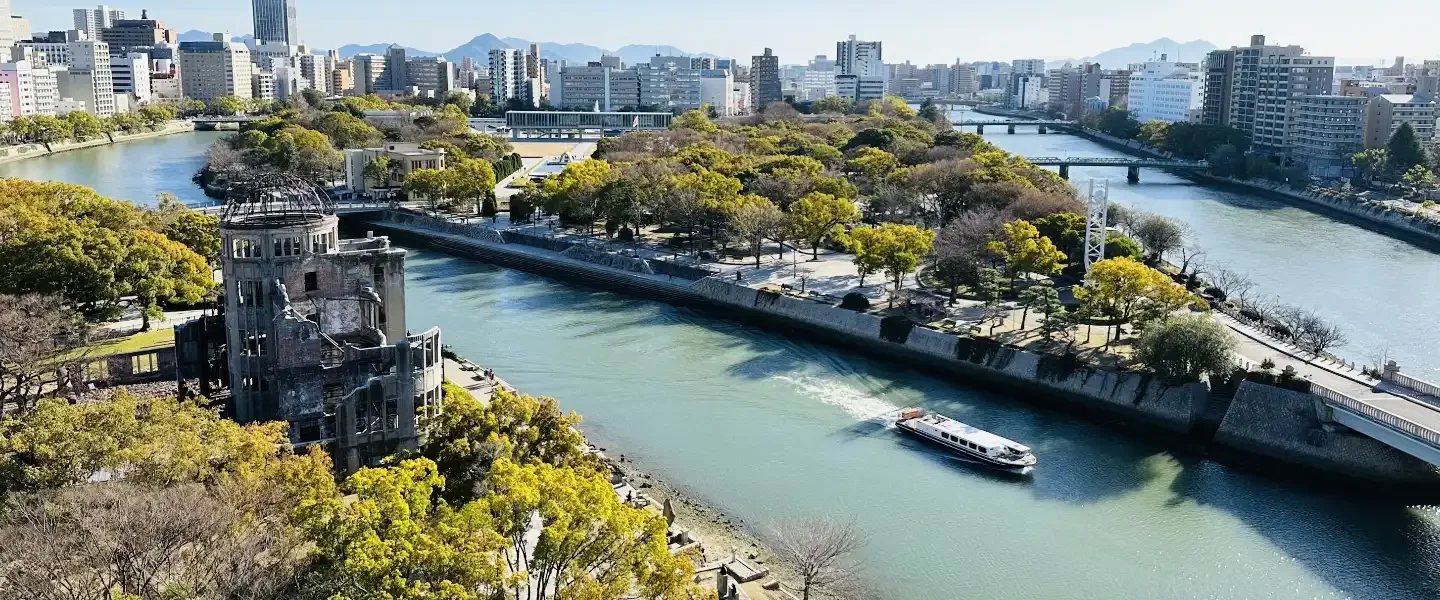
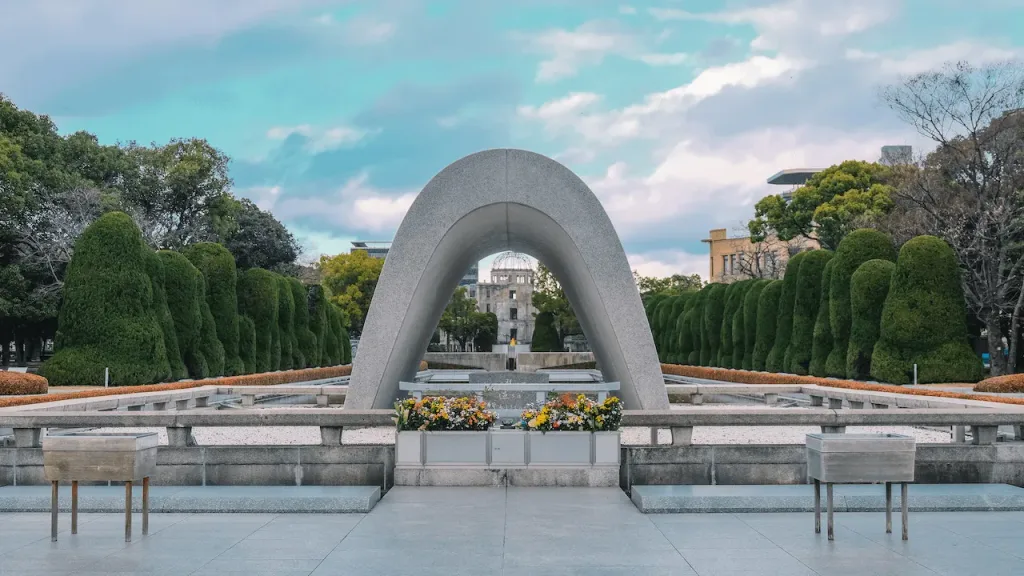
Peace Memorial Park is the centre of most first visits, but it is not the whole city and it should not be treated like a box to tick before lunch. The museum is heavy, crowded at the wrong hours, and better handled slowly, with time afterward to walk the river instead of rushing straight into the next sight. The Atomic Bomb Dome, the cenotaph, the school groups, the paper cranes, and the quiet way people move through the park all work because the city around them keeps functioning. That is the point.
Hiroshima Station now gives a better first impression than it used to, which matters in a city many travellers treat as a one-night stop. Trams roll into the upper level, Minamoa has softened the old transit-hub feel, and the Granvia setup makes the station area a more practical base than it once was. It is still not the part of town with the most texture, but arriving here no longer feels like being dropped beside the machinery before the trip starts. The front door got better.
The streetcars are the city's real rhythm. Hiroden is slower than a subway and better for it, rattling past office blocks, rivers, shopping arcades, hospital stops, and ordinary neighbourhood corners that most fast trains would erase. Some cars feel old enough to have stories, while the newer routes make the south and east sides easier to stitch into a day without treating taxis as the answer to everything. This is a city you understand through windows.
Food here is not delicate in the Kyoto sense, and that is a compliment. Hiroshima-style okonomiyaki is layered, hot, heavy, and best eaten at the counter while the cook manages noodles, cabbage, egg, sauce, and a crowd of impatient regulars with the calm of someone doing actual work. Okonomimura and Ekimae Hiroba make the choice easy, but the better meal can be a smaller counter with fewer signs and no performance. Oysters add the other half of the story, especially around Miyajima. Come hungry, not precious.
Nagarekawa and Yagenbori give Hiroshima a late-night edge, but this is not Tokyo with the volume turned down. The best nights are smaller: a second-floor bar with six seats, a bartender who notices when you are done talking, a vinyl place near Peace Boulevard, or a baseball crowd leaking out after a Carp game. The weak version is following a tout into a room with unclear prices. Choose your own door.
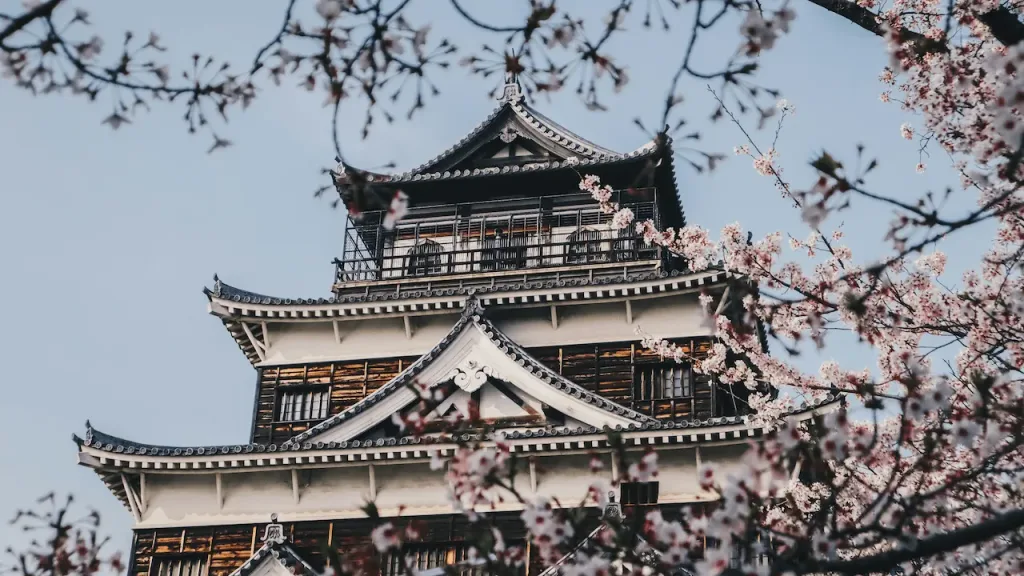
Hiroshima Castle is no longer the easy interior stop it used to be, because the main tower has closed over age and earthquake-resistance problems. The grounds still work as a walk, especially if you are already linking Shukkeien, the rivers, and the old centre, but anyone chasing castle interiors will leave underfed. That is a useful filter for Hiroshima as a whole: it rewards people who let the city accumulate in pieces, not people who need every landmark to perform.
Itsukushima Shrine
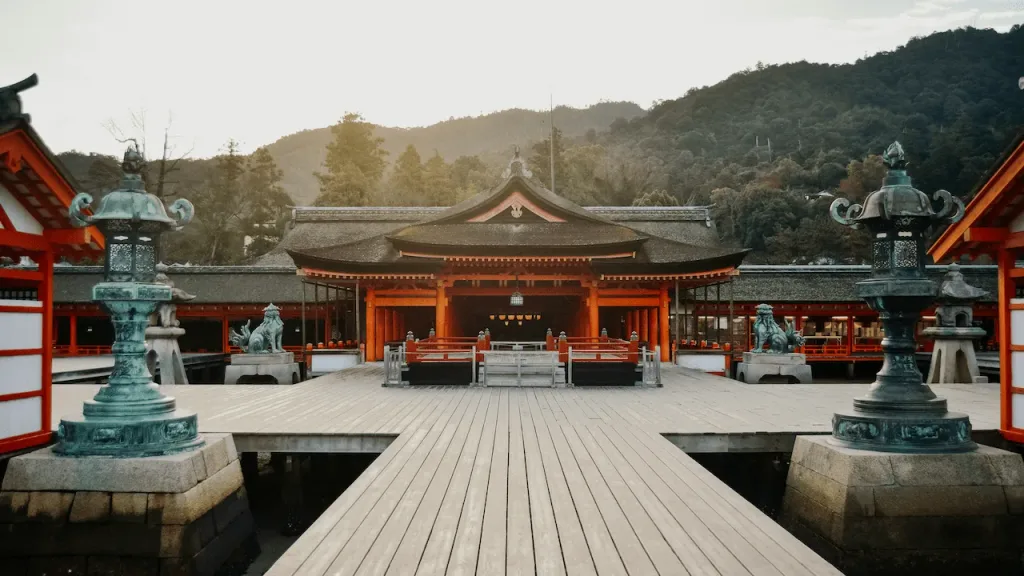
Itsukushima Shrine is not one sight, no matter how many posters flatten it into a red gate floating on blue water. At high tide, the torii sits offshore with the shrine's corridors lifted above the bay, and the whole thing finally makes sense as architecture built for water rather than land. The best moment is not the clean postcard view, but the small shift when the ferry noise drops, the boards creak underfoot, and the gate looks less like an object than a marker. Time it badly and you get the same shrine with the spell switched off.
Low tide is not a failure, just a different version with less grace and more crowd management. People walk out across the exposed flats toward the torii, shoes getting muddy, selfie lines forming, children poking at puddles where the water has retreated. It can feel blunt after the elegance of high tide, but it also shows how much of the shrine's fame depends on the sea doing its part. The mistake is arriving when convenient and expecting the tide to cooperate. Check the tide table before the ferry, not after.
Miyajima punishes lazy timing because the island's easiest hours are also its most crowded. Day-trippers pour off the boats, move through the deer, snack street, shrine entrance, and torii viewpoint in one compressed loop, then wonder why it felt staged. Build the visit around either high tide or the change between tides, and leave enough slack to step away from the waterfront before coming back. Itsukushima Shrine is worth the effort, but only if you let the bay set the schedule.
Areas of Hiroshima
- Memorials, museums, rivers
Peace Memorial Park Area
Peace Memorial Park Area puts the museum, Atomic Bomb Dome, cenotaph, and river paths within the easiest walking range. Hotels nearby tend to suit first-timers who want a serious visit without building the day around transport. Evenings are calmer than Hondori or Nagarekawa, which is useful after the museum but thin if you want late food and bars outside your door. Stay here for focus, not nightlife.
Good for: Museum visits, riverside walks, first Hiroshima trips.
Skip if: You want late-night bars and a wider dinner choice outside your hotel.
- Shopping, food, central base
Hondori
Hondori is the covered arcade base for travellers who want food, shops, trams, and Peace Park within easy reach. The main strip is practical rather than subtle, with chain stores, snack stops, and crowds moving through it from morning into evening. The better eating and drinking is usually on the side streets toward Nagarekawa, not under the arcade roof. Book slightly off the arcade if noise bothers you.
Good for: Easy meals, shopping, walking access to central sights.
Skip if: You want a quiet neighbourhood feel or dislike arcade crowds.
- Nightlife, izakayas, bars
Nagarekawa
Nagarekawa is Hiroshima's late-night district, with izakayas, small bars, host clubs, karaoke rooms, and side streets that stay awake after the shopping arcades thin out. It is the best base if you want dinner to slide into drinks without planning another tram ride. The trade-off is noise, touts, and a rougher edge than the memorial or station areas. Choose your own bar, not the one someone waves you into.
Good for: Late dinners, bar hopping, Hiroshima nightlife.
Skip if: You want quiet sleep, early nights, or a polished hotel district.
- Transport, day trips, shopping
Hiroshima Station Area
Hiroshima Station Area is the practical base for Shinkansen arrivals, airport buses, and day trips that start early. The station complex now has enough food and shopping to make the area less sterile than it used to feel. It still lacks the street texture of Hondori or Nagarekawa, and you will ride the tram for the memorial district rather than step straight into it. Stay here when logistics matter most.
Good for: Shinkansen travel, early departures, easy day trips.
Skip if: You want the city's bars, memorials, and river walks at your doorstep.
Frequently Asked Questions
Planning & moving around
-
How many days do I need in Hiroshima?
Two full days is the clean minimum: one for Peace Memorial Park, the museum, the central food streets, and one for Miyajima. Three days is better if you want Itsukushima Shrine at the right tide instead of whatever the ferry schedule hands you. Four days only makes sense if you are adding Kure, Onomichi, baseball, or slower neighbourhood time.
-
What is a good 24-hour Hiroshima itinerary?
Start with Peace Memorial Park and the museum while your head is still clear, then walk the river rather than rushing straight to the next stop. Eat Hiroshima-style okonomiyaki around Hondori or the station area, then use the afternoon for Shukkeien, the castle grounds, or a tram ride through the centre. Save Nagarekawa or Yagenbori for dinner if you want the city after work hours.
-
What should I prioritise on a first Hiroshima trip?
Prioritise Peace Memorial Park and the museum, then decide whether Miyajima fits your time and energy. Hiroshima Castle is better treated as a grounds-and-walk stop while the main tower is closed, not the centrepiece of a day. If time is tight, skip checklist sightseeing and put the spare hour into okonomiyaki, Shukkeien, or the rivers.
-
What are the best day trips from Hiroshima?
Miyajima is the obvious first choice because Itsukushima Shrine changes with the tide and Mount Misen gives the island a real second act. Kure works if naval history interests you, while Onomichi is the better call for hillside lanes, temple walks, and a slower Seto Inland Sea feel. Do not cram all three into a short stay.
-
Which popular Hiroshima spots are overrated?
The Mazda Museum is easy to overrate unless you are genuinely interested in cars and factory tours. Hiroshima Castle also disappoints travellers expecting a full interior visit while the main tower is closed. Shukkeien is not a bad stop, but it is a quiet garden, not a reason to rearrange the whole day.
-
Where can I store luggage in Hiroshima?
Hiroshima Station is the easiest place to store luggage, with coin lockers and staffed services nearby. Lockers fill faster on busy travel days, especially around the Shinkansen gates, so do not assume a large case will fit anywhere at noon. Hotels will often hold bags after checkout if you are returning the same day.
-
Which taxi apps work in Hiroshima?
GO and Uber can dispatch standard taxis in Hiroshima, but they are not cheap private-car rides. Taxi stands at Hiroshima Station, major hotels, and busier nightlife streets are often simpler than waiting for an app. For most central trips, the streetcars are cheaper and less annoying.
-
Is Hiroshima good for digital nomads?
Hiroshima works for self-contained remote workers who want a calm Japanese city with good transport, reliable internet, and fewer distractions. It is weaker for people chasing a big coworking scene or instant nomad community. The better long-stay base is near the station, Hondori, or Naka-ku, depending on how much you value food, trams, and quiet.
-
What mistake do first-timers make in Hiroshima?
The classic mistake is treating Hiroshima as a rushed museum stop between bigger cities. The Peace Memorial Museum needs time, and Miyajima depends heavily on tide timing. Give the city at least two days or accept that you are only sampling it.
-
Is Hiroshima worth visiting as a day trip?
A day trip is possible, but it is the thinnest version of Hiroshima. You can see the memorial area and eat okonomiyaki, but Miyajima, the tide, and the city after dark will probably fall away. Stay overnight if the trip is meant to be more than a respectful stop.
Safety & medical
-
Is it safe to walk around Hiroshima at night?
Yes, central Hiroshima is safe by normal city standards, including around Hondori, Peace Boulevard, and the station area. The main late-night annoyance is not street crime, but drunk groups, touts, and unclear bar pricing around Nagarekawa. Stick to places you choose yourself and know when the last tram has gone.
-
How LGBTQ+ friendly is Hiroshima?
Hiroshima is safe and polite for LGBTQ+ travellers, but it is not an especially loud or visible queer destination. A few LGBTQ-friendly bars exist around Nagarekawa, and most hotels will not make same-sex couples an issue. Public affection can draw looks because the city is socially restrained, not because danger is likely.
-
What happens if I get sick in Hiroshima?
Hiroshima has proper hospitals, clinics, and pharmacies, so a normal illness is manageable. Hiroshima City Hospital and Hiroshima University Hospital are major medical options, while private clinics may be easier for minor problems and English support. For anything serious, use 119 and let the hotel or clinic help with language.
-
Can you drink the tap water in Hiroshima?
Yes, tap water in Hiroshima is safe to drink. Locals drink it, hotels use it normally, and brushing your teeth with it is fine. Bottled water is mostly a convenience choice, not a safety requirement.
Laws & local norms
-
What are the drug laws in Hiroshima?
Japan's drug laws are strict, and Hiroshima is no exception. Cannabis, THC products, MDMA, cocaine, and methamphetamine can lead to arrest, detention, fines, or prison. Do not bring CBD unless you are completely certain it contains no controlled THC and complies with Japanese rules.
-
Can I vape in Hiroshima?
Heated tobacco products are common in Japan, but nicotine e-liquid is not sold like it is in many other countries. Travellers can bring a limited personal supply for personal use, but buying nicotine vape liquid locally is not the simple fallback people expect. Use designated smoking areas and do not vape on trams, platforms, or in restaurants unless signs clearly allow it.
-
What is the dress code and etiquette in Hiroshima?
Dress is neat but not fussy, and tourists do not need special clothing for normal sightseeing. Temples and shrines reward covered shoulders and quieter behaviour, while Peace Memorial Park needs restraint more than a dress code. Keep voices low on trams and do not treat memorials as a selfie set.
Money & costs
-
Is Hiroshima expensive compared with Tokyo or Kyoto?
Hiroshima is usually easier on the wallet than Tokyo or Kyoto, especially for food and ordinary hotels. It is not cheap in a Southeast Asia sense, and Miyajima-facing stays or peak travel dates can still feel expensive. The value is strongest when you base centrally and use trams instead of taxis.
Culture & etiquette
-
What do tourists get wrong about Hiroshima?
Many visitors assume Hiroshima is solemn all the time. The memorials matter deeply, but the city is also streetcars, baseball, oysters, okonomiyaki counters, rivers, and late-night bars. Plan for grief and ordinary life in the same trip.
-
How much English is spoken in Hiroshima?
English is workable around stations, hotels, Peace Memorial Park, Miyajima ferry routes, and major attractions. Smaller restaurants, local bars, taxis, and clinics can still be Japanese-first. Translation apps help, but pointing, patience, and simple phrases do more than shouting English slowly.
Food & drink
-
Where do locals actually eat in Hiroshima?
Locals eat all over, but the easiest traveller zones are Nagarekawa, Yagenbori, Hondori side streets, and the station food floors. Okonomimura is famous and useful, not automatically the best counter in town. For oysters, Miyajima and the bay-facing side of the food map matter more than generic seafood restaurants.
-
Where can I eat late at night in Hiroshima?
Nagarekawa and Yagenbori are the best late-night food areas, especially for izakaya, ramen, yakitori, and post-drink meals. Some okonomiyaki counters stay open late, but do not count on every famous shop running into the early hours. Convenience stores are the fallback, and in Japan that is less depressing than it sounds.
Families & kids
-
Is Hiroshima a good place to visit with kids?
Yes, but the museum needs judgment. Older children may handle the Peace Memorial Museum well if you pace it and talk through what they are seeing, while younger children may do better with the park, the streetcars, and a shorter stop at the Children's Peace Monument. Miyajima also works well for families if you do not overload the day.
-
Is Hiroshima manageable with a stroller or buggy?
Hiroshima is easier with a stroller than many older Japanese cities because the centre is flat and the Peace Park paths are wide. The awkward parts are crowded trams, small restaurants, older station exits, and narrow side streets near nightlife areas. A lightweight folding stroller is better than a large one.
-
What happens if a child gets sick in Hiroshima?
Hiroshima has proper paediatric care, pharmacies, and emergency hospitals, so this is not a remote-destination problem. Hiroshima University Hospital is a major option for serious issues, while pharmacies such as Welcia and Matsumoto Kiyoshi can handle basic medicine needs. Bring any child-specific medicine your kid depends on, because local equivalents may not match.
-
Where should families stay in Hiroshima?
Families usually do best near Hiroshima Station, Peace Boulevard, or the Peace Memorial Park area. Station hotels simplify arrivals and day trips, while Peace Park and Hondori put food, trams, and flat walking closer together. Nagarekawa is useful for adults at night, not for early bedtimes.
-
What works for half a day with young kids?
The Children's Museum and the open spaces around Peace Memorial Park are the safest half-day picks. Hiroden streetcars can become the activity if your child likes vehicles, especially when you get a front-facing view. Hijiyama Park also works when you need room to move rather than another indoor stop.
Staying longer
-
Which neighbourhood in Hiroshima should I stay in?
First-timers do best around Peace Memorial Park, Hondori, or Hiroshima Station, depending on what matters most. Peace Park is best for the museum and river walks, Hondori is better for food and shopping, and the station area wins for Shinkansen arrivals and day trips. Nagarekawa suits late nights, but it is the wrong base if you want quiet sleep.
After dark
-
What changes after dark in Hiroshima?
Hiroshima gets looser after dark, but it does not become Tokyo. Nagarekawa and Yagenbori fill with izakaya groups, karaoke, small bars, and adult nightlife, while the Peace Park area stays quieter and more reflective. Trams keep things easy until service thins out, then taxis become the fallback.
-
Where do Hiroshima nights go wrong?
Nights usually go wrong when travellers follow a tout, ignore unclear cover charges, or miss the last tram. Nagarekawa is fun when you choose your own bar and irritating when someone chooses it for you. Know your route back before the second round.
-
What are Hiroshima's best nightlife areas?
Nagarekawa and Yagenbori are the main nightlife areas, with izakaya, karaoke, snack bars, small cocktail rooms, and later energy than the rest of the city. Hondori and Peace Boulevard are better for quieter drinks and easier exits. Stay near Nagarekawa only if noise is part of the plan.
-
Does Hiroshima have a red-light district?
Hiroshima does not have a famous red-light district in the way some larger cities do, but adult nightlife exists around parts of Nagarekawa and Yagenbori. It is mixed into the wider bar and entertainment area rather than separated as a tourist landmark. If you are not looking for it, avoid smaller tout-led venues and stick to main streets or researched bars.