
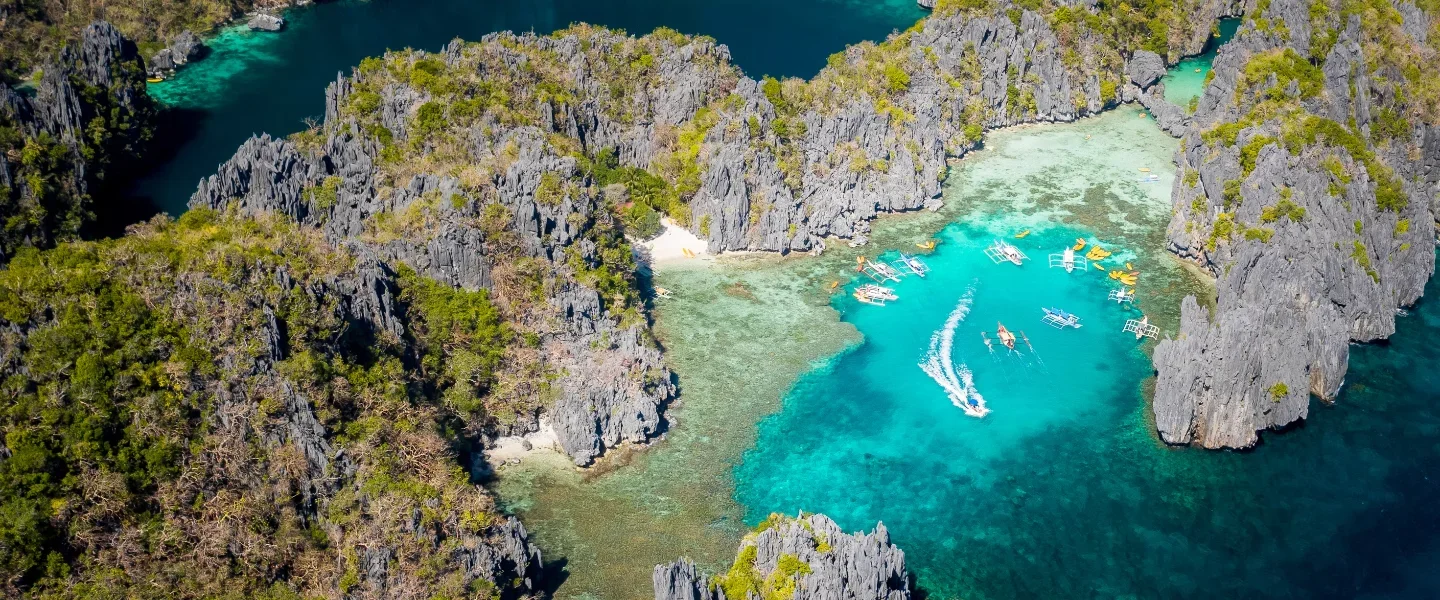

El Nido Right Now
Typhoon Inday impact is causing ongoing flight cancellations and sea travel disruptions to and from El Nido.
Best time to visit
Off-season🌧️Southwest Monsoon
Wet and windy with low crowds; island-hopping runs between systems, but expect weather days off the water.
SCORE BY MONTH
December to March is the window: dry skies, calm seas, and island-hopping tours that actually run. April and May stay dry but turn hot. From June to October the southwest monsoon brings rough water and cancelled boats, so it is the stretch to avoid. Christmas, New Year, and Holy Week draw the heaviest crowds and the steepest prices.
Visitor data: Estimated from seasonal travel patterns 2026
Day-to-day in El Nido
Walkability
35/100
El Nido town is small enough to cover on foot, but walking often means sharing narrow streets with traffic.
Most streets lack usable pavements, leaving pedestrians to walk alongside tricycles and motorbikes.
Restaurants, tour offices and shops sit within a short walk inside the town centre.
Narrow streets, parked tricycles and constant motorbike traffic make walking require attention.
Frequent rain interrupts walks for half the year. Plan around the wet season or carry an umbrella.
-
WATER SPORTS
Many long-stay visitors build their weeks around diving. Bacuit Bay's reefs, walls and marine life keep people returning to the water between workdays.
-
Coworking
Coworking exists but remains a small scene. Neighbors and Nomads and Masayana are the main options, with air conditioning and workable internet, though connectivity can still be less predictable than larger nomad hubs.
-
Gym
$32 / month
VERY AFFORDABLEGym options are limited but usable for a longer stay. Hieroglyph Fitness in Corong-Corong focuses on CrossFit-style training, while Madness Mixed Martial Arts attracts locals, fighters and fitness regulars.
Need to Know
- Population
- 50,494 PSA · 2020 Census
- Currency
- Philippine Peso (PHP)
- Language
- Filipino and English; English widely spoken in tourist areas
- Tap water
- Not safe to drink
- Time zone
- PHT (UTC+8)
- Power plug
- Type A / B / C, 220V
- Dialling code
- +63
- Driving side
- Right
- Tipping
- Not expected, but many travellers leave around 10% for good service if no service charge is included.
- Internet
- 4G and 5G coverage is available in town and main tourist areas, though speeds and reliability lag behind larger Philippine cities.
- Emergency
- 911 (all services), 165 (Palawan Rescue)
When not to go
-
Skip Holy Week crowds
Late Mar – Apr · shifts yearlyAvoid El Nido during Holy Week if you want the lagoons to feel even remotely spacious. Domestic holiday demand floods flights, ferries, accommodation and island-hopping tours, while popular stops around Bacuit Bay can feel more like a queue than a boat trip. Pick a quieter island destination or travel outside the holiday period.
Go here instead:
- Raja Ampat Far lower visitor numbers and boat traffic at key sites.
- Sumba More space, fewer organised tours and quieter beaches.
Upcoming Events & Holidays
On the horizon
Public holidays & observances — next 12 months
Dates are researched and checked, but events move. Always confirm with the official source before you book anything around them.
Getting To El Nido
-
Puerto Princesa Airport (PPS)
Around 5 to 6 hours by road to El Nido
Many travellers fly into Puerto Princesa and continue overland to El Nido. The route is long but offers more flight choices and often more availability than flying directly into ENI.
-
From Coron Port
Fast ferries connect Coron and El Nido
The Coron route is one of the main ways travellers move between northern Palawan and the Calamian Islands. Sea conditions can affect schedules, particularly during rough weather.
-
Ninoy Aquino Airport (MNL)
Main international gateway for most visitors
Most international travellers enter the Philippines through Manila before continuing to Palawan. Allow extra time if connecting between terminals, as road traffic around the airport can be slow.
-
Clark International (CRK)
Alternative gateway with direct El Nido connections
Clark is often the simplest way to avoid Manila's terminal transfers. It serves both international arrivals and domestic connections into El Nido.
Safety Advice
Scooter crashes on rough coastal roads are the main risk, along with the usual boat-safety concerns on packed island-hopping bancas, so check for life vests and do not sail in bad weather. Petty theft is low. Frequent power cuts are an inconvenience rather than a danger.
Common Scams
-
ATM Skimming and Fees
HIGH RISKTrigger:A standalone ATM adds unexpected charges before withdrawal
Independent ATMs can charge higher fees than bank-operated machines, and any ATM can be a target for card skimming. Losing access to your cards in El Nido can seriously disrupt a trip because banking options are limited.
How to avoid: Use bank-branded ATMs such as BPI, BDO or Metrobank. Check card readers for tampering and carry backup payment methods.
-
Tricycle Overcharging
MEDIUM RISKTrigger:A driver quotes a high flat fare upfront
Some drivers quote tourist prices that are far above local rates, especially near arrival points and busy tourist areas. The loss is usually small but adds up over multiple rides.
How to avoid: Agree on the fare before departing and compare with other drivers if the price seems excessive.
-
Island Tour Upsells
MEDIUM RISKTrigger:A seller claims only a premium tour reaches key sites
Some operators use misleading photos or exclusivity claims to sell more expensive packages. Many of the headline attractions are available through standard island-hopping tours.
How to avoid: Use accredited operators and confirm exactly which stops, fees and equipment are included before paying.
-
Overpriced Waterproof Gear
MEDIUM RISKTrigger:A beach vendor pushes a last-minute dry bag sale
Cheap dry bags and phone pouches sold near departure points sometimes fail during boat trips. The real cost comes from water-damaged electronics rather than the purchase itself.
How to avoid: Bring your own waterproof gear or buy from a reputable retailer before travelling.
-
Fake Environmental Fee Requests
LOW RISKTrigger:Someone requests an environmental fee without paperwork
Occasional unofficial fee requests target travellers unfamiliar with local tourism charges. The amounts are usually small but there is no reason to pay without documentation.
How to avoid: Pay required tourism fees only through accredited operators or official counters and keep the receipt.
Mistakes to Avoid
-
Drinking Tap Water
SERIOUS CONSEQUENCETap water is not considered safe to drink and can cause stomach illness. Losing several days of a short island trip to gastroenteritis is a common and avoidable mistake.
Fix: Drink bottled or properly purified water and use the same standard for brushing teeth if you have a sensitive stomach.
-
Walking in the Street
SERIOUS CONSEQUENCEMany roads have little or no pedestrian infrastructure, and traffic mixes tricycles, motorbikes and cars in tight spaces. A moment of inattention can result in a collision.
Fix: Walk close to the roadside, stay visible and avoid assuming drivers will yield.
-
Ignoring Plastic Restrictions
SERIOUS CONSEQUENCEEl Nido actively restricts many single-use plastics to reduce environmental damage. Violations can result in fines or confiscation of prohibited items.
Fix: Carry reusable bottles and bags and follow local rules when joining tours or entering protected areas.
-
Expecting Reliable Connectivity
MINOR CONSEQUENCEPower cuts and internet interruptions still occur despite improvements in recent years. Remote workers can lose productive hours if they assume constant connectivity.
Fix: Download offline resources, carry a power bank and avoid scheduling critical work around a single connection.
-
Ignoring Town Dress Rules
Walking through town in swimwear can attract unwanted attention and may breach local ordinances. The issue is respect as much as regulation.
Fix: Put on a shirt, dress or cover-up when leaving the beach and entering town areas.
Money & Payments
Carry cash, use cards selectively, and always pay in PHP to avoid poor exchange rates.
-
Cash Comes First
Cash is still the default payment method for tricycles, small restaurants, market stalls and many tour-related purchases. Carry smaller notes such as ₱20, ₱50 and ₱100 for everyday spending.
-
Cards Work Selectively
Visa and Mastercard are accepted at many hotels, dive shops and larger restaurants, but card acceptance remains patchy elsewhere. Some businesses add a surcharge for card payments.
-
Limited ATM Network
Most ATMs are clustered around central El Nido, including BPI, BDO and Metrobank machines. Bank ATMs charge withdrawal fees, while independent machines often cost more.
-
Choose PHP at Checkout
If a card terminal offers payment in your home currency, decline it and choose Philippine pesos instead. Dynamic Currency Conversion often adds a worse exchange rate and extra markup.
-
Digital Payments Lag Behind
GCash and QRPh are common among locals, but many visitors cannot easily use them without local setup. Do not rely on mobile payments as your primary spending method.
-
Eco-Tourism Fee
Most island-hopping visitors must pay the El Nido Eco-Tourism Development Fee of ₱400. Keep the receipt, as it is normally accepted across multiple tours during the validity period.
-
International Transfers
To send money to a bank account in The Philippines, for things like rent or day-to-day expenses, services like Wise or Remitly usually offer better rates than traditional banks and faster delivery.
You'll typically need the recipient's full name, account number, and SWIFT/BIC code. Some banks may also require a local address.
Costs in El Nido
El Nido is the priciest stop in Palawan, so reckon on $70 to 120 a day. Local meals stay cheap near $4, but rooms, tours, and even coffee run higher than the mainland because everything ships in. Budget separately for the island-hopping tours and the Bacuit Bay environmental fee that every visitor pays.
Save money?
Sign up for our guide on how to save money on your next trip.
SIM Cards & Data
Best option for most travellers: an eSIM you set up before you arrive. You'll be online the moment you land, with no airport queue and no tourist pricing.
Travel eSIMs Connect the second you land. Zero hassle. Skip the airport queue and paperwork. Activate before you fly and land connected. Find the best eSIM →Prefer a local SIM?
You can buy a physical SIM at El Nido phone shops, convenience stores and airport kiosks in Manila or Puerto Princesa, with airport purchase usually offering the easiest setup. Globe is the one to get. Passport registration is required for all SIM cards and is normally completed during purchase. Expect usable 4G coverage around El Nido town and nearby tourist areas, with weaker service on remote beaches and parts of Bacuit Bay.
What El Nido is Like
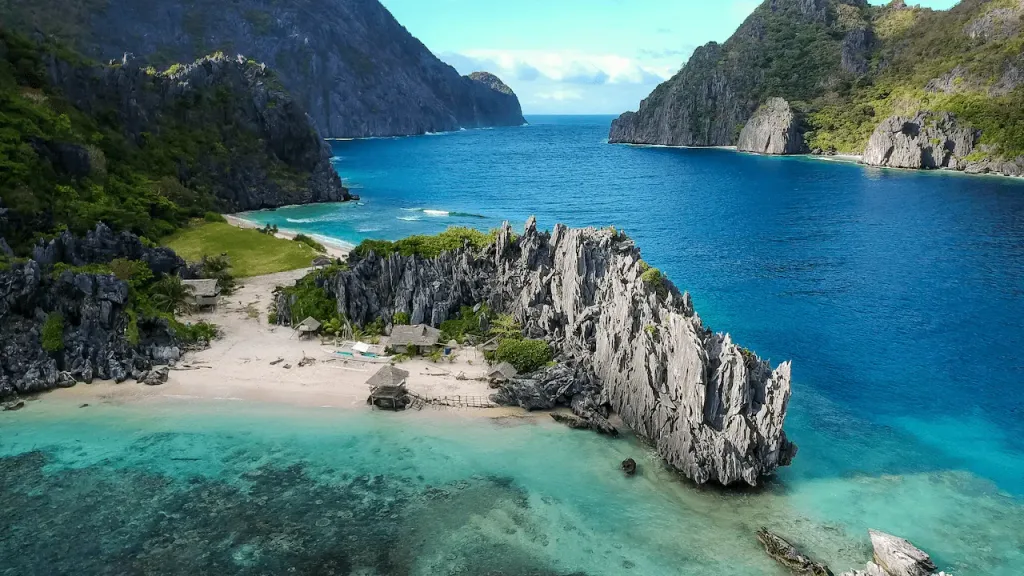
The town itself is a frantic grid of narrow concrete roads jammed with tricycles and diesel fumes, squeezed tightly between steep limestone walls and a busy harbour. It functions mainly as a staging area rather than a beach destination, where travellers cross paths in open-air bars, dive shops and tour offices. By mid-morning, the streets empty as boats head into Bacuit Bay, only to fill again by sunset with sunburnt snorkellers and divers looking for dinner and a drink. It is loud, commercial and short on tropical stillness. Nearly everything revolves around getting people onto the water.
Everything changes the moment your outrigger clears the harbour and enters the vertical landscape of Bacuit Bay. This is the primary reason people endure the journey here, and the scale of the limestone walls rising straight from the sea genuinely delivers. Days are spent squeezing through gaps in the rock into enclosed lagoons or drifting over shallow reefs where sea turtles are a routine sight rather than a lucky one. It is an extraordinary marine environment, though rarely a solitary one. You are trading isolation for some of the most dramatic coastal scenery in Southeast Asia.
Moving a few minutes south to Corong-Corong or Las Cabanas provides the breathing room that the town centre lacks. Accommodation stretches along a broad west-facing shoreline where the water is often shallow and calm, and sunsets pull people onto the sand each evening. The rhythm slows noticeably, with smaller restaurants, fewer tricycles and more space between buildings. It is the sensible compromise for travellers who want access to the bay without sleeping in the middle of the noise. The daily ride into town is usually a fair trade.
This destination is a poor fit for travellers looking for a polished resort holiday where everything happens within walking distance of a perfect swimming beach. If you want the wide beachfront and easy layout of Boracay, the working shorelines and boat logistics here can feel like hard work. Exploring often means climbing in and out of boats, getting wet before you reach the beach, and accepting that infrastructure still lags behind demand. People come for the geography first and tolerate the inconveniences that come with it. That distinction matters.
Big Lagoon

The biggest mistake people make with Big Lagoon is treating it like a secret. By the time the first wave of island-hopping boats arrives, the narrow entrance often resembles a floating traffic jam of kayaks, tour guides shouting instructions and visitors trying to line up the same photograph. None of this means the place is overrated. It means the marketing has convinced people they are heading somewhere hidden when they are actually visiting the most famous spot in Bacuit Bay.
Once you paddle beyond the entrance and the noise fades behind the limestone walls, the reason for the hype becomes obvious. The water shifts from deep blue to impossible shades of green, the cliffs rise almost vertically from the lagoon, and every turn reveals another corner that feels too large to fit inside the enclosed space. The scale is what impresses, not the idea of exclusivity. People who arrive expecting solitude leave disappointed. People who arrive expecting extraordinary geology usually leave satisfied.
Timing changes the experience more than most visitors realise. Early boats often reach the lagoon before the biggest crowds build, while late arrivals can spend part of the visit waiting for other kayaks to clear narrow passages. Private tours help, but they do not magically empty the lagoon because everyone is chasing the same landmark. This is the trade that defines El Nido. The famous places are famous for a reason, and Big Lagoon remains one of the few that still earns its reputation.
Areas of El Nido
- Quiet, views, walkable
Caalan Beach
Caalan Beach sits just north of town and attracts travellers who want to stay close without sleeping in the middle of the traffic. The shoreline faces Cadlao Island and feels calmer than the town centre, especially in the early morning. Swimming is limited by rocks, coral and shallow water, but the setting is attractive and the walk into town is straightforward. It works best as a quieter version of the town experience.
Good for: Quiet mornings, sea views, walking access to town.
Skip if: You want a proper swimming beach and lots of dining choices nearby.
- Beach, resorts, airport
Lio Beach
Lio Beach sits north of town beside El Nido's airport and feels deliberately planned compared with the rest of the area. The beachfront is cleaner and more swimmable than the town shoreline, with wider paths, open space and fewer tricycles. Restaurants and shops exist, but the atmosphere is noticeably more resort-focused than local. You gain comfort and beach quality while giving up some of the energy of town.
Good for: Beach time, resort stays, families, easy airport access.
Skip if: You want El Nido's busiest restaurants and nightlife within walking distance.
- Tours, nightlife, convenience
El Nido Town Proper
El Nido Town Proper is where most visitors end up because nearly every island-hopping boat, dive shop and transport connection starts here. Restaurants, bars and tour offices pack the narrow streets, and you can handle most daily errands on foot. The trade-off is noise, traffic and a waterfront dominated by working boats rather than swimming. Stay here if being in the middle of the action matters more than beach quality.
Good for: Tour departures, diving, nightlife, staying car-free.
Skip if: You want quiet evenings and a beach outside your room.
- Sunsets, beach walks, quieter
Corong-Corong
Corong-Corong stretches along the bay south of town and gives you more space without cutting you off from restaurants and tours. Sunset views across the limestone islands are the main draw, and many travellers prefer the slower pace here. The beach works better for walks and evening drinks than for swimming because of shallow water and boat traffic. It strikes a sensible balance between convenience and breathing room.
Good for: Sunsets, longer stays, couples, slower evenings.
Skip if: You want nightlife at your doorstep or a strong swimming beach.
- Beach, remote, relaxation
Nacpan Beach
Nacpan Beach is for people who care more about sand and sea than about being close to tour offices and bars. The long shoreline feels far removed from the congestion around El Nido town and is one of the few genuinely swimmable beaches in the area. Days revolve around the beach itself rather than constant movement between restaurants and activities. The downside is committing to a remote base with fewer services and longer transfers.
Good for: Beach days, disconnecting, couples, slower travel.
Skip if: You want quick access to town, diving shops or nightlife.
- Remote, kitesurfing, local life
Sibaltan
Sibaltan sits on El Nido's east coast and feels like a different destination altogether. Travellers stay here for quiet beaches, seasonal kitesurfing conditions and a slower rhythm built around the local community rather than organised tourism. Facilities are limited compared with Bacuit Bay, and reaching the headline attractions around El Nido takes time. That isolation is the entire point.
Good for: Kitesurfing, local life, remote beaches, unplugging.
Skip if: You need dependable infrastructure and daily access to Bacuit Bay tours.
Frequently Asked Questions
Planning & moving around
-
How many days do you need in El Nido?
Three to five days is enough for the headline island-hopping routes and a beach day or two. Stay longer if you plan to dive, kayak independently or spend time around Nacpan. Trying to squeeze El Nido into a quick overnight stop rarely works well.
-
What are the best day trips from El Nido?
Most visitors spend their time on the island-hopping routes through Bacuit Bay, especially around Big Lagoon, Small Lagoon and the limestone islands offshore. If you want a break from boats, Nacpan Beach is the most popular land-based day trip. The famous attractions here are overwhelmingly water-focused.
-
How do you get around El Nido?
Most people walk around town and use tricycles for longer trips to places such as Corong-Corong, Lio or Las Cabanas. Scooter rentals are common, but road quality varies and driving standards are inconsistent. Agree on tricycle fares before setting off.
-
Do you need a license to rent a scooter in El Nido?
Legally, yes. Many rental shops hand over scooters with little scrutiny, but that does not change the rules or help if you crash. Insurance claims often become difficult when the rider is not properly licensed.
-
What's the most common mistake first-time visitors make in El Nido?
Expecting a quiet tropical beach town. El Nido's main attraction is organised access to Bacuit Bay, and many famous sites are busy for much of the day. Arrive expecting dramatic scenery rather than solitude.
-
What does almost every tourist get wrong about El Nido?
People assume the town beach is the reason to visit. In reality, the shoreline in town is mostly a working waterfront for boats and tours. The real draw is what lies offshore.
Safety & medical
-
Is El Nido safe at night?
Violent crime against visitors is uncommon, and the main tourist areas stay active into the evening. The bigger risks are poorly lit roads, drinking and riding scooters, or walking on narrow streets with traffic. Remote beaches feel very different from the town centre after dark.
-
What are the main health risks in El Nido?
Sunburn, dehydration and stomach issues cause far more problems than serious disease. Long boat trips expose you to strong reflected sunlight for hours, and cuts from coral can become infected if ignored. Mosquitoes are present, so basic dengue precautions are sensible.
-
Do I need travel insurance for El Nido?
Yes. Many visitors spend their days on boats, scooters or in the water, and serious medical cases often require transfer to Puerto Princesa. Check that your policy covers the activities you actually plan to do rather than assuming standard coverage is enough.
-
Is El Nido LGBTQ+ friendly?
Most LGBTQ+ travellers have few issues in El Nido, particularly around the tourism industry. Staff and other visitors are usually accepting, and same-sex couples are a common sight. Public displays of affection tend to stay fairly low-key regardless of orientation.
-
Where can I find medical care for children in El Nido?
Basic medical services are available locally, but specialist paediatric care is limited. Serious cases are often referred to Puerto Princesa. Families travelling with young children should carry any essential medicines with them.
-
Can you drink the tap water in El Nido?
No. Most visitors stick to bottled or properly filtered water, and many accommodations advise the same. Ice in established restaurants is usually not an issue, but drinking straight from the tap is a common mistake.
Laws & local norms
-
What are the laws regarding drugs in El Nido?
Philippine drug laws are strict, and penalties can be severe. Travellers sometimes assume a laid-back beach destination means relaxed enforcement. It does not.
-
Can you vape in El Nido?
Vaping is legal in the Philippines but regulated. Restrictions apply in many public places, and local rules can vary. Treat it much like smoking rather than assuming it is allowed everywhere.
-
What is the dress code in El Nido town?
Swimwear belongs on the beach, not in the middle of town. Local ordinances have targeted walking around commercial areas in bikinis or swim trunks, and many residents appreciate visitors covering up away from the water. A shirt or cover-up solves the issue.
-
How should I dress when visiting churches?
Cover your shoulders and knees when entering churches or attending services. El Nido is relaxed by Philippine standards, but religious sites still expect a basic level of respect. Beachwear is not appropriate.
Culture & etiquette
-
What is the local etiquette in El Nido?
Politeness matters more than formal rules. A friendly attitude, patience and respect toward staff usually go a long way. Visitors who treat El Nido like a private resort rather than a working town tend to stand out for the wrong reasons.
Food & drink
-
Where do locals eat in El Nido?
Look beyond the beachfront strips and tourist-focused restaurants. Small carinderias and eateries around town serve everyday Filipino meals and are often where local workers eat. The experience is less polished but usually more representative.
-
What local dishes should I try in El Nido?
Fresh seafood is the obvious choice, but classic Filipino dishes such as adobo, sinigang and kinilaw are worth seeking out as well. Many visitors leave having eaten mostly western food despite being in one of the country's best coastal regions.
-
Is El Nido good for vegetarians or vegans?
Yes, by Philippine island standards. Tourism has created a surprisingly strong selection of vegetarian and vegan-friendly cafes and restaurants around town and Corong-Corong. You will have far more choice here than in most smaller destinations across the country.
Families & kids
-
Is El Nido good for families with young kids?
It can work, but it is not effortless. The biggest attractions involve boats, sun exposure and getting in and out of the water rather than playgrounds or child-focused activities. Families who enjoy beach and boat days tend to have a better experience than those seeking resort convenience.
-
Can you use a stroller in El Nido?
Not comfortably. Narrow roads, uneven surfaces and boat-based activities make strollers frustrating in many situations. A baby carrier is usually the more practical option.
Staying longer
-
Which area should I stay in El Nido?
El Nido Town Proper suits travellers who want restaurants, bars and tour departures within walking distance. Corong-Corong is quieter and better for sunsets, while Nacpan Beach is for people who want a real beach and do not mind being far from town. Choosing the wrong base is one of the easiest ways to end up disappointed here.
-
Is El Nido a good place for digital nomads?
It works better for short stays than for serious remote work. Coworking spaces exist and internet has improved, but outages and inconsistent speeds still happen. People usually choose El Nido for the water and scenery rather than productivity.
After dark
-
What is the nightlife like in El Nido?
Think beach bars, live music and social hostels rather than large clubs. Most nights revolve around sunset drinks, dinner and meeting other travellers. If you want a serious party destination, places such as Boracay do it better.
-
Is it easy to meet other travellers in El Nido?
Yes. Shared boat tours, dive trips, hostels and beach bars create a social atmosphere with very little effort. Even travellers arriving alone usually end up meeting people quickly.